


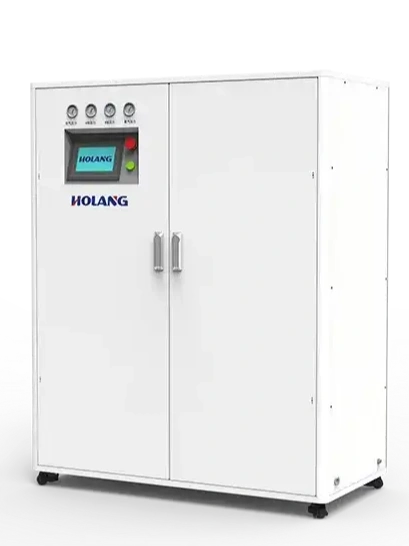
Introduction
In the previous three articles of this series, we covered:
- Part 1: Which SMT applications require nitrogen
- Part 2: Matching nitrogen supply with different reflow oven brands and models
- Part 3: Five key indicators for daily nitrogen system monitoring
Together, these topics addressed demand evaluation, system configuration, and daily operation, forming a complete technical path from “Do we need nitrogen?” to “How to use it effectively.”
In real projects, however, engineers often need something more direct:
a practical checklist that can be applied during project planning.
This article consolidates the key points into a four-step decision framework for technical reference.
Step 1: Demand Evaluation — Does Your Production Line Need Nitrogen?
| Evaluation Item | Yes | No |
|---|---|---|
| Use of bottom-termination components (QFN, LGA) | □ | □ |
| Fine pitch (<0.4 mm) or mixed assembly process | □ | □ |
| Special surface finishes (ENEPIG, OSP bare copper) | □ | □ |
| Applications in automotive, medical, or aerospace | □ | □ |
| High requirement for process stability | □ | □ |
Evaluation Result
- 1–2 items checked: Nitrogen is recommended (purity based on product level)
- 3 or more items checked: Nitrogen is essential
Recommended Nitrogen Purity
- Consumer-grade (home appliances, toys): ≥ 99.9%
- Industrial-grade (PCBs, automotive sensors): ≥ 99.99%
- High-reliability (medical, aerospace, automotive-grade): ≥ 99.999%
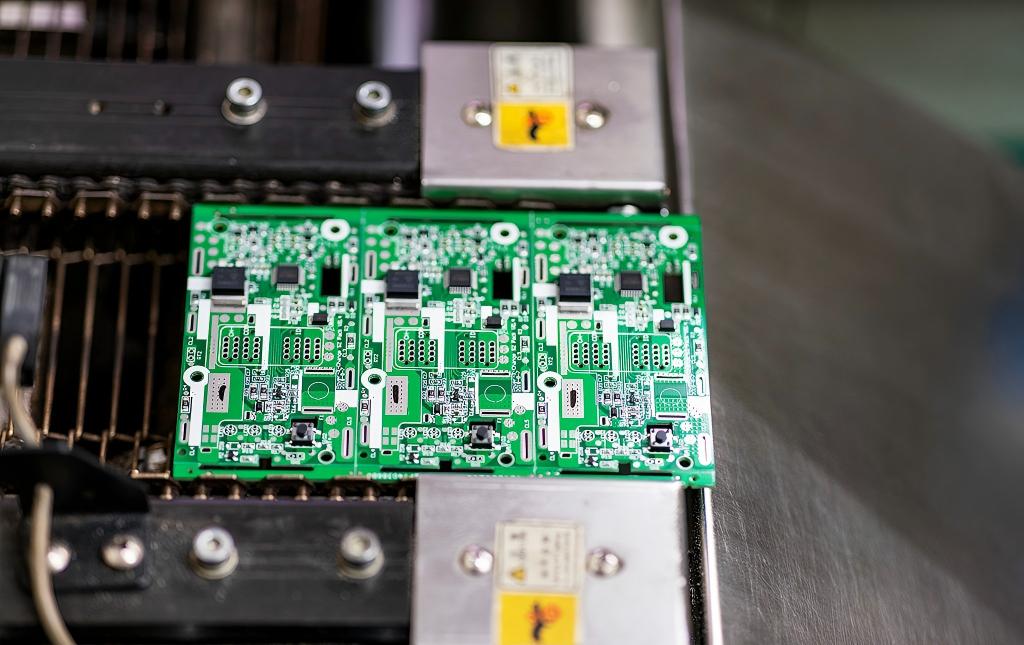
Step 2: System Configuration — Matching Nitrogen Supply Parameters
| Evaluation Item | Input | Reference |
|---|---|---|
| Oven configuration | 8 / 10 / 12 zones, single / dual lane |
8-zone single: 20–30 Nm³/h 10-zone single: 30–40 Nm³/h 12-zone dual: 50–60 Nm³/h |
| Number of production lines | ___ lines | Total demand ≈ per-line demand × number of lines |
| Nitrogen supply method | □ Liquid nitrogen □ On-site generation | If monthly usage > 2000 Nm³, cost comparison recommended |
| Flow margin reserved | □ Yes □ No | Recommended 20%–30% |
Key Selection Considerations
- Flow margin: Allow for peak startup demand and future expansion
- Pressure stability: Recommended 0.4–0.6 MPa; fluctuations affect oxygen control
- Purity matching: Higher purity is not always better — match actual requirements
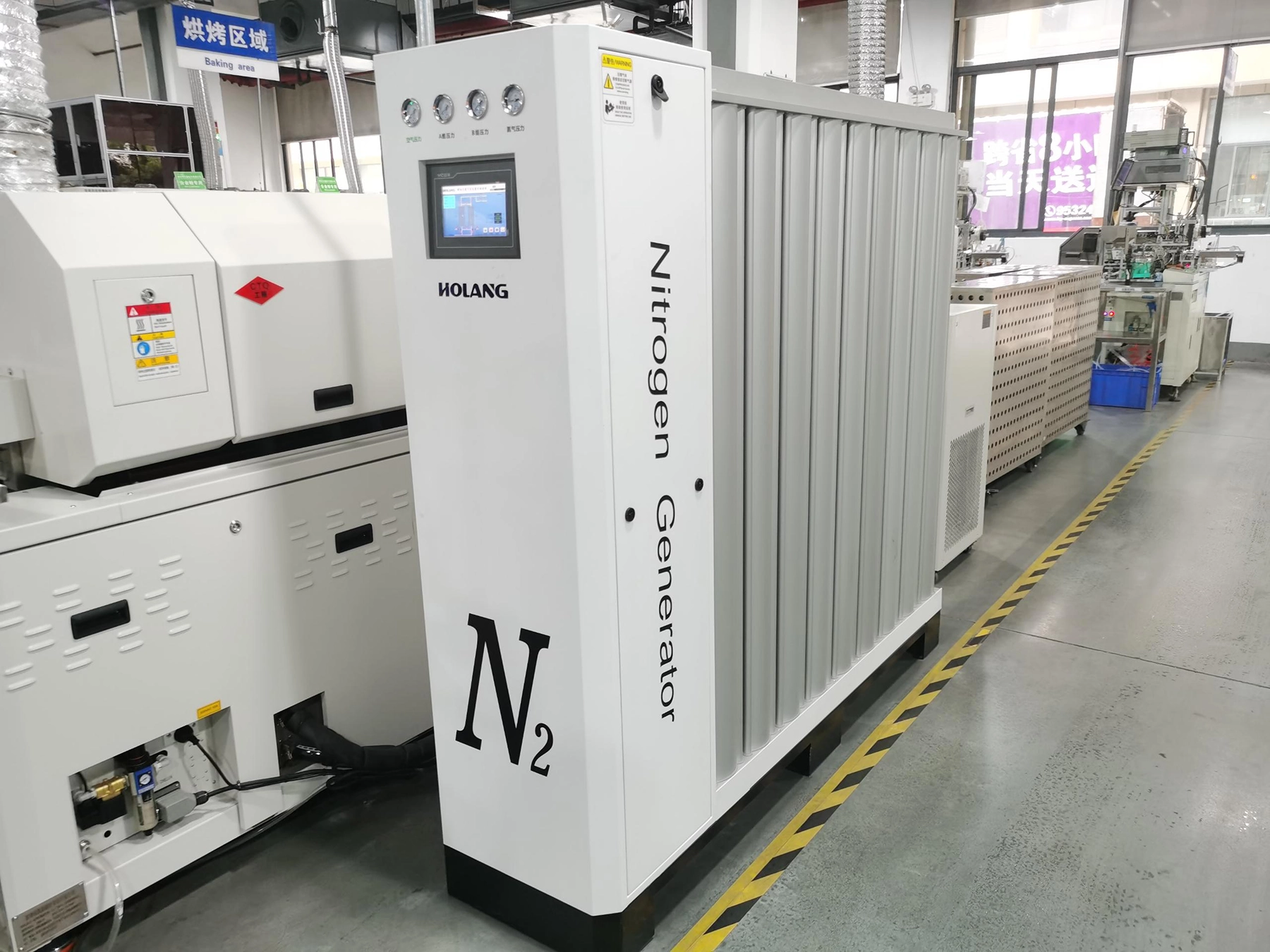
Step 3: Daily Operation — Key Monitoring Indicators
| Parameter | Normal Range | Frequency | Check |
|---|---|---|---|
| Oxygen concentration trend | Within ±10% of setpoint | Daily | □ |
| Instant flow rate | Within ±15% of rated value | Daily | □ |
| Supply pressure | Within ±0.05 MPa | Daily | □ |
| Dew point | ≤ -40°C | Weekly | □ |
| Alarm records | No repeated alarms | Weekly | □ |
Operation Recommendations
- Daily monitoring helps identify most potential issues early
- If abnormalities occur, first check filters, seals, and pipeline leakage
- Keep a printed checklist near the equipment for routine inspection
Step 4: Value Verification — Performance and ROI Evaluation
| Evaluation Item | Yes | No | Notes |
|---|---|---|---|
| Gas cost lower than liquid nitrogen | □ | □ | On-site generation ≈ 0.7 RMB/m³ vs LN₂ ≈ 1.7 RMB/m³ |
| Supply interruption risk eliminated | □ | □ | No reliance on external delivery |
| Oxygen level control more stable | □ | □ | Real-time monitoring, traceable data |
| Reduced management workload | □ | □ | No ordering, logistics, or reconciliation |
| Meets audit/data requirements | □ | □ | Can integrate with MES systems |
Evaluation Result
- 3 or more items checked: Investment delivers clear overall benefits
- Less than 3 items: Revisit earlier steps to optimize system design
Summary
This checklist integrates the full series into a unified workflow:
- Step 1 (Demand Evaluation) → Part 1
- Step 2 (System Matching) → Part 2
- Step 3 (Daily Operation) → Part 3
- Step 4 (Value Verification) → This article
Engineers can use this as a practical reference tool during project planning and execution.
Coming Next
More technical topics will be released in April. Stay tuned.
Contact Information
- Website: https://www.holanggas.com
- Email: marketing@holangchina.com
- Tel: +86-400-0512-711
- Address: No. 51 Jinsigang Road, Wuzhong District, Suzhou, China