


As the second installment in our SMT series, following "Does Reflow Soldering Really Need High-Purity Nitrogen?", this article addresses a more specific engineering challenge: once a production line decides to introduce nitrogen, how should the nitrogen system be precisely configured for reflow ovens of different brands (imported vs. domestic) and specifications (8-zone to 12-zone) to achieve optimal "oven-gas matching" and avoid quality fluctuations and resource waste?
I. The Fundamental Logic: How Oven Type Dictates Nitrogen Demand
The nitrogen consumption of a reflow oven is not a fixed value. It primarily depends on three key structural factors:
-
Chamber Volume: The number of zones and the length of the track directly determine the internal space. A 12-zone dual-track oven typically has a chamber volume more than twice that of an 8-zone single-track oven, naturally leading to higher baseline consumption for filling and maintenance.
-
Sealing Structure Design: Sealing effectiveness varies significantly across brands and generations. Some high-end imported models feature fully sealed chamber designs, offering high nitrogen retention and relatively lower consumption. In contrast, older or economy models, with aged seals and more leak points, can consume over 30% more nitrogen to maintain the same oxygen level.
-
Gas Replacement Method: Ovens using a "continuous flow" supply consume significantly more nitrogen compared to those with "pulse" or "on-demand" designs, which only supplement gas when oxygen levels rise.
II. Reference Data: Nitrogen Consumption by Major Brands
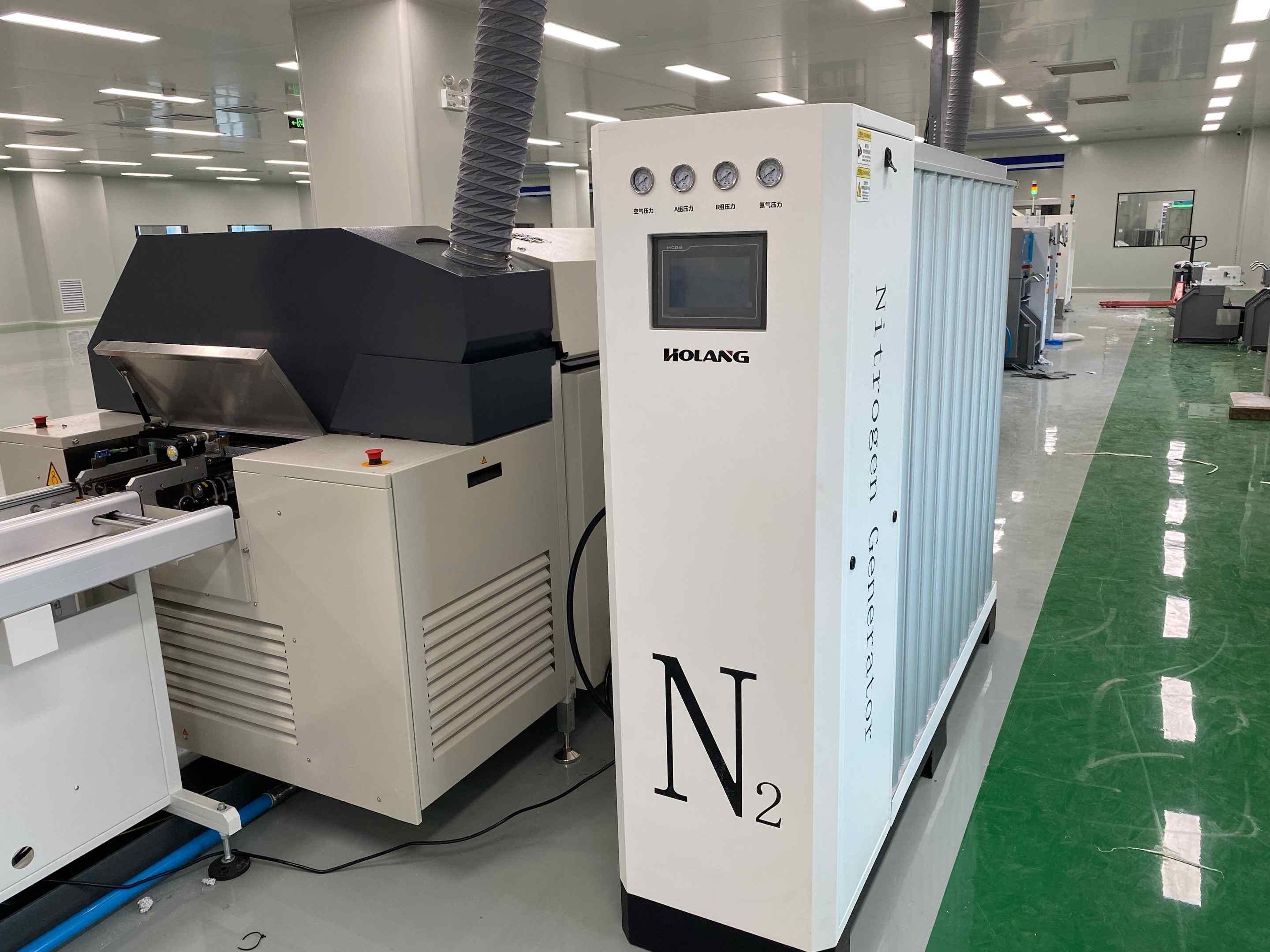
Public technical data from various equipment manufacturers confirms significant differences in nitrogen consumption. The table below shows data from several brands for reference.
| Brand/Model | Zone Configuration | Nitrogen Consumption | Notes |
|---|---|---|---|
| ERSA HOTFLOW 3/14 | 7 heating + 3 cooling | 0–30 m³/h | Closed-loop control, leak-tested, minimum 20ppm |
| ERSA HOTFLOW 3/20 | 10 heating + 4 cooling | 10–25 m³/h (typical) | Smart oxygen adjustment, stable at 20-50ppm |
| Senju 7-zone oven | 7 heating zones | Approx. 12 m³/h | Public data from Senju official website |
| Senju 13-zone oven | 13 heating zones | Approx. 36 m³/h | Public data from Senju official website |
| Heller Vacuum Reflow Oven | 12 heating + vacuum | 9–24 m³/h | Public data from Heller official website |
| Senju Vacuum Nitrogen Oven | 5 heating + 1 vacuum | 24 m³/h (main) + 12 m³/h (vacuum break) | Public data from Senju official website |
Note: The above data are technical parameters published by the respective brands. Actual consumption is influenced by factors such as target oxygen level, product throughput, and oven maintenance status.
III. Estimating Nitrogen Demand for Different Production Scales
Based on industry practice, nitrogen flow can be preliminarily estimated according to oven type, providing a foundation for system planning.
| Oven Type | Typical Configuration | Estimated Flow Range |
|---|---|---|
| 8-zone single-track | Small to medium lines, consumer electronics | 20–30 Nm³/h |
| 10-zone single-track | Mainstream lines, automotive electronics | 30–40 Nm³/h |
| 12-zone dual-track | High-capacity lines, communication modules | 50–60 Nm³/h |
If multiple lines run simultaneously, the total demand is roughly additive. For example, three 12-zone dual-track lines operating together could require over 150 Nm³/h.
Important Note: These are empirical estimates. Actual consumption is significantly influenced by:
-
Target Oxygen Level: The difference in demand between a target of 100ppm versus 1000ppm can be several-fold.
-
Product Throughput: Consumption varies between full-load production and intermittent operation.
-
Oven Maintenance Status: Issues like seal aging and pipeline leaks increase consumption.
IV. Three Key Parameters for Nitrogen System Matching
Configuring a nitrogen system for reflow ovens is more than just "connecting pipes and adjusting pressure." Three parameters require precise attention:
-
Flow Margin: During selection, it is recommended to base calculations on the peak flow when all ovens operate at full load, then add a 20-30% margin. This accounts for: a) the higher instantaneous flow during oven startup for rapid air displacement, and b) future expansion or oven upgrades.
-
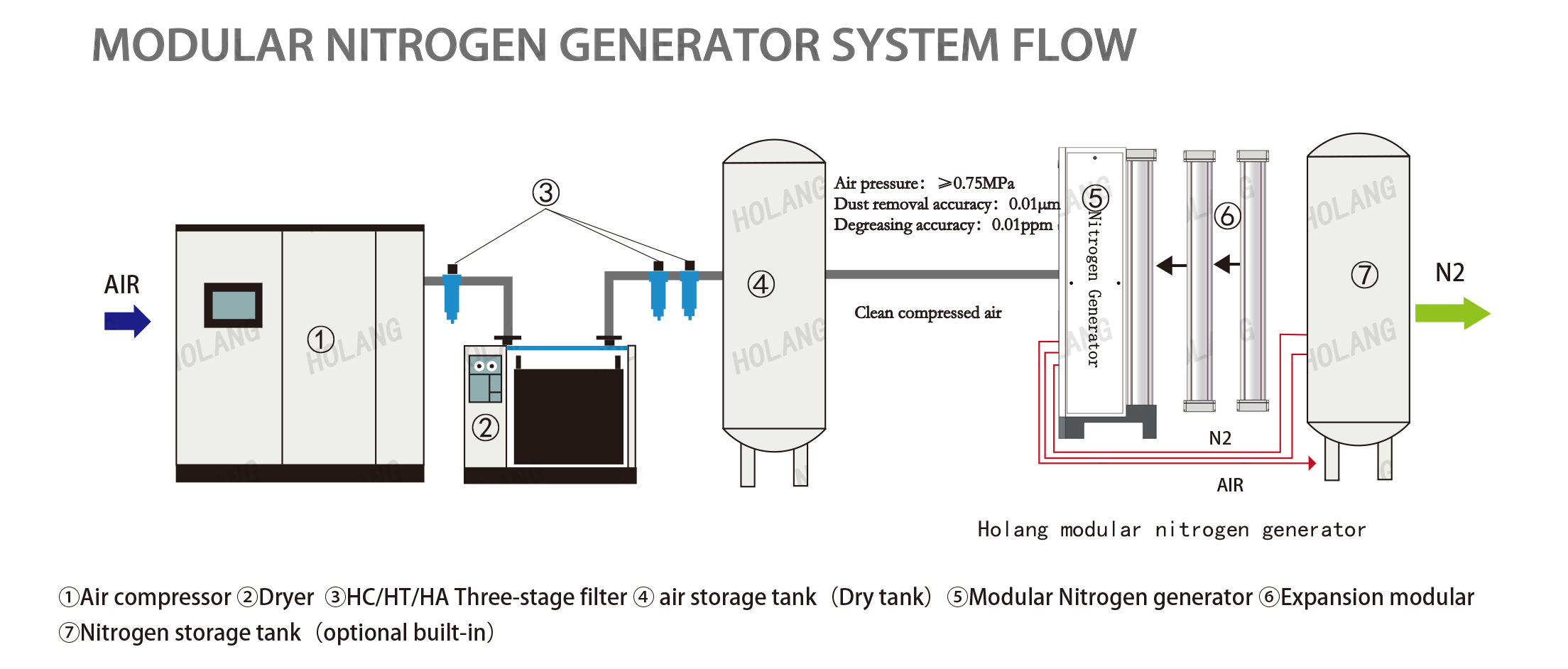
Pressure Stability: Reflow processes typically require a stable nitrogen pressure of 0.4-0.6 MPa. Pressure fluctuations directly impact chamber oxygen stability. Modular nitrogen generators usually include buffer tanks to smooth out instantaneous demands. For longer plant pipelines, consider installing a pressure regulator at the oven inlet.
-
Purity Matching: Purity should match process requirements; higher is not always better.
-
Consumer electronics: 99.9% is generally sufficient.
-
Automotive electronics: 99.99% is recommended.
-
Medical/Aerospace: 99.999% may be required.
If a process only needs 100ppm oxygen (corresponding to 99.99% purity), pursuing 99.999% only increases costs without providing additional quality benefits.
-
V. Common Misconceptions: Why is Oxygen Level Still Not Meeting Expectations?
Our service experience shows that when chamber oxygen levels fail to meet expectations after nitrogen is connected, the problem often lies not with the gas source, but in these areas:
-
Misconception 1: Monitoring Inlet Purity Only, Not the Chamber. Source purity does not equal chamber purity. Pipeline leaks, loose connections, and poor oven sealing can allow air ingress. Recommendation: Install oxygen sensors in the preheat and reflow zones to obtain real data.
-
Misconception 2: Constant High Flow Causes Waste. Some lines supply nitrogen 24/7 at a constant rate, even during standby. Modern modular PSA systems support on-demand production, adjusting output based on actual line load to avoid waste.
-
Misconception 3: Providing Only the Gas Source, Not the Monitoring System. Without data, effective control is impossible. Connecting oxygen data to the MES system enables process traceability and provides alerts for abnormalities, preventing batch scrap.
VI. Selection Recommendations for Different Factory Scales
Based on the analysis above, the following nitrogen system configurations are recommended for different production scales:
Scenario A: 1-2 Single-Track 8-10 Zone Ovens
-
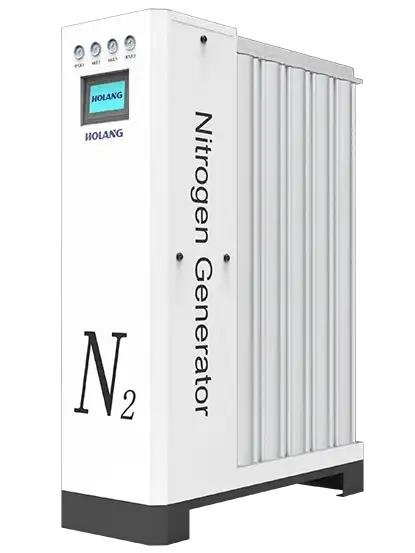
Recommended Configuration: Parallel NPL05 + NPL03 (or a single NPL08)
-
Typical Flow: 20–40 Nm³/h
-
Purity Configuration: 99.99%
Scenario B: 3-5 Mixed Lines (Including 12-Zone Dual-Track)
-
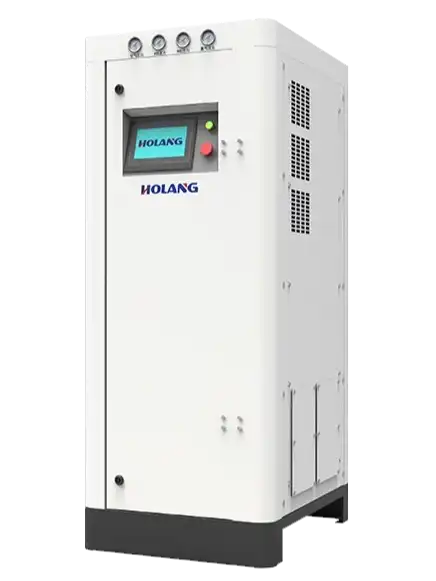
Recommended Configuration: Multiple parallel modules (e.g., NPL07+NPL08+NPL09)
-
Typical Flow: 50–100 Nm³/h
-
Purity Configuration: 99.99% or 99.999% (based on product requirements)
Scenario C: 10+ Large-Scale Lines
-
Recommended Solution: Centralized supply with multiple parallel modules
-
Typical Flow: 150+ Nm³/h
-
Core Advantages: Modular redundancy (maintenance on one module doesn't halt production); future expansion by adding modules without replacing the main unit.
📢 Conclusion:
Matching nitrogen to reflow ovens essentially answers three core questions:
-
How much gas do my ovens need? – Estimate flow based on brand/model, zone count, and track configuration.
-
What purity does my product need? – Determine the target oxygen level based on product grade.
-
Is my system stable? – Verify with actual measurements and ensure with a monitoring system.
Answering these clearly transforms the nitrogen system from a vague "consumable expense" into a true "process capability" ensuring stable line operation and product quality.