


Low-Flow On-Site Nitrogen Generation for SMT Reflow Soldering: Confirm These 6 Data Points With Manufacturers to Avoid Selecting the Wrong Equipment
Before purchasing a modular PSA nitrogen generator, do not provide only “purity and flow rate.”
When configuring low-flow on-site nitrogen generation for SMT reflow soldering, procurement personnel often first provide manufacturers with two figures: required purity and required flow rate.
These two figures are important, but they are not enough.
Even with the same purity and flow rate, the final configuration may differ completely if the nitrogen-use period, peak duration, equipment inlet pressure, or on-site compressed-air conditions differ. If too little information is provided, manufacturers can only add margins based on experience. If the margin is too small, gas supply may be insufficient during production peaks; if it is too large, equipment and supporting investment will increase.
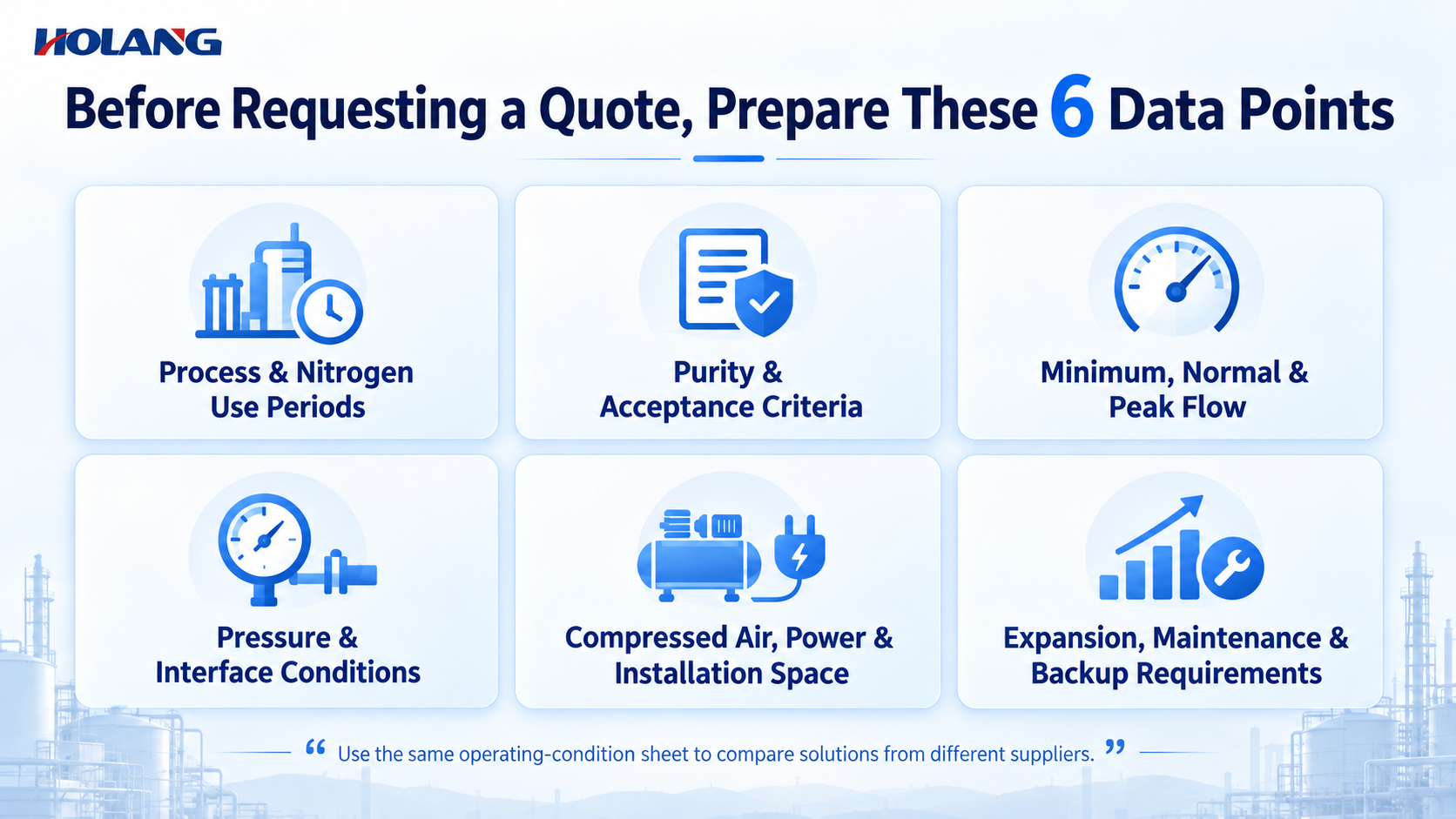
Before requesting a quotation or beginning technical selection, it is recommended to prepare the following six data points.
1. Reflow Soldering Process and Actual Nitrogen-Use Periods
First, clearly explain where and when nitrogen is used.
At minimum, manufacturers need to know:
- The brand, model, and quantity of reflow ovens;
- Which stage of the reflow soldering process uses nitrogen;
- The number of operating shifts per day;
- The duration of each continuous operating period;
- Whether nitrogen is required during startup, preheating, production, line changeover, and shutdown;
- Whether multiple reflow ovens operate simultaneously;
- Whether nitrogen-use conditions change when switching products or processes.
“Eight hours of production per day” and “eight total production hours split into several periods” are not the same operating condition. The former is closer to a continuous load, while the latter also requires consideration of repeated startup and shutdown, re-establishment of process conditions, and whether nitrogen-use periods overlap.
If the production schedule fluctuates significantly, also inform the manufacturer about normal shifts and high-load shifts.
Recommended Information for Manufacturers
| Item | Information Required |
|---|---|
| Reflow oven | Brand, model, and quantity |
| Operating status | Trial production, intermittent production, or continuous production |
| Daily operating time | Daily shifts and duration of each shift |
| Simultaneous operation | Normal number and maximum number of operating units |
| Process changes | Whether gas-use conditions change during line or product changes |
2. Required Nitrogen Purity and Acceptance Criteria
Writing only “99.99% nitrogen is required” is still not enough.
Procurement personnel should also confirm whether this requirement comes from the reflow oven manual, the equipment manufacturer’s recommendation, internal process documentation, or on-site experience. Requirements from different sources should not be mixed.
At the same time, confirm with the nitrogen generator manufacturer:
- Whether the requirement is expressed as nitrogen purity or oxygen content;
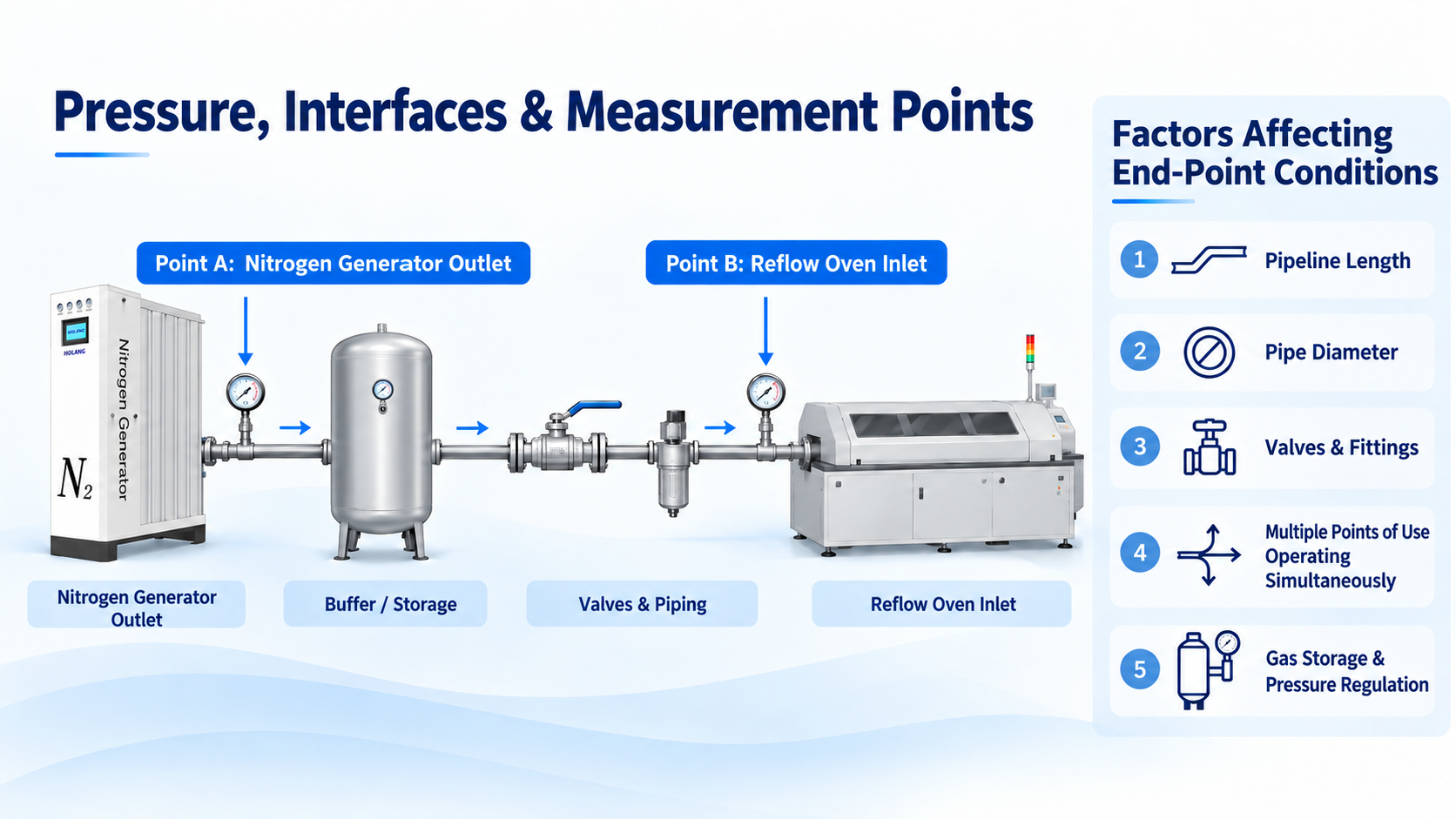
- Whether the measurement point is at the nitrogen generator outlet, the end of the main pipeline, or the reflow oven inlet;
- When data collection begins after equipment startup;
- What fluctuation is allowed during normal production;
- Which measuring instrument will be used;
- The instrument’s range, condition, and calibration requirements;
- The corresponding gas-supply flow rate and outlet pressure during acceptance.
A common issue occurs when the manufacturer quotes based on nitrogen generator outlet data, while the customer accepts the equipment based on data at the reflow oven inlet. Gas storage, piping, valves, and multiple gas-use points lie in between. If both parties do not agree on the measurement location in advance, disputes can easily arise at delivery.
Higher purity is not always better. First meet process requirements, then compare the corresponding configuration and operating costs. As purity increases, the effective nitrogen output and compressed-air demand of a PSA nitrogen generator may change. The specific relationship depends on equipment design and operating method.
3. Minimum, Normal, and Peak Flow Rates
Do not provide only one average flow rate.
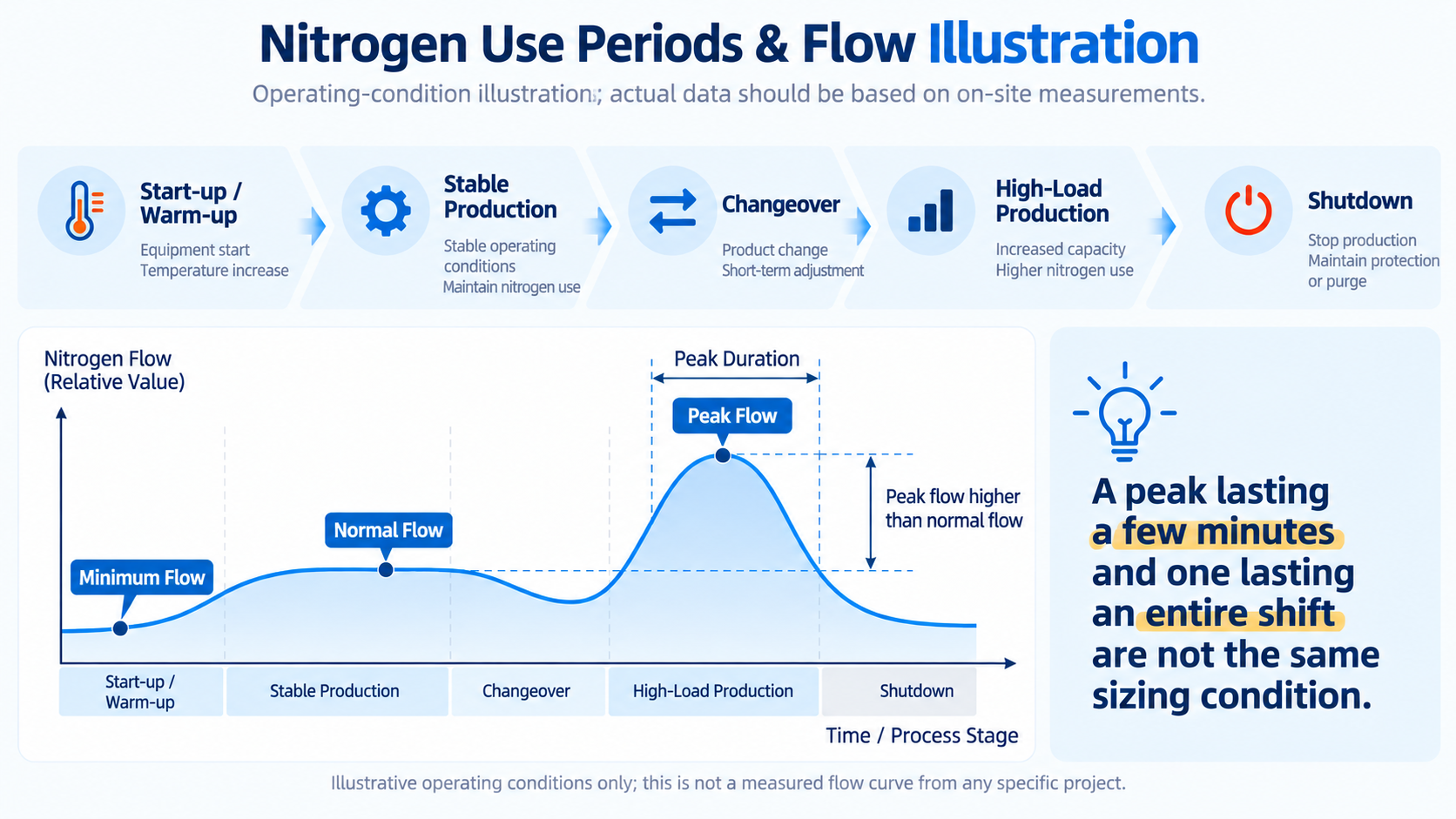
At minimum, modular nitrogen-generator selection should distinguish among three flow rates:
| Flow Type | What It Represents | Why It Must Be Confirmed |
|---|---|---|
| Minimum flow | Nitrogen demand during low load, single-line operation, or partial equipment operation | Used to determine low-load operating method |
| Normal flow | The most common continuous nitrogen demand during normal production | Used to define the main operating condition |
| Peak flow | Maximum nitrogen demand during simultaneous startup of multiple units or high-load production | Used to verify whether the system can cover short-term or sustained peaks |
The duration of peak flow should also be specified.
A peak lasting several minutes and high-load operation lasting an entire shift may require different solutions. For the former, gas storage and control strategies can be evaluated; for the latter, the nitrogen generation system often needs to continuously provide the required capacity. The specific solution should be calculated by the manufacturer according to actual operating conditions and should not rely only on a gas tank to “cover” the peak.
If flow data is not yet available, it can be supplemented by:
- Reviewing the nitrogen interface and recommended gas-use conditions in the reflow oven manual;
- Requesting normal and peak flow data from the reflow oven manufacturer;
- Recording actual data when measurement conditions are available on the existing gas-supply pipeline;
- Separately recording single-unit operation and simultaneous operation of multiple units.
Do not directly copy data from other factories. Oven models, sealing conditions, process settings, and operating methods may differ, as may actual nitrogen consumption.
4. Nitrogen Pressure and Interface Conditions
Nitrogen output from a nitrogen generator does not necessarily mean nitrogen can be delivered to the reflow oven as required.
Before procurement, confirm:
- Required pressure at the reflow oven inlet;
- Whether the pressure requirement is a normal value, minimum value, or allowable range;
- Whether the measurement point is at the equipment outlet or oven inlet;
- The distance between the nitrogen generator and the reflow oven;
- Pipeline material, diameter, and existing layout;
- Whether the system passes through a gas tank, filter, pressure-reducing valve, or flow-control device;
- Whether multiple gas-use points share the same main pipeline;
- Who is responsible for confirming interface specifications and connection requirements.
Pipeline distance, diameter, valves, and simultaneous gas use all affect terminal pressure. A solution should not only guarantee nitrogen generator outlet pressure; it should also verify the actual conditions when nitrogen reaches the reflow oven inlet.
The technical agreement should clearly state the relationship among flow rate, purity, and pressure, avoiding the comparison of maximum parameters from different operating conditions.
5. On-Site Compressed Air, Power Supply, and Installation Space
PSA on-site nitrogen generation relies on compressed air. If the upstream air supply does not meet requirements, stable nitrogen performance cannot be ensured.
The site conditions provided to manufacturers should include:
Compressed Air
- Existing air-compressor type and operating condition;
- Pressure and flow available for the project;
- Whether other equipment shares the same air source;
- Whether pressure fluctuates during peak production;
- Compressed-air filtration, moisture, and oil-control conditions;
- Whether air receivers, dryers, and filtration equipment are already available.
Do not provide only the air-compressor nameplate parameters. What manufacturers need to know is how much stable, usable compressed-air capacity remains during normal factory production.
Power Conditions
- Site voltage and frequency;
- Available power capacity;
- Distance between the distribution point and equipment installation location;
- Who will supply power and wiring for the air compressor, air treatment equipment, and nitrogen generator.
Nitrogen generator main-unit power should not be treated as the energy consumption of the complete system. When comparing operating costs, include the air compressor, air treatment equipment, and other supporting equipment.
Installation Conditions
- Available installation area length, width, and height;
- Equipment transportation and positioning routes;
- Space for maintenance, disassembly, and future expansion;
- Piping inlet and outlet directions;
- Ventilation, drainage, and ambient-temperature conditions;
- Distance between the equipment and reflow oven.
“Space is available on site” is too general. It is best to provide dimensions, photos, and a simple layout drawing so the manufacturer can determine before quotation whether the equipment can be transported in, installed, and maintained.
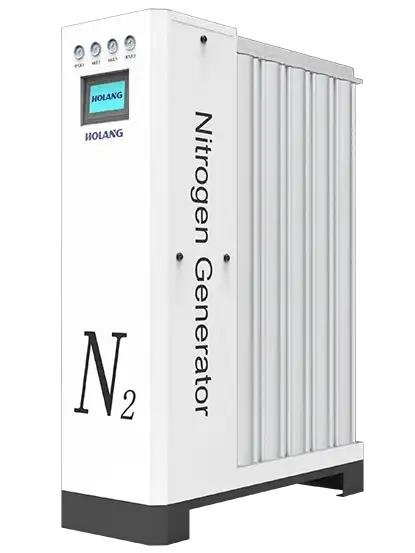
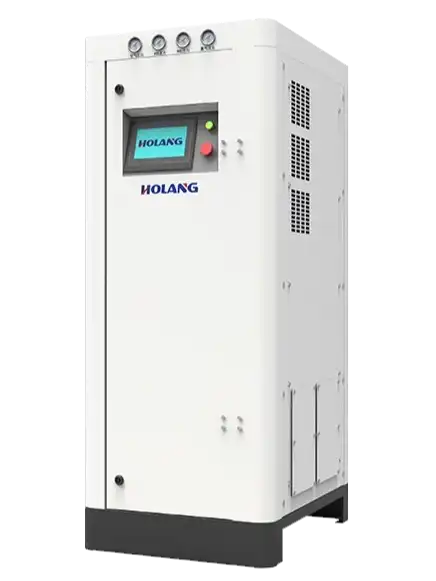
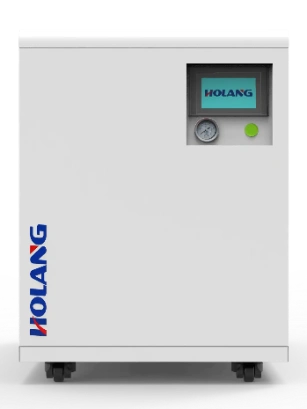
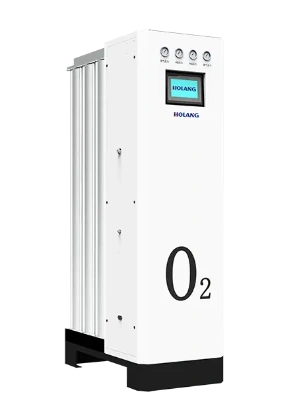
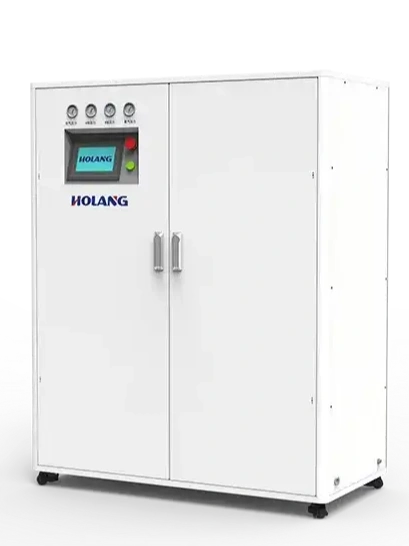
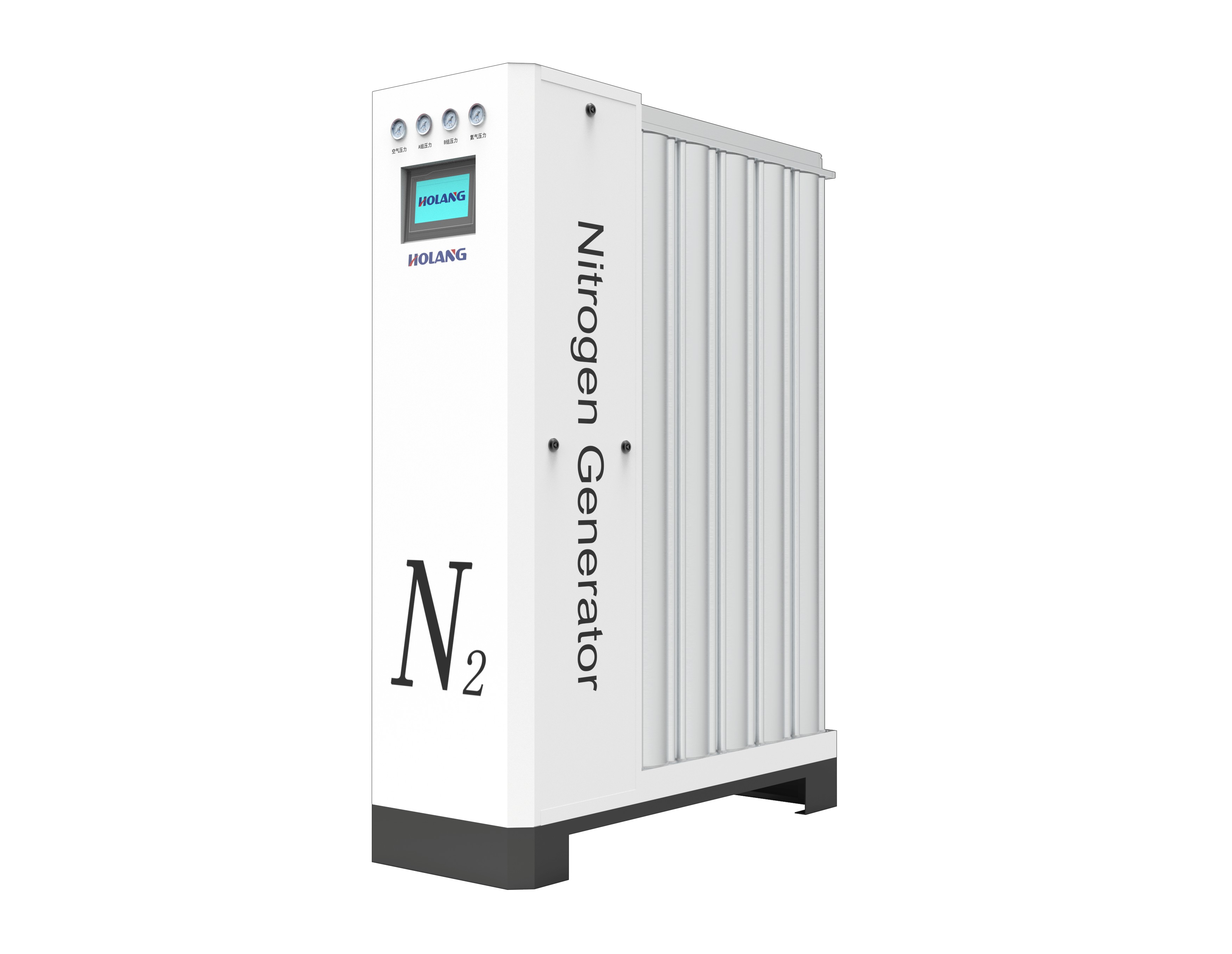
HOLANG’s publicly available NPL Series product information also lists operating conditions such as compressed-air quality, inlet pressure, and working environment. Specific projects should still be subject to the relevant specifications and technical selection results. General website parameters should not be treated directly as on-site conclusions.
6. Future Expansion, Maintenance, and Backup Requirements
The value of modular capability often becomes evident not on the first day of operation, but when production lines change or equipment requires maintenance.
Before procurement, tell the manufacturer:
- Whether additional reflow ovens will be added;
- How many units are expected and when they will be added;
- Whether the same process requirements will apply after expansion;
- Whether compressed air, power, piping, and installation space can be reserved on site;
- Whether reduced gas-supply capacity is acceptable during maintenance of an individual module;
- Whether production can be paused during maintenance;
- What impact a gas interruption would have;
- Whether bottled nitrogen, liquid nitrogen, or another backup gas source is required;
- How long the backup gas source must support production;
- How the backup gas source will be switched.
“Modules can be added” is only the first step of expansion. A practical expansion plan should also answer:
- Can existing modules remain in use?
- Can the control system recognize and coordinate additional modules?
- Does upstream compressed air still have sufficient capacity?
- Do air treatment, gas storage, and piping require adjustment?
- Is a gas interruption required during expansion?
- How will the expanded system be re-accepted?
Likewise, “module maintenance will not affect production” should not be promised generally. Whether the remaining modules can still meet flow, purity, and pressure requirements after one module is shut down must be confirmed based on the specific configuration and production load.
After Receiving Supplier Proposals, Check These Five Questions
- What purity, pressure, and inlet-air conditions correspond to the quoted flow rate?
- Does the solution cover normal flow or peak flow?
- Does the quotation include compressed air, air treatment, gas storage, measuring instruments, piping, and commissioning?
- Where and when are acceptance indicators measured, and how are they recorded?
- During expansion and maintenance, how much effective nitrogen can the system still provide?
If these five questions do not have clear answers, even a detailed quotation does not mean equipment selection has been completed.
To evaluate whether an NPL modular PSA nitrogen generator is suitable for low-flow on-site nitrogen generation in SMT reflow soldering, submit the above operating-condition information to HOLANG. Technical personnel will verify the configuration based on actual nitrogen-use periods, gas requirements, load changes, and site conditions.
Service Hotline: 400-0512-711