


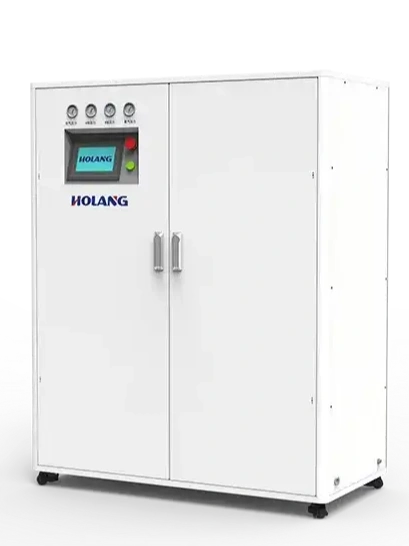

For many companies entering metal 3D printing, the first concerns are usually the equipment itself: How much does the printer cost? Are material costs high? Is post-processing complicated?
But once production becomes more stable and continuous, many manufacturers realize that the real bottleneck is not always the printer — it is often the gas supply system.
Especially in metal 3D printing applications, as print times become longer, the number of machines increases, and production shifts toward continuous operation, the stability, manageability, and scalability of the gas supply begin to directly affect production efficiency.
That is why deciding whether to install a nitrogen generator is not simply about whether the equipment is “worth buying.” A more important question is:
Has your current gas supply method started affecting production?
If your operation is still focused on occasional prototyping with relatively low gas consumption, gas cylinders may still be sufficient.
If gas demand is increasing but production schedules are not yet stable, liquid nitrogen may work as a transitional solution.
However, if your facility has already moved into continuous production, operates multiple printers simultaneously, or frequently experiences scheduling disruptions caused by gas management, it may be time to seriously evaluate an on-site nitrogen generation system.
Before calculating detailed gas costs, it is worth checking whether your operation is already showing the following four signs.
Sign 1: The Print Is Still Running, but the Gas Supply Is Already Becoming Unstable
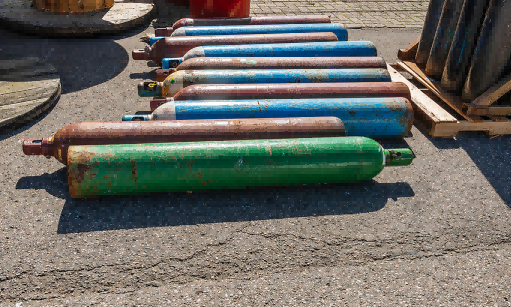
Many companies start with gas cylinders because they are simple to deploy, flexible, and require relatively low upfront investment. For low-frequency prototyping, this approach is usually manageable.
But as print jobs become longer and machine utilization increases, several issues may gradually appear:
- Cylinder pressure starts dropping before the print job is finished;
- Operators need to frequently monitor remaining gas levels;
- Cylinder replacement interrupts production schedules;
- After switching cylinders, pressure and gas stability need to be checked again.
At this stage, the real cost increase is often not just the gas itself. It also includes:
- Additional operator attention;
- Production interruptions caused by gas management;
- Reduced scheduling stability.
If your team is increasingly spending time replacing cylinders, checking pressure, or waiting for gas supply adjustments, your current supply method may no longer match your production pace.
Sign 2: Liquid Nitrogen Delivery Is Starting to Affect Production Scheduling
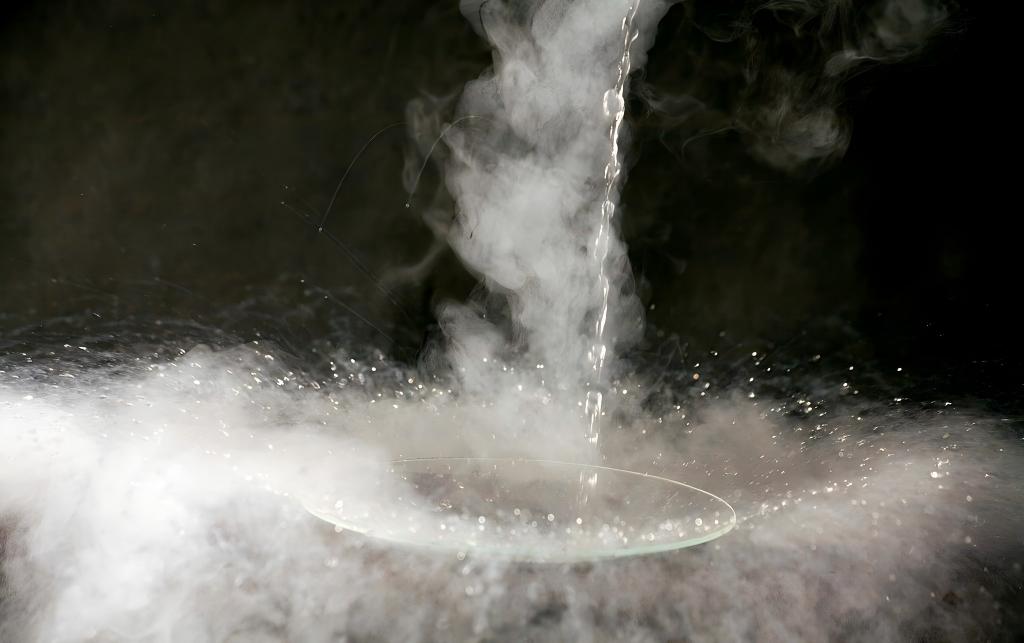
For some medium-consumption applications, liquid nitrogen can support production effectively for a certain period of time. However, one commonly overlooked issue with liquid nitrogen is that the supply schedule depends on external delivery.
When production plans are stable and delivery schedules are predictable, liquid nitrogen can operate smoothly. But problems may begin to appear when:
- Gas consumption suddenly increases;
- Production schedules change unexpectedly;
- Print durations become longer;
- Deliveries cannot keep up with demand.
In some cases, production stops not because of equipment failure, but simply because the gas supply has not arrived in time. These losses may not appear directly in the per-unit gas price, but they often show up in:
- Production coordination;
- Waiting time;
- On-site management workload;
- Reduced operational continuity.
If liquid nitrogen delivery, storage, or refill timing has started affecting production planning, then gas supply controllability should become part of your cost evaluation — not just gas price alone.
Sign 3: Print Quality and Powder Condition Are Becoming Less Stable
In some metal 3D printing applications, atmosphere stability can influence:
- Part consistency;
- Surface quality;
- Powder recycling performance;
- Post-processing difficulty;
- Rework frequency.
These problems do not always lead to complete batch failures. More often, they appear as smaller but continuous losses, such as:
- Inconsistent print results for similar parts;
- Surface quality fluctuations;
- Increased post-processing effort;
- More frequent rework;
- Lower powder reuse efficiency.
If your operation mainly focuses on occasional prototyping or lower-cost materials, these issues may not seem significant.
But if:
- Printed parts have high value;
- Material costs are high;
- Production has moved toward batch manufacturing;
then long-term losses caused by atmosphere instability become much harder to ignore.
At that point, comparing cylinders, liquid nitrogen, and on-site nitrogen generation should not be limited to gas cost alone. The more important questions are:
- Which option better supports stable production?
- Which option may help reduce rework?
- Which solution is better suited for long-term continuous operation?
Sign 4: As More Printers Are Added, Gas Management Becomes Increasingly Difficult
When operating one or two printers, cylinders or liquid nitrogen may still be manageable.But as the number of machines increases, print times become longer, and production schedules become denser, gas supply management often becomes significantly more complicated.
Typical changes include:
- Continuous growth in gas consumption;
- More difficult pressure and flow coordination between multiple machines;
- More frequent cylinder replacement;
- Increased liquid nitrogen refill frequency;
- More staff time spent managing gas supply;
- Additional pipeline and supply adjustments when expanding production.
These issues usually appear gradually during expansion rather than all at once.
For this reason, if your facility plans to expand capacity within the next 6–12 months, or if additional printers are already being added, it is not ideal to evaluate gas supply only based on current consumption.
Scalability should also be considered early in the planning process.
A Simple Way to Make an Initial Assessment
Different stages of 3D printing production often require different gas supply approaches.
| Production Situation | More Suitable Option |
|---|---|
| Occasional prototyping, low gas usage, unstable production rhythm | Gas cylinders |
| Increasing gas demand but not yet stable continuous production | Liquid nitrogen |
| Multiple printers running with continuous production requirements | On-site nitrogen generation |
| Production scheduling frequently affected by gas management or delivery | Evaluate a nitrogen generator |
| Future expansion plans requiring easier scalability | Evaluate a modular nitrogen generation system early |
It is important to understand that this decision is not simply about “which gas option is cheaper.”
The real question is: Has the problem shifted from gas purchasing cost to production stability?
When Is It Worth Seriously Evaluating a Nitrogen Generator for 3D Printing?
If your facility is already experiencing the following situations:
- Longer continuous production hours;
- Multiple printers operating simultaneously;
- Higher requirements for atmosphere stability;
- Gas management affecting production rhythm;
- Future expansion plans;
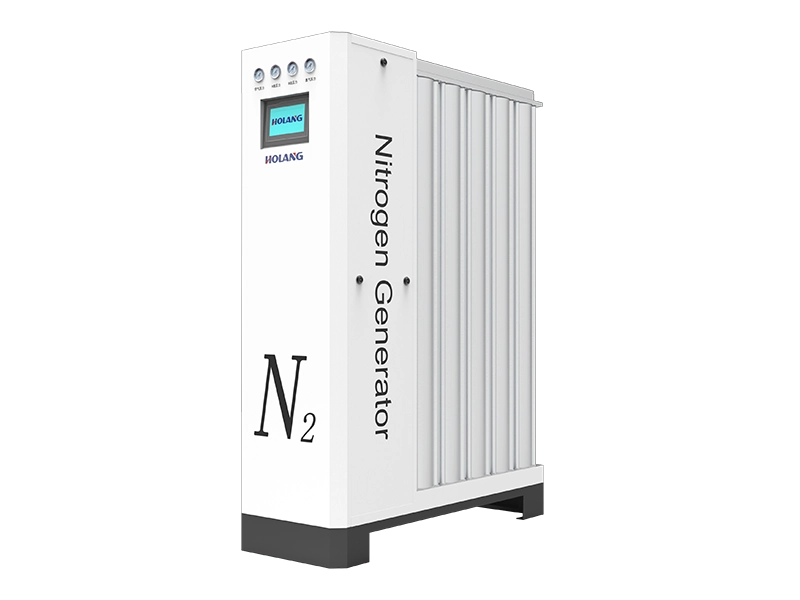
then an on-site nitrogen generation system may be worth evaluating. Before discussing a solution, it is helpful to prepare the following information:
- Current 3D printing process;
- Main printing materials;
- Number of machines and operating hours;
- Current gas supply method;
- Estimated gas consumption or monthly gas cost;
- Future expansion plans.
The clearer this information is, the easier it becomes to determine whether on-site nitrogen generation is suitable and which type of solution may fit the application best.
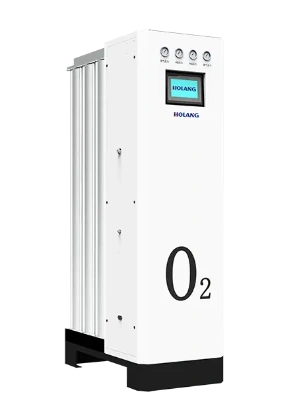
As a modular nitrogen generator manufacturer, HOLANG specializes in the development and manufacturing of modular nitrogen generation systems. Based on different 3D printing applications, gas consumption requirements, purity targets, equipment quantity, and installation conditions, HOLANG can assist customers in evaluating whether a modular nitrogen generator solution is suitable for their production environment.