




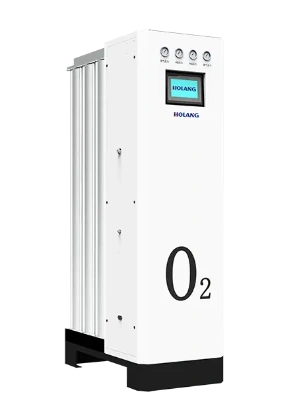
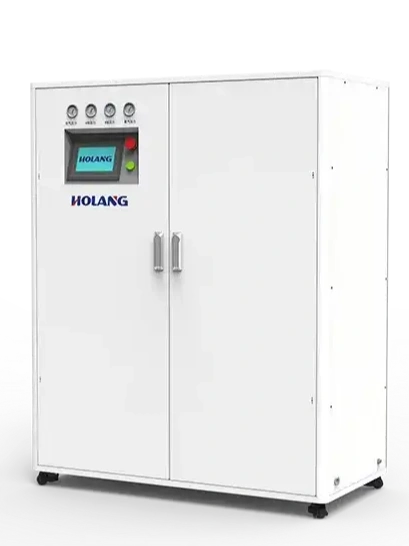
When selecting a modular nitrogen generator manufacturer for SMT reflow soldering, do not compare only quotations, maximum purity, and equipment appearance.
What procurement teams really need to verify is whether the supplier can select equipment based on the actual operating conditions of the reflow oven, explain the applicable conditions of the equipment’s capabilities, deliver a complete gas supply system, and clarify who will be responsible for commissioning, maintenance, and capacity expansion after the equipment is put into operation.
This is especially important for low-flow on-site nitrogen generation projects, where the design margin is usually not as wide as that of large centralized gas supply systems. If flow, purity, pressure, or compressed-air conditions are assessed incorrectly, the equipment may barely meet normal operating conditions but fail to cover startup, high-load production, or simultaneous gas consumption by multiple production lines.
Step 1: Confirm Whether the Supplier Truly Understands Nitrogen Use in SMT Reflow Soldering
“Used for SMT reflow soldering” is not a complete basis for equipment selection.
Different reflow ovens may have different nitrogen interfaces, gas consumption levels, and process requirements. Even for the same equipment model, actual nitrogen demand may change with production takt time, oxygen-content settings, and operating methods.
Before recommending a nitrogen generator, the supplier should at least ask about:
- The brand, model, and quantity of reflow ovens;
- The normal and peak flow rates of each unit and all units combined;
- The oxygen-content or nitrogen-purity requirements specified by the equipment manufacturer or process documentation;
- Nitrogen inlet pressure, dew point, and cleanliness requirements;
- Daily operating shifts and continuous operating hours;
- Whether multiple units will start simultaneously or operate at high load at the same time;
- The pressure, flow rate, and quality of on-site compressed air;
- Power supply, ventilation, piping, and installation space;
- The impact of nitrogen interruption on production;
- Whether additional reflow ovens or production lines are planned in the future.
If a supplier only asks, “What purity do you need?” and immediately provides a model and quotation, the basis for that selection is usually incomplete.
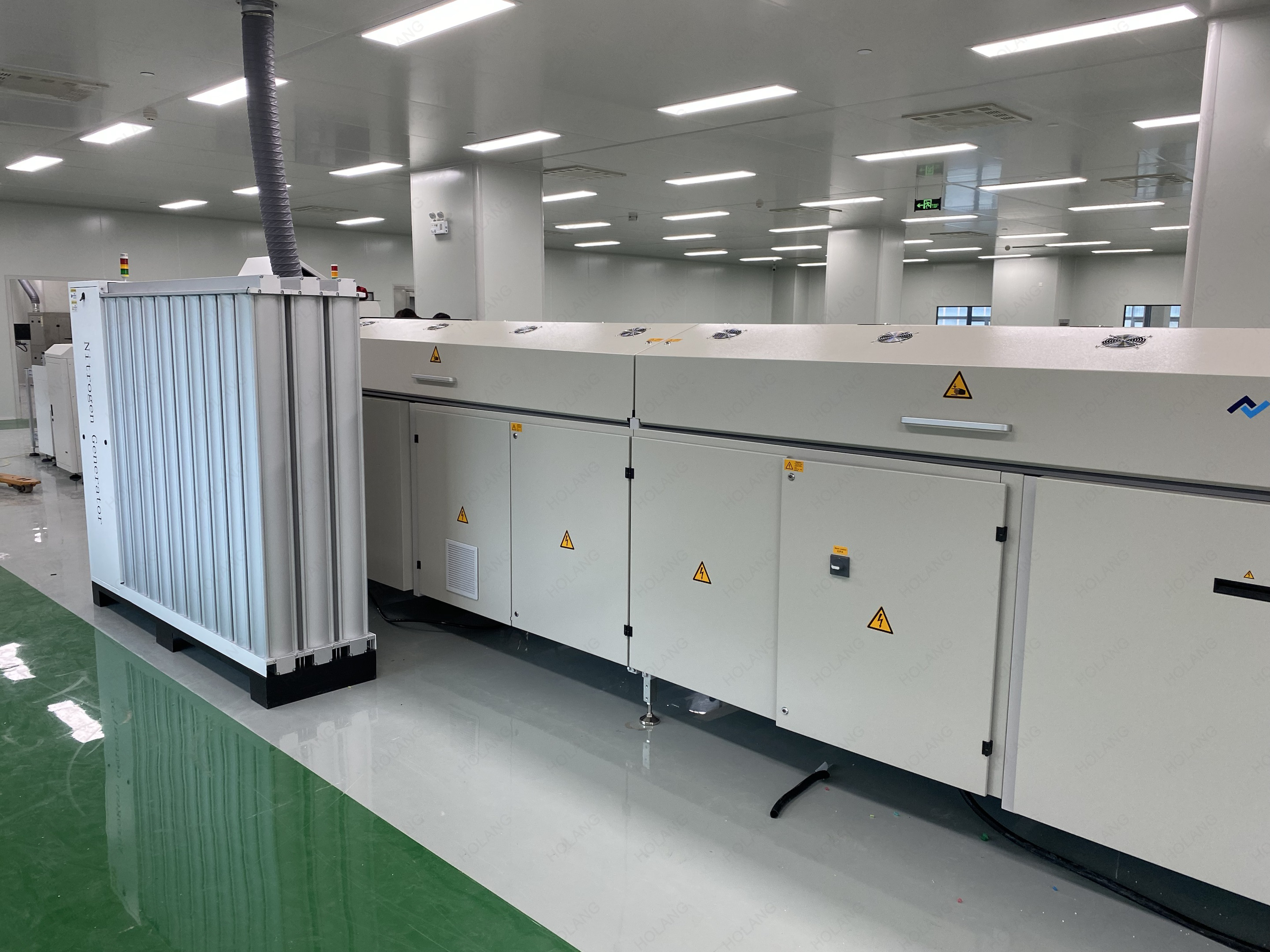
Step 2: Verify Whether Flow and Purity Can Be Achieved Simultaneously
Nitrogen-generator flow rate and purity are not two independent parameters.
For PSA nitrogen generators, increasing nitrogen purity may change effective nitrogen output and compressed-air demand. The exact relationship depends on equipment design, configuration, and operating method. Therefore, procurement personnel should not directly combine the “maximum flow rate” and “highest purity” shown on a brochure as the actual operating point of the equipment.
When evaluating suppliers, ask them to clearly specify:
- The nitrogen purity or residual oxygen condition corresponding to the quotation;
- The effective flow rate that can be continuously supplied under that condition;
- The inlet pressure and ambient conditions corresponding to the flow data;
- How normal and peak operating conditions will each be met;
- Whether the data comes from specifications, test records, or calculations;
- How flow and purity will be adjusted when operating conditions change.
If a proposal only states “maximum purity of 99.999%” and “maximum flow rate,” without explaining whether both can be achieved under the same operating conditions, it should not be used as the basis for a procurement decision.
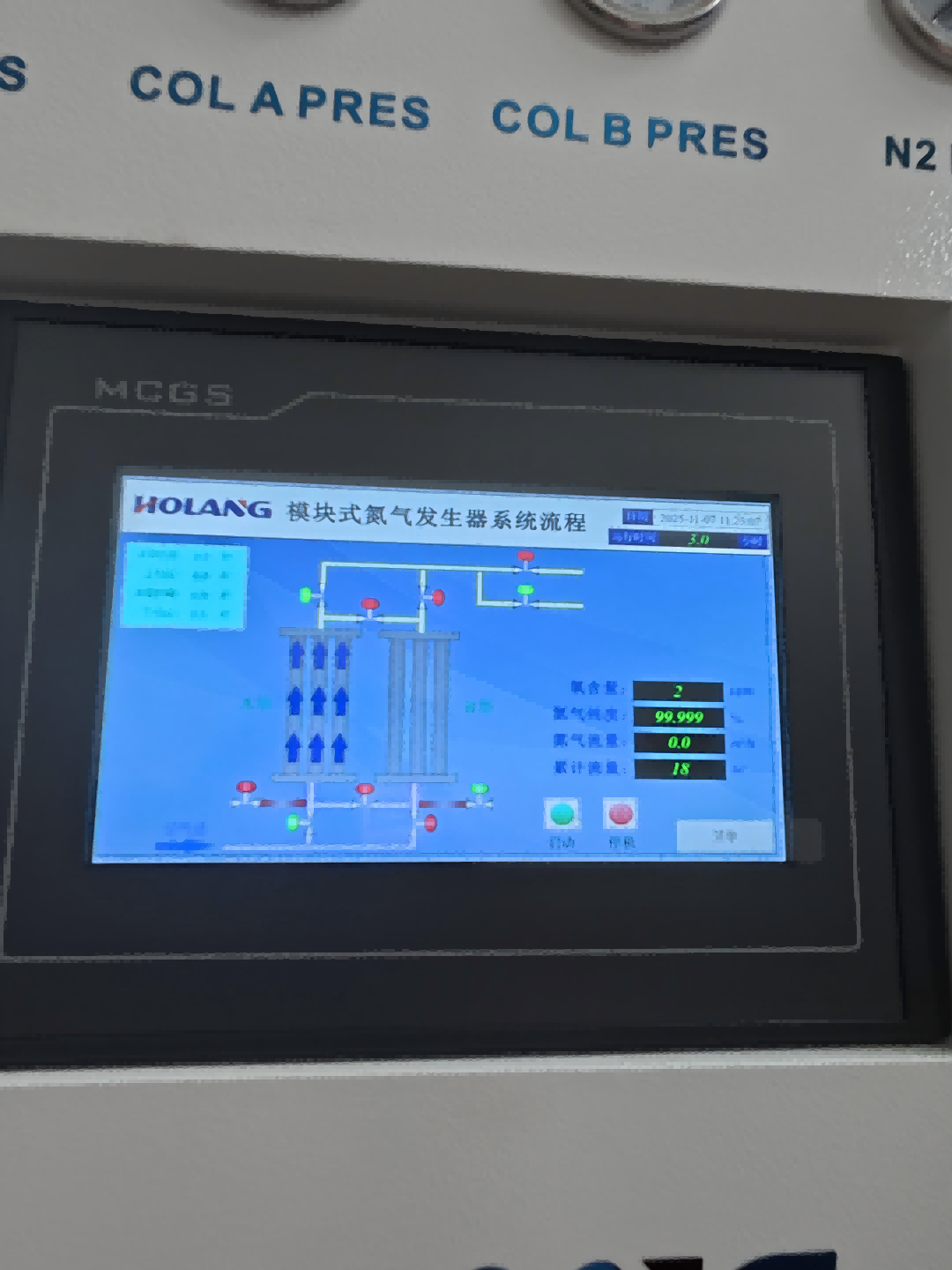
Step 3: Define How “Low Flow” Is Actually Defined
Low flow is not a fixed equipment parameter.
For a pilot line operating for a short period and a mass-production line operating continuously every day, equipment configuration, gas-storage requirements, and backup solutions may differ even if their instantaneous flow rates are similar.
Before procurement, low-flow demand should be further broken down:
| Verification Item | Question to Confirm |
|---|---|
| Normal flow rate | How much nitrogen is continuously required during stable production? |
| Peak flow rate | Does gas consumption increase during startup, process changes, or simultaneous operation of multiple units? |
| Continuity | How many hours per day does the equipment operate, and is continuous cross-shift gas supply required? |
| Fluctuation range | Does nitrogen consumption change with products, takt time, or the number of operating units? |
| Expansion plan | Will additional reflow ovens or other nitrogen-use points be added later? |
| Backup requirement | Is gas-supply interruption acceptable during equipment maintenance or shutdown? |
If measured data is not currently available, first review the reflow oven manual or confirm recommended flow rates and interface conditions with the equipment manufacturer. Data from other factories or different oven models should not be used as a substitute.
Step 4: Verify Whether Modularity Is Truly Expandable
“Modular” should not be judged only by equipment appearance or marketing terminology.
What matters for procurement is whether the existing equipment can continue to be used when nitrogen demand increases, how additional modules will be connected, whether the control system supports expansion, and whether compressed air, piping, power supply, and installation space have been reserved on site.
Ask the supplier to confirm:
- Whether modules can operate and be maintained independently;
- Whether the original main unit must be replaced during expansion;
- How many modules the control system can manage;
- Whether the compressed-air system will still have sufficient capacity after expansion;
- Whether existing air-treatment and gas-storage configurations need adjustment;
- Whether gas supply must be interrupted during expansion;
- How new and existing modules will be coordinated during operation;
- How performance after expansion will be tested and accepted.
If a supplier can only say, “Modules can be added later,” but cannot explain the gas source, controls, piping, and acceptance conditions, the claimed expandability has not been fully demonstrated.
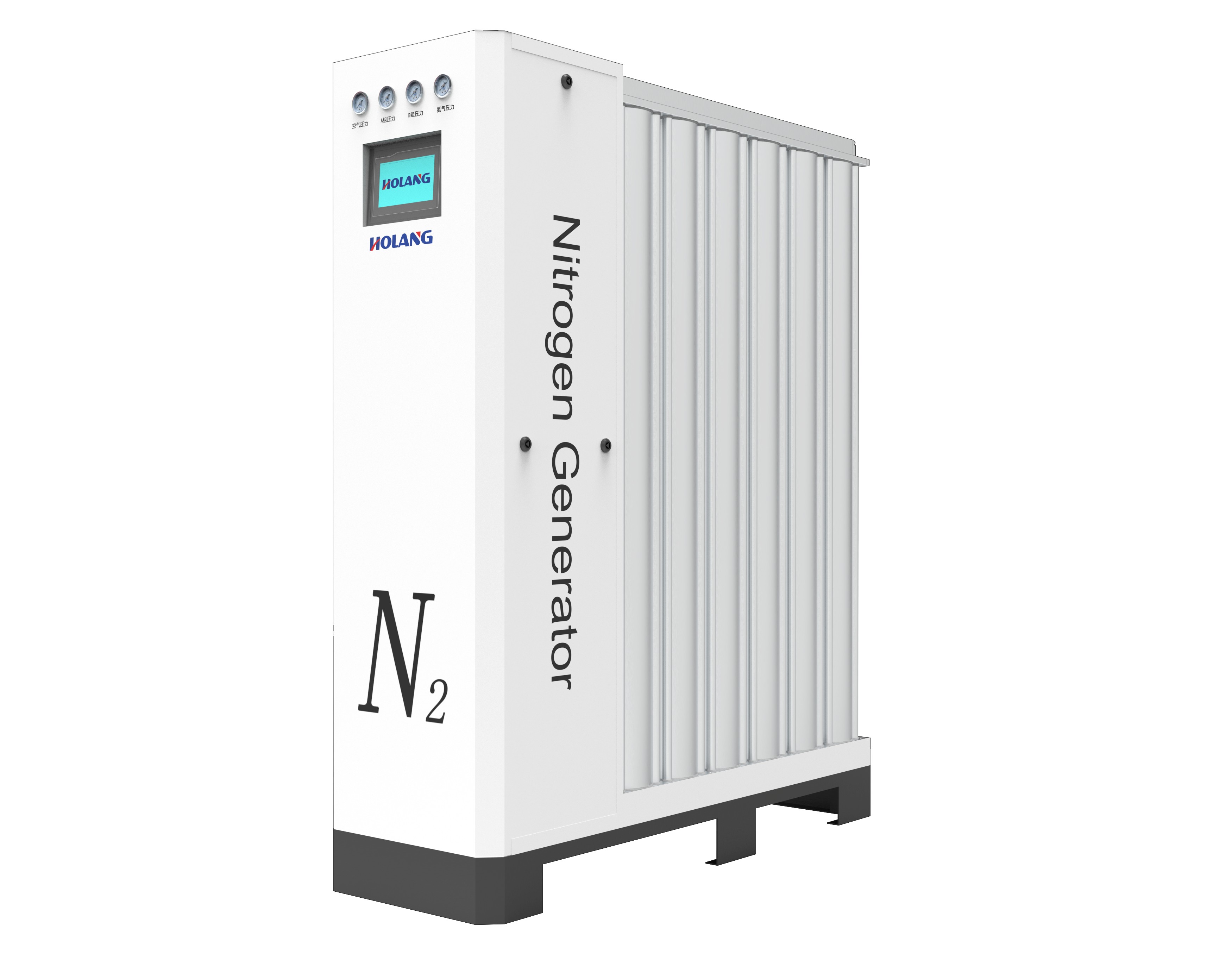
Step 5: Do Not Treat Main-Unit Parameters as the Capability of the Entire System
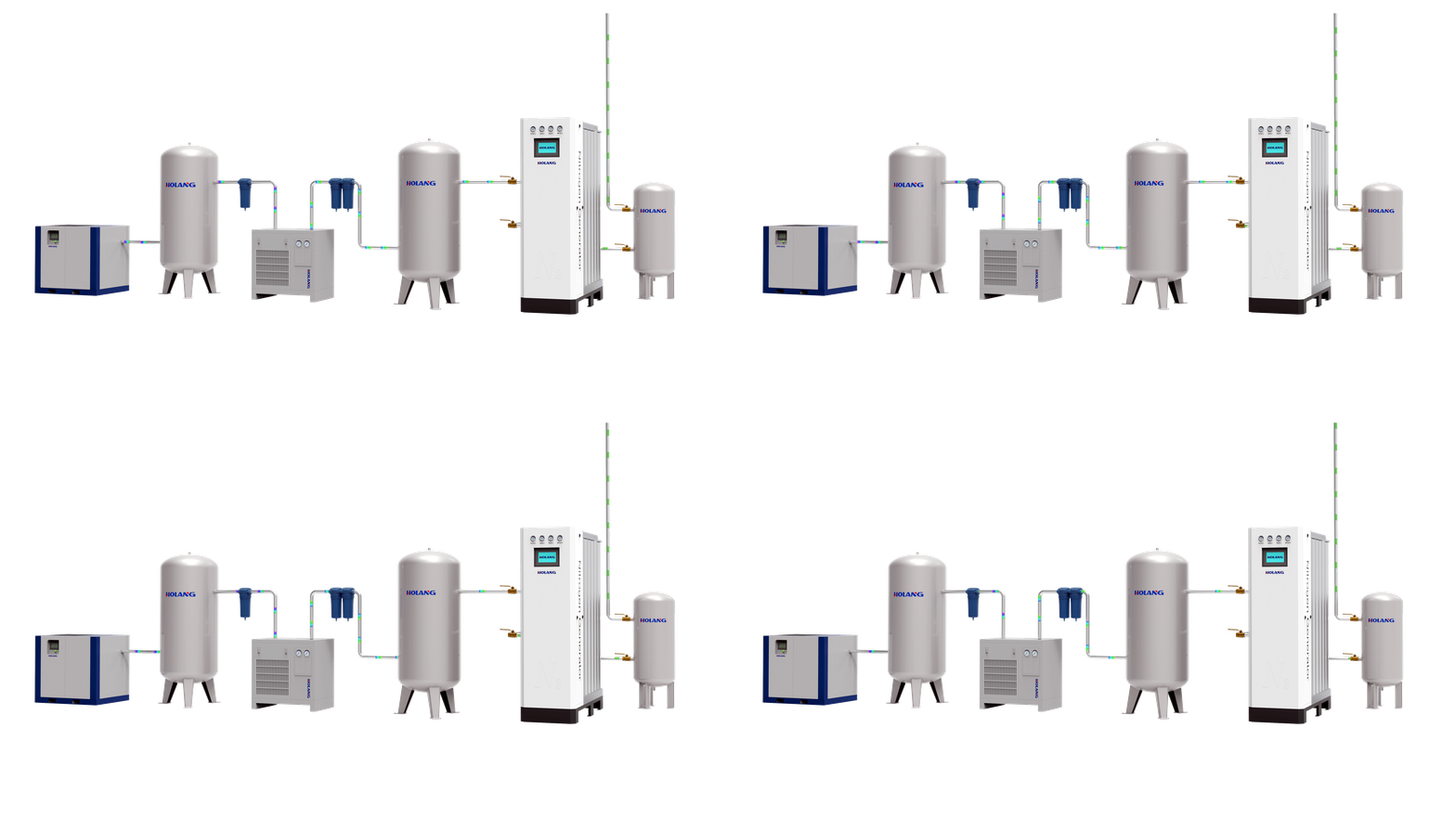
On-site nitrogen generation requires more than a nitrogen-generator main unit.
A complete solution may involve an air compressor, air receiver, filtration and drying equipment, nitrogen storage tank, flow and purity monitoring, piping, valves, power supply, ventilation, and backup gas supply. The specific configuration should be determined according to existing site conditions and process requirements.
When evaluating a supplier proposal, clarify the quotation scope:
| System Section | Verification Content |
|---|---|
| Compressed air | Required pressure, flow rate, quality, and available on-site capacity |
| Air treatment | Filtration, drying, and drainage requirements |
| Nitrogen generator | Effective flow rate and outlet pressure at the specified purity |
| Buffering and storage | Whether included, sizing basis, and installation conditions |
| Monitoring and control | Flow, pressure, purity monitoring, and fault alarms |
| Piping interfaces | Supply boundary, material, diameter, and installation responsibility |
| Installation and commissioning | Who is responsible for delivery, positioning, piping connection, startup, and parameter settings |
| Backup gas source | Whether required, switching method, and available backup duration |
| Acceptance | Conditions for testing and data to be recorded |
Main-unit power consumption should not be presented directly as the energy consumption of the entire gas supply system. When comparing operating costs, compressed air, air treatment, the nitrogen generator, and other supporting equipment should all be included within the same calculation boundary.
Step 6: Require Executable Acceptance Conditions
“Equipment can produce nitrogen” does not mean the project has been fully delivered.
At a minimum, the procurement contract or technical agreement should specify:
- Nitrogen flow rate during acceptance;
- Corresponding purity or oxygen content;
- Outlet pressure and allowable fluctuation;
- Dew point and cleanliness requirements, where required by the process;
- Continuous-operation test duration;
- Measuring instruments and their status;
- Compressed-air conditions during testing;
- Data-recording method;
- Corrective actions if agreed performance indicators are not achieved.
One easily overlooked point is that acceptance conditions must match the operating conditions used for quotation and equipment selection. If the quotation is based on one purity and inlet condition but acceptance is conducted under another, disputes over equipment capability can easily arise.
Step 7: Verify Maintenance Responsibilities and Gas-Interruption Arrangements
Low-flow equipment does not mean maintenance can be ignored.
Filters, drying equipment, valves, sensors, and other components all have their own inspection and maintenance requirements. Suppliers should explain maintenance items, the basis for maintenance intervals, consumable scope, operating conditions, and service response methods.
Before procurement, request:
- Daily inspection items;
- Periodic maintenance items;
- A recommended spare-parts and consumables list;
- Whether maintenance requires shutdown;
- Methods for handling common alarms;
- Responsibility boundaries for remote support and on-site service;
- Reconfirmation procedures after capacity expansion or operating-condition changes.
For production lines where gas interruption would cause significant losses, assess in advance whether bottled nitrogen, liquid nitrogen, or another method is needed as backup. A backup gas source is not a standard requirement for every project; it should be determined based on maintenance methods, allowable downtime, and production continuity.
Step 8: Verify Consistency of Supplier Identity and Documentation
Manufacturers, agents, system integrators, and installation service providers may have different responsibilities. None is inherently better or worse. The key is that their roles and responsibilities must be clearly defined.
Procurement personnel can verify:
- Whether the contracting, invoicing, and payment-receiving entities are consistent;
- Whether the product brand, nameplate, specification sheet, and quotation entity correspond;
- Who manufactures the equipment and who integrates the system;
- Who is responsible for installation, commissioning, training, and after-sales service;
- Whether cited certifications, patents, and test documents correspond to a specific entity and product;
- Whether case studies are authorized or genuinely anonymized;
- Whether the version, date, and applicable operating conditions of the technical proposal are clear;
- Whether after-sales contact information and response scope are included in the documentation.
A supplier’s inability to disclose customer names does not necessarily mean it lacks delivery experience, as industrial projects often involve confidentiality requirements. However, if no verifiable basis can be provided for the equipment model, operating years, claimed savings, or application results in a case study, it should not be treated as procurement evidence.
Step 9: Quotations Must Be Compared on the Same Basis
Different total prices from two suppliers do not necessarily indicate a difference in equipment price.
Quotations may include different supply scopes, purity conditions, flow-rate definitions, air-treatment configurations, measuring instruments, installation services, and backup solutions. Procurement personnel should first standardize the following conditions before comparing prices:
- The same nitrogen purity or oxygen content;
- The same effective flow rate;
- The same outlet pressure;
- The same operating time;
- The same inlet-air conditions;
- The same supply boundary;
- The same installation and commissioning responsibilities;
- The same warranty and maintenance scope;
- The same acceptance method.
When calculating long-term costs, include electricity, compressed air, consumables, maintenance, and backup gas supply. Without actual gas-consumption data, solution structures can be compared, but specific savings percentages or payback periods should not be promised directly.
When Should You Avoid Selecting a Manufacturer Too Quickly?
In the following situations, first supplement the operating-condition information rather than immediately comparing quotations:
- Actual reflow-oven gas consumption is unclear;
- Process requirements for oxygen content, pressure, or dew point have not been confirmed;
- Only average flow rate is known, while peak flow rate is unknown;
- On-site compressed-air conditions are unclear;
- Future expansion plans have not been determined;
- Losses from gas interruption and backup plans have not been evaluated;
- Quotation boundaries differ significantly among suppliers;
- Parameters in the proposal are not supported by specification sheets or technical documents.
When operating conditions are unclear, the more precise a quotation appears, the more likely it is to create the illusion that equipment selection has already been completed.
How Can HOLANG’s NPL Series Be Verified?
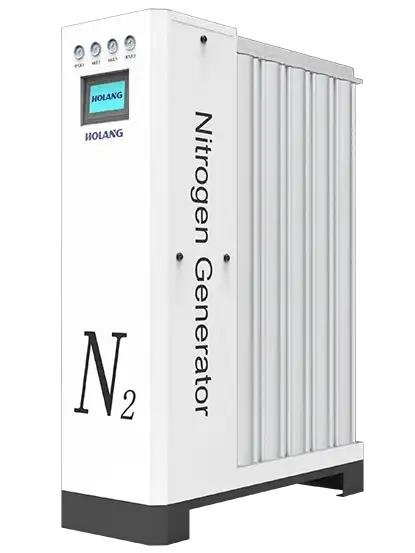
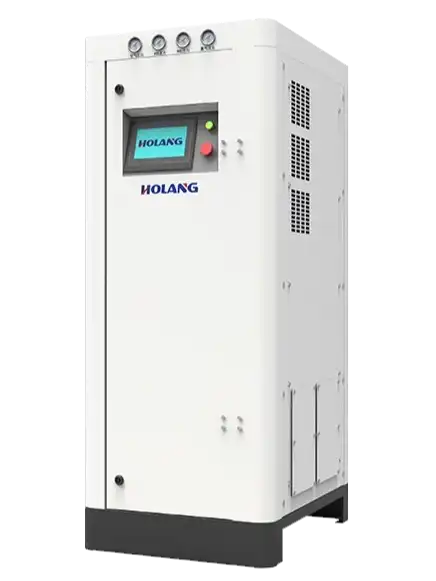
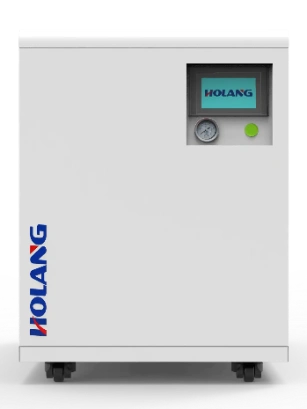
HOLANG’s publicly available NPL Series product information states that the series uses PSA technology, offers a published nitrogen purity range of 95%–99.999%, adopts an independent modular structure, and lists requirements for compressed-air quality, inlet pressure, outlet pressure, and operating environment.
This public information can be used for an initial assessment of the product’s operating boundaries, but it cannot replace project-specific equipment selection. SMT reflow soldering projects still require configuration confirmation based on flow rate, purity or oxygen content, pressure, dew point, continuous operating time, compressed-air conditions, and expansion plans.
It should be noted that not all SMT production lines are inherently suited to the NPL Series. Where gas demand is very low, operating time is short, qualified compressed air is unavailable on site, or there is no long-term usage plan, other gas supply methods or equipment configurations should first be compared.
Supplier Verification Checklist Before Procurement
Before requesting quotations from candidate suppliers, prepare:
- Reflow oven models and quantities;
- Normal and peak flow rates;
- Oxygen-content or nitrogen-purity requirements;
- Pressure, dew point, and cleanliness requirements;
- Daily operating hours and shifts;
- On-site compressed-air parameters;
- Installation space and piping conditions;
- Current gas-supply method and related costs;
- Allowable gas-interruption time;
- Backup gas-source requirements;
- Future expansion plans;
- Preferred acceptance method.
Require candidate suppliers to submit proposals using the same operating-condition form. Only then can procurement personnel effectively compare equipment capability, supply scope, acceptance conditions, and long-term costs.
To verify operating conditions for low-flow on-site nitrogen generation in SMT reflow soldering, submit the above information to HOLANG. HOLANG technical personnel can assess whether a modular nitrogen generator is suitable based on the actual conditions and further confirm the configuration boundaries.
Service Hotline: 400-0512-711