

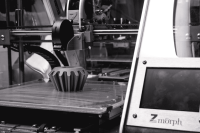

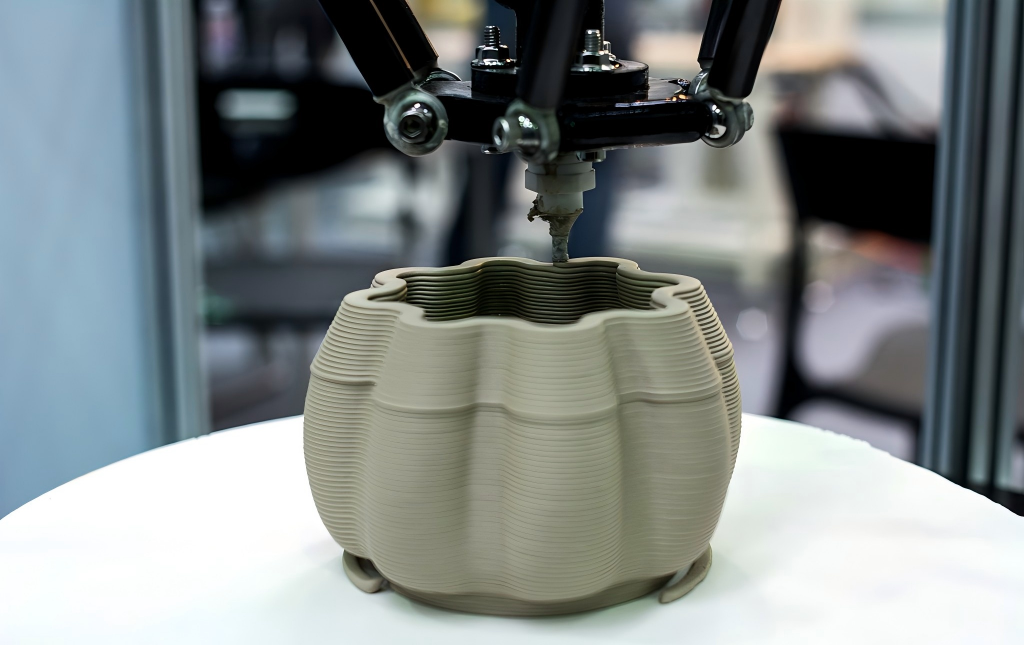
Nitrogen is widely used in 3D printing applications to reduce oxygen concentration, minimize oxidation effects, and help maintain a stable protective atmosphere during the printing process.
However, when selecting a nitrogen supply solution, purity alone should not be the only consideration. Different printing processes, materials, and operating conditions create different requirements. In many cases, the key factors include whether the nitrogen purity matches the process, whether flow capacity is sufficient, whether pressure remains stable, whether the system can support continuous operation, and whether future expansion is possible.
This article outlines five important aspects to consider when evaluating nitrogen supply solutions for 3D printing applications.
1. Printing Process and Material Requirements
Different 3D printing technologies place different demands on nitrogen supply systems.
- SLM (Selective Laser Melting): SLM applications are generally more sensitive to oxygen concentration inside the build chamber. Nitrogen is commonly used to establish and maintain a low-oxygen environment, helping reduce oxidation risks for metal powders and molten material during the printing process.
- SLS (Selective Laser Sintering): SLS applications involve a wider range of material types. For some materials, including certain nylon powder applications, nitrogen requirements may not be determined by purity alone. Material characteristics and equipment specifications should also be considered.
- DED (Directed Energy Deposition): DED is closer to continuous deposition manufacturing. In large-part production, long-duration printing, or multi-station applications, the focus often shifts toward sustained flow capacity, pressure stability, and continuous nitrogen supply performance.
Before selecting a nitrogen supply solution, it is recommended to confirm:
- The 3D printing process being used
- Material type
- Equipment manufacturer gas requirements
- Target oxygen concentration specifications
- Single-machine or multi-machine operation
These factors help define the baseline supply requirements.
2. Nitrogen Purity and Oxygen Control
Nitrogen purity is an important specification, but it does not always represent the complete picture. In some facilities, nitrogen purity may meet specification while oxygen fluctuations still occur during operation.
Possible reasons may include:
- Insufficient flow rate
- Pressure instability
- Inefficient chamber purging
- Slow system response
- Simultaneous demand from multiple machines
Therefore, it is important to clarify:
- Whether the requirement is nitrogen purity or chamber oxygen concentration
- Required purge time before printing
- Oxygen recovery time after chamber opening
- Stability during continuous printing
- Supply consistency under multi-machine operation
For oxygen-sensitive processes, purity alone is often only one part of the evaluation.
3. Flow Rate and Pressure Stability
Many on-site issues in 3D printing are not caused by insufficient purity, but by unstable or insufficient gas supply. Gas demand changes throughout the printing cycle.
For example:
- Startup purging may require high flow rates
- Stable printing requires continuous protective gas flow
- Chamber opening or material replacement may require oxygen recovery again
Key evaluation points include:
- Continuous gas consumption per machine
- Peak flow demand during purging
- Simultaneous machine operation
- Equipment inlet pressure requirements
- Pipeline length and pressure loss
- Need for downstream pressure regulation or boosting
Sizing a system only based on average gas consumption may create performance risks during peak demand conditions.
4. Continuous Operation Capability
Nitrogen supply requirements can vary significantly between prototyping and production. Occasional sample production may create relatively low demand. However, production environments involving:
- Multi-shift operation
- Long-duration continuous printing
- Multiple machines running simultaneously
will require stronger focus on supply continuity. Recommended evaluation points:
- Daily operating hours
- Continuous operation requirements
- Maintenance downtime tolerance
- Long-term purity and flow stability
- Future equipment expansion plans
For production-oriented applications, long-term performance should be considered early.
5. Buffer Capacity and Future Expansion
Many 3D printing operations begin with a single machine and later expand as production demand grows. Without sufficient expansion planning, later growth may result in:
- System reconfiguration
- Pipeline modifications
- Repeated investment
- Operational disruption
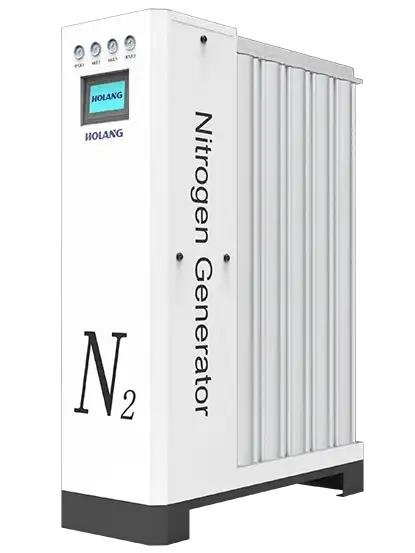
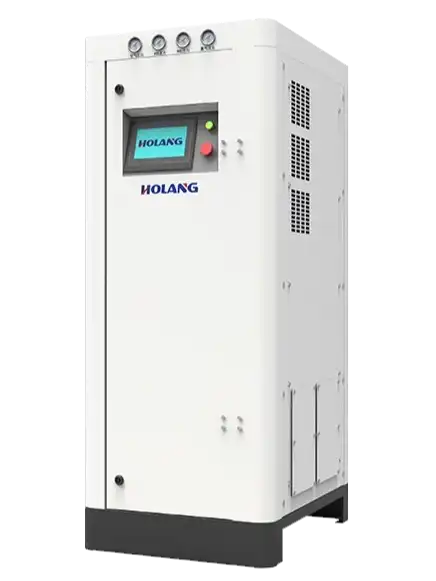
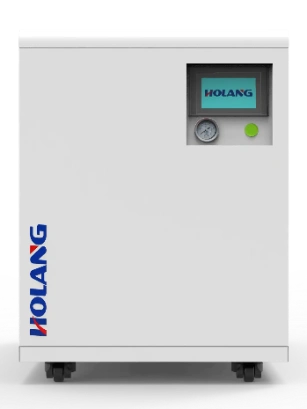
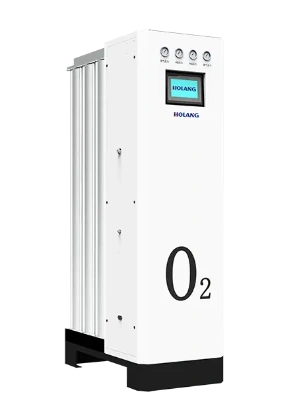
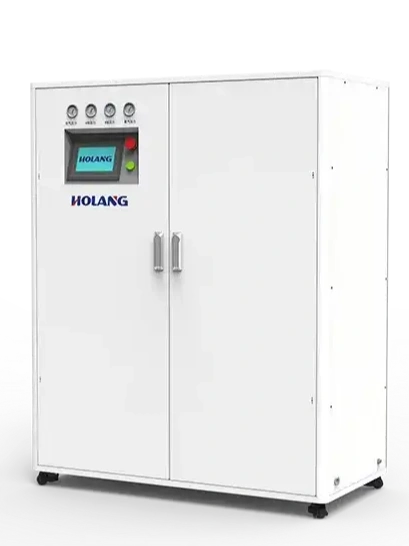
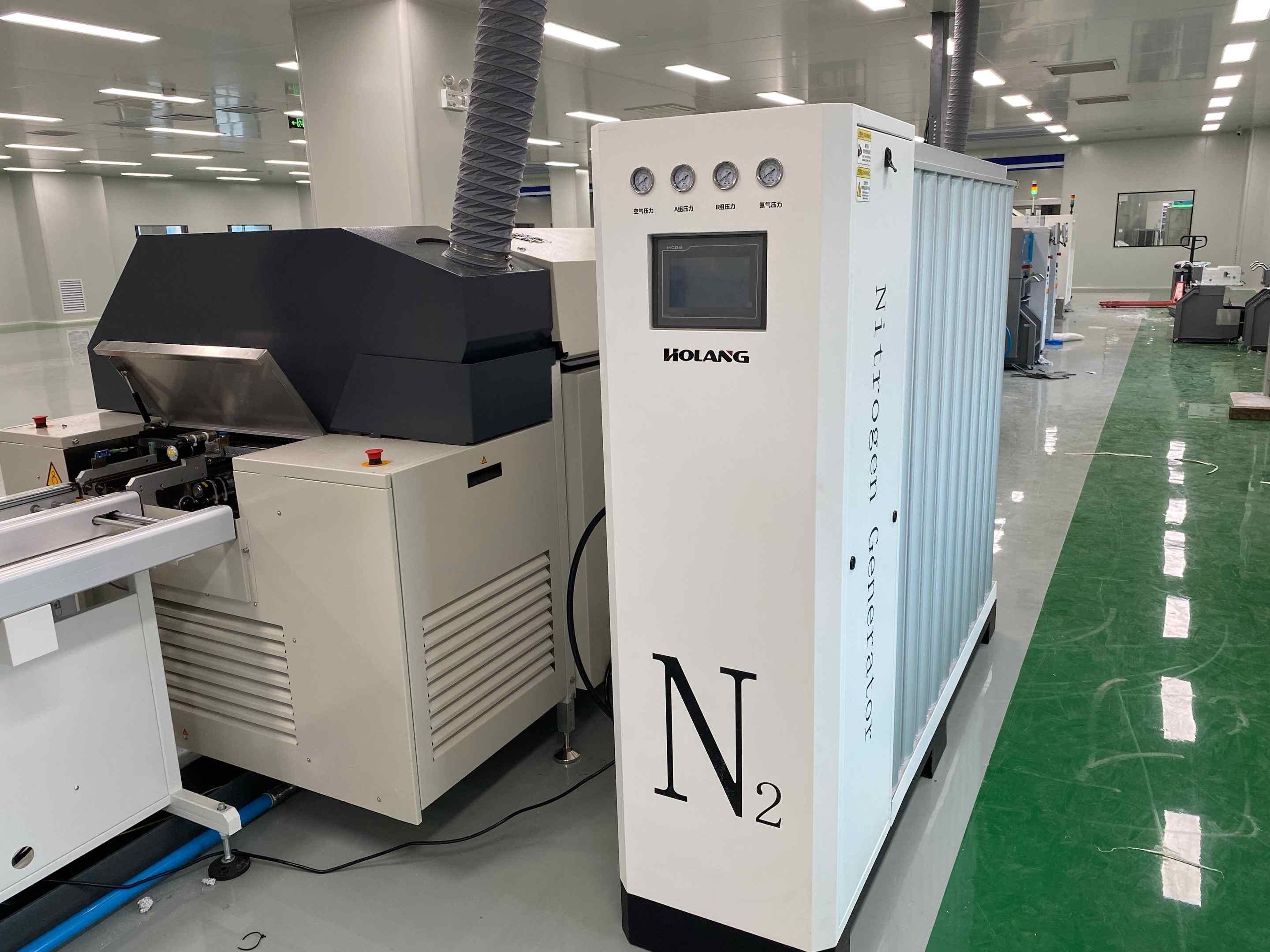
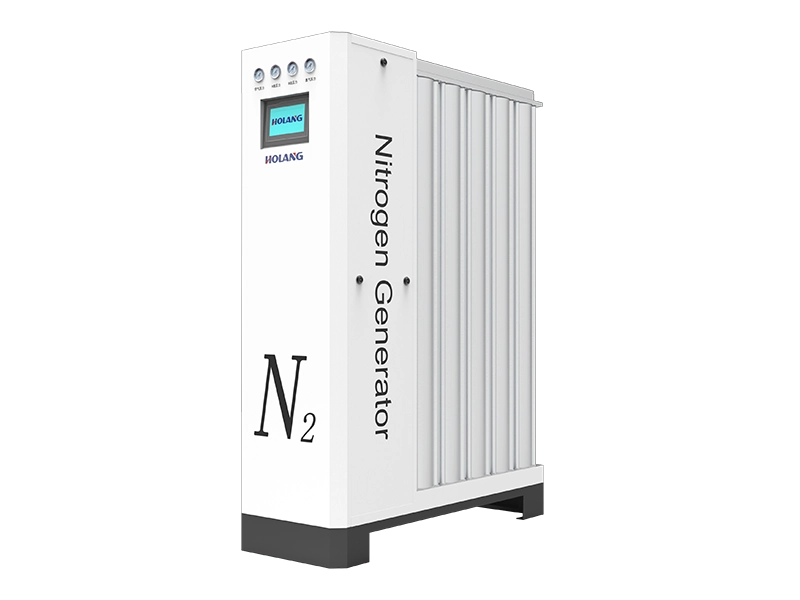
For these applications, modular nitrogen generator systems are often worth evaluating. For example, the HOLANG NPL modular nitrogen generator series can be assessed from several perspectives:
- Flexible Initial Configuration: Capacity can be configured according to current purity, pressure, flow, and equipment requirements.
- Easier Future Expansion: Additional capacity can be added as equipment count or production demand increases.
- Better Suitability for Multi-Machine Applications: Modular architecture can provide greater flexibility when handling changing gas demand.
- Support for Continuous Production Environments: Modular systems may be more suitable for applications transitioning from prototyping to production.
- Improved Stability with Buffer Design: Proper nitrogen buffer integration may help reduce pressure and flow fluctuations during peak demand conditions.
Conclusion
Choosing a nitrogen supply solution for 3D printing is not simply about selecting a target purity level.
The right solution should be based on a broader evaluation of:
- Process requirements
- Material characteristics
- Oxygen control needs
- Flow capacity
- Pressure stability
- Continuous operation requirements
- Future scalability
For SLM, SLS, DED, and other additive manufacturing applications, supply requirements should be evaluated according to actual operating conditions rather than applying a one-size-fits-all approach.