


In the food processing and packaging industry, Modified Atmosphere Packaging (MAP) has become an important method for extending product shelf life. At the recent 31st ProPak China exhibition, MAP equipment and automated packaging systems once again attracted significant attention, reflecting the industry’s continued shift from conventional sealed packaging to controlled-atmosphere packaging.
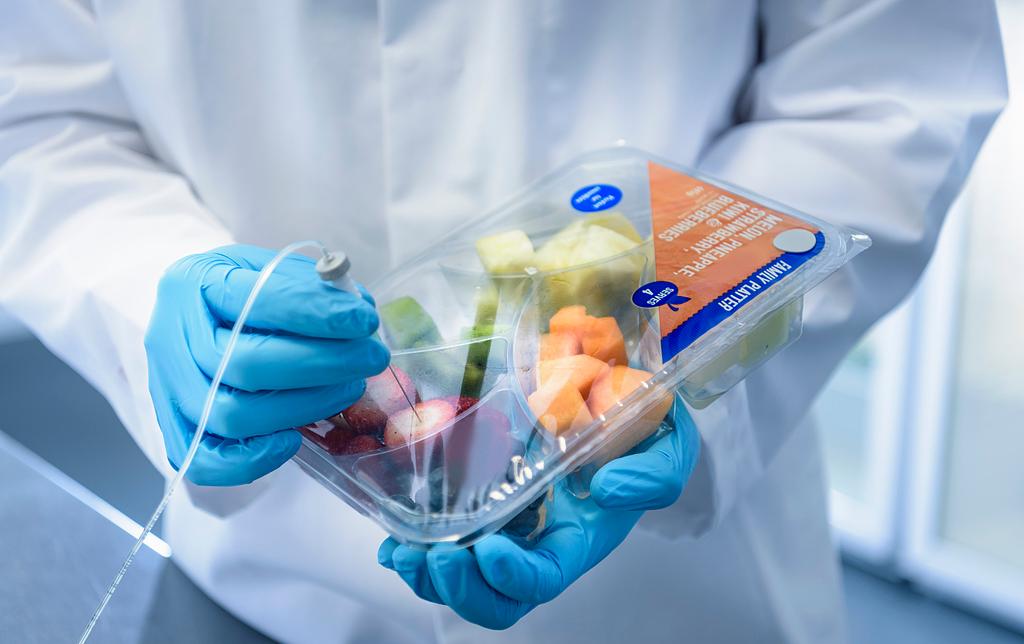
In everyday applications, MAP can often be recognized by the slightly inflated appearance of packaged fresh meat, fruit and vegetables, cooked foods, and other products. This appearance is not created by simply filling the package with gas. Instead, the gas composition inside the package is carefully controlled to create a more stable preservation environment.
1. How Modified Atmosphere Packaging Works
A modified atmosphere packaging machine adjusts the gas composition inside a food package before sealing, helping create a controlled environment for product preservation.
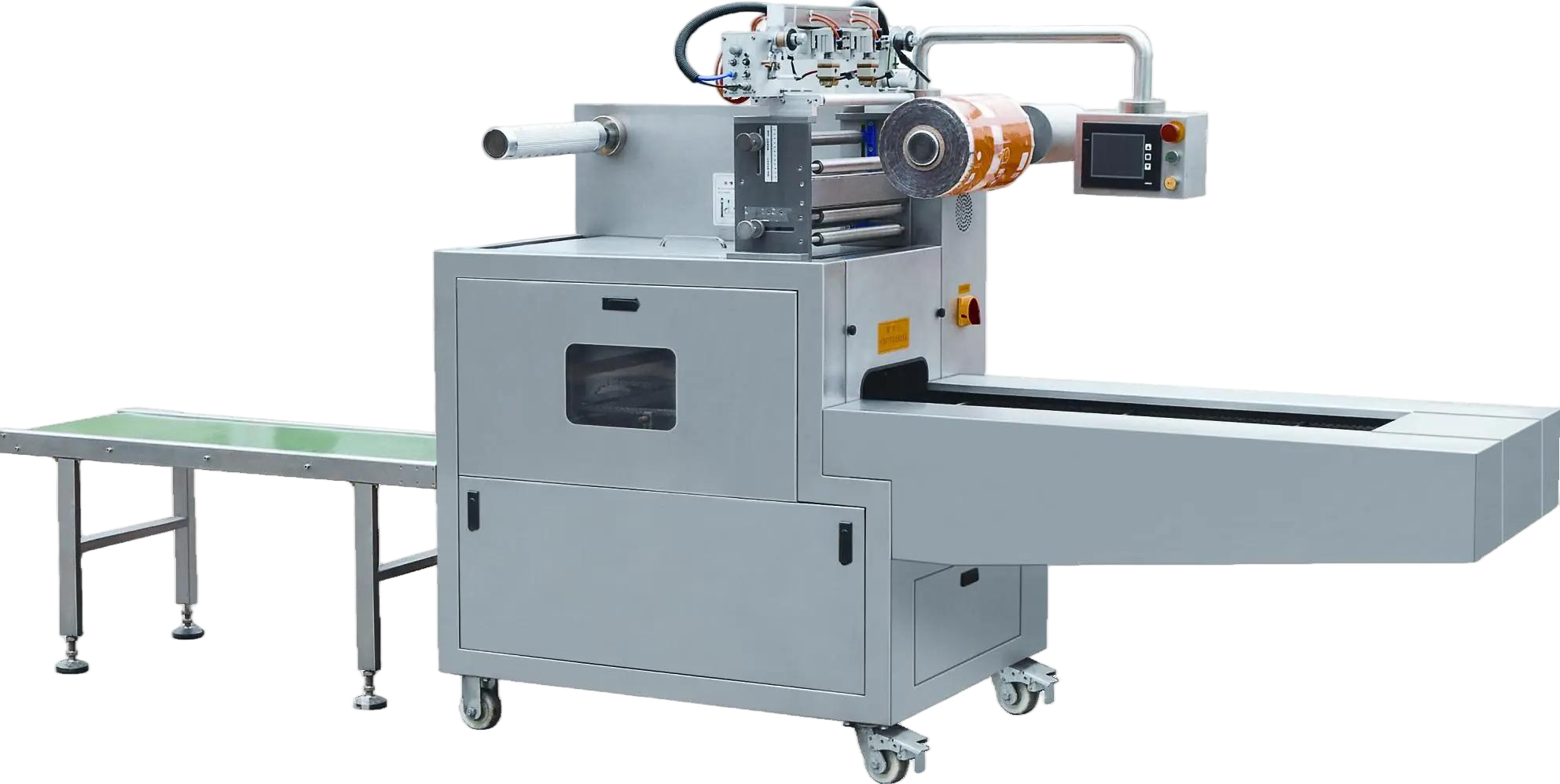
Its function is not limited to vacuuming or gas filling. Before sealing, the air inside the package is partially or fully replaced with nitrogen or a selected gas mixture, creating a low-oxygen or controlled-atmosphere environment around the product.
Compared with conventional vacuum packaging, MAP can reduce product compression and deformation. Depending on the food type and gas composition, it can also help slow oxidation and microbial growth, thereby maintaining product quality and extending shelf life.
Typical applications include:
- Fresh meat and fresh-cut fruit and vegetables
- Cooked foods and marinated products
- Coffee and bakery products
- Prepared meals and ready-to-eat foods
These products require more than an airtight package. Their appearance, flavour, texture, and overall quality must remain stable throughout storage and distribution.
2. How Gas Is Used During the Packaging Process
During operation, nitrogen or a mixed gas is normally supplied to the MAP machine through an external gas supply system.
A typical packaging cycle includes the following stages:
1. Packaging Chamber Closing
The product enters the packaging station, and the chamber is closed. At this stage, the package still contains normal air.
2. Internal Air Treatment
Depending on the packaging process, the system may first evacuate part of the air or proceed directly to gas flushing to reduce the oxygen concentration inside the package.
3. Gas Flushing and Filling
Nitrogen or a selected gas mixture enters the packaging chamber and gradually replaces the remaining air until the required gas composition is reached.
4. Gas Filling Control
Different packaging machines may use different gas-filling methods, including:
- Single-stage gas flushing
- Multi-stage pulse filling
- Continuous gas flushing coordinated with the packaging cycle
5. Sealing
Once the required gas composition has been achieved, the package is sealed to maintain the controlled internal atmosphere.
3. Gas Supply Options for MAP Production Lines
MAP systems generally use one of three gas supply methods:
- Gas cylinders
- Liquid nitrogen
- On-site nitrogen generation
Gas cylinders and liquid nitrogen may be suitable for small-scale production or intermittent gas consumption. However, continuous production lines and multi-machine installations often face practical challenges, including:
- Frequent gas replenishment
- More complex coordination across multiple packaging lines
- Unstable supply during peak production periods
- Higher logistics, handling, and management costs
For continuous production, an on-site nitrogen generation system can provide a more direct and stable gas source. Nitrogen is produced at the production facility and supplied according to the actual operating rhythm of the packaging line.
4. On-Site Nitrogen Generation for MAP Applications
A typical on-site nitrogen supply system for modified atmosphere packaging consists of:
Air compressor → Compressed air treatment system → Nitrogen generator → Nitrogen buffer tank → MAP machine
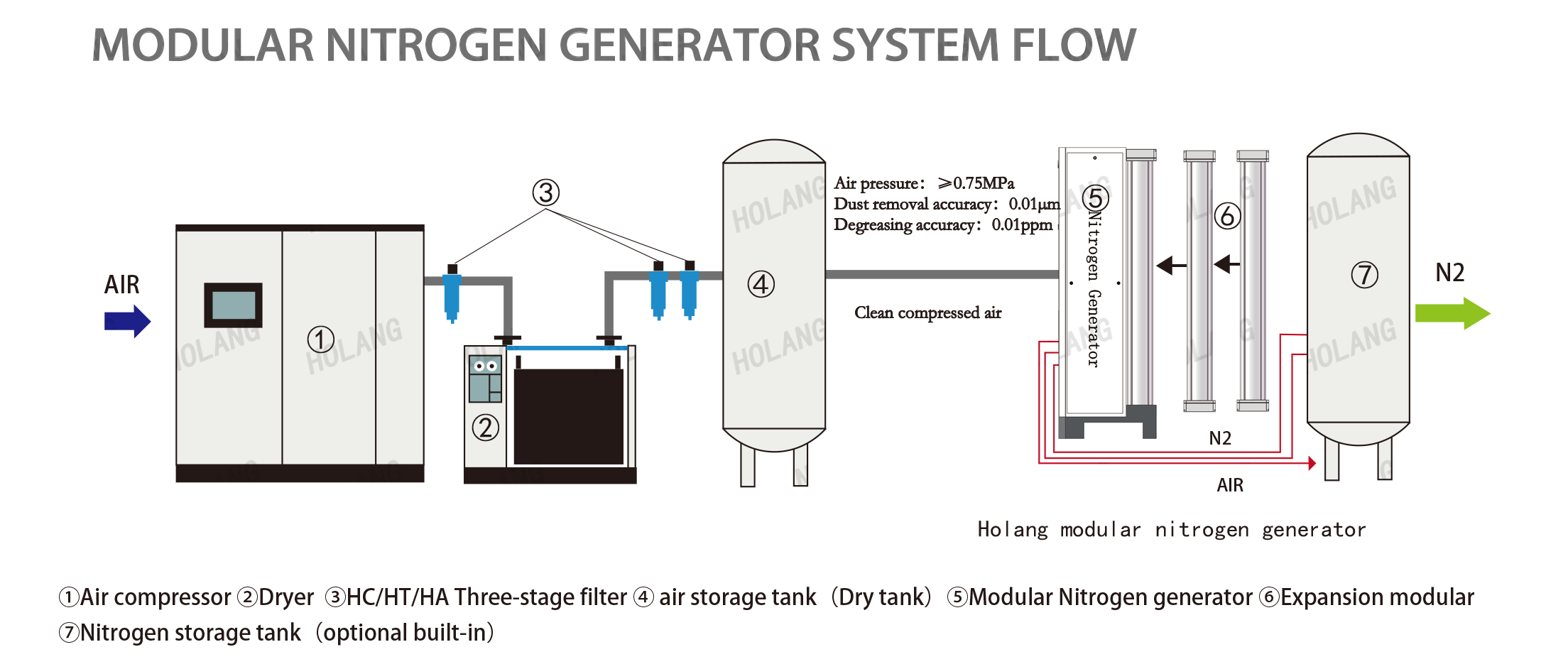
The compressed air treatment system removes moisture, oil, and particulate contaminants from the air. The nitrogen generator then separates nitrogen from compressed air using PSA technology, while the nitrogen buffer tank helps stabilize pressure and compensate for short-term fluctuations in gas demand.
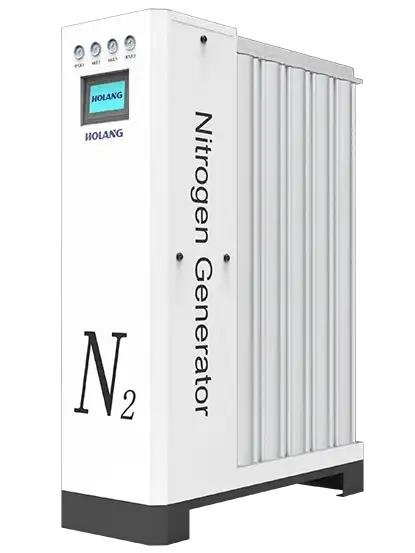
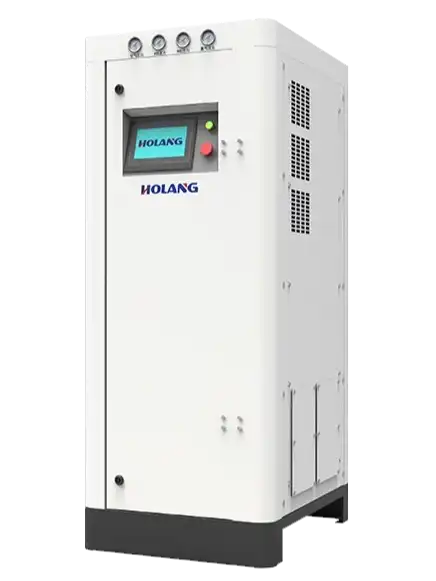
As the main gas source, the nitrogen generator provides continuous nitrogen for one or more packaging machines.
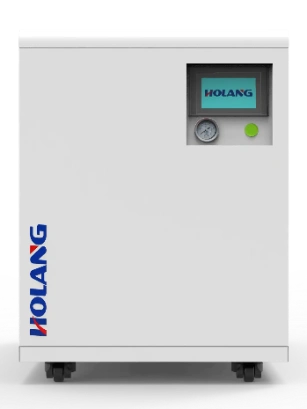
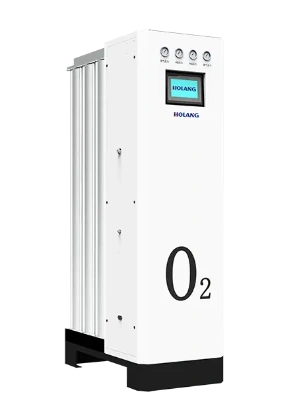
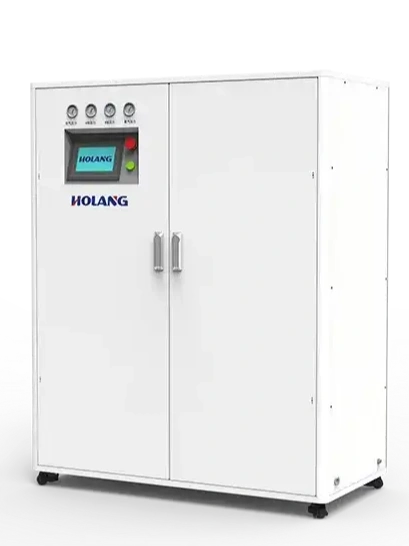
HOLANG NPL Modular Nitrogen Generator
The HOLANG NPL Series can be connected to an existing compressed air system and configured according to the required nitrogen purity, flow rate, pressure, and operating conditions.
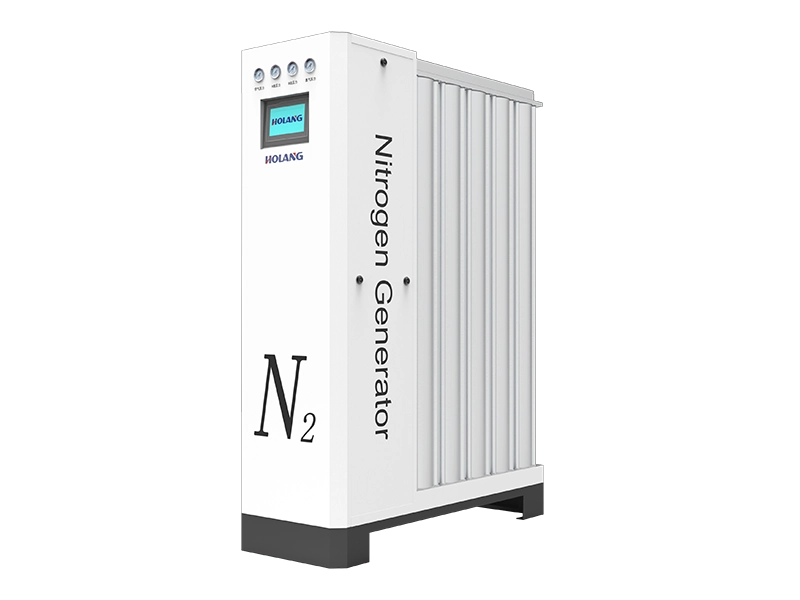
Nitrogen purity: 95%–99.999%, configurable according to process requirements
- Nitrogen flow range: 2.2–198 Nm³/h across different models
- Operating pressure: 0.7–1.0 MPa
- Nitrogen generation technology: PSA pressure swing adsorption
System Features
- Modular design suitable for packaging lines of different capacities
- Continuous and stable nitrogen output
- Capable of matching changes in packaging cycles and gas demand
- Wide flow range for single-machine and multi-line applications
- Easy integration with existing compressed air systems
- Suitable for continuous industrial operation
The final system configuration should not be determined by packaging speed alone. Package volume, gas-filling method, injection time, simultaneous machine operation, inlet pressure, and peak gas demand all affect the selection of the nitrogen generator and buffer tank.
Conclusion
The key to modified atmosphere packaging is not simply whether gas is injected into the package, but whether the internal gas composition can be controlled and maintained consistently.
When selecting a nitrogen supply system, manufacturers should consider the packaging process, production schedule, gas consumption pattern, required nitrogen purity, inlet pressure, and available compressed air conditions. A properly matched on-site nitrogen generation system can provide a stable gas supply for continuous MAP production while reducing dependence on externally supplied gas.
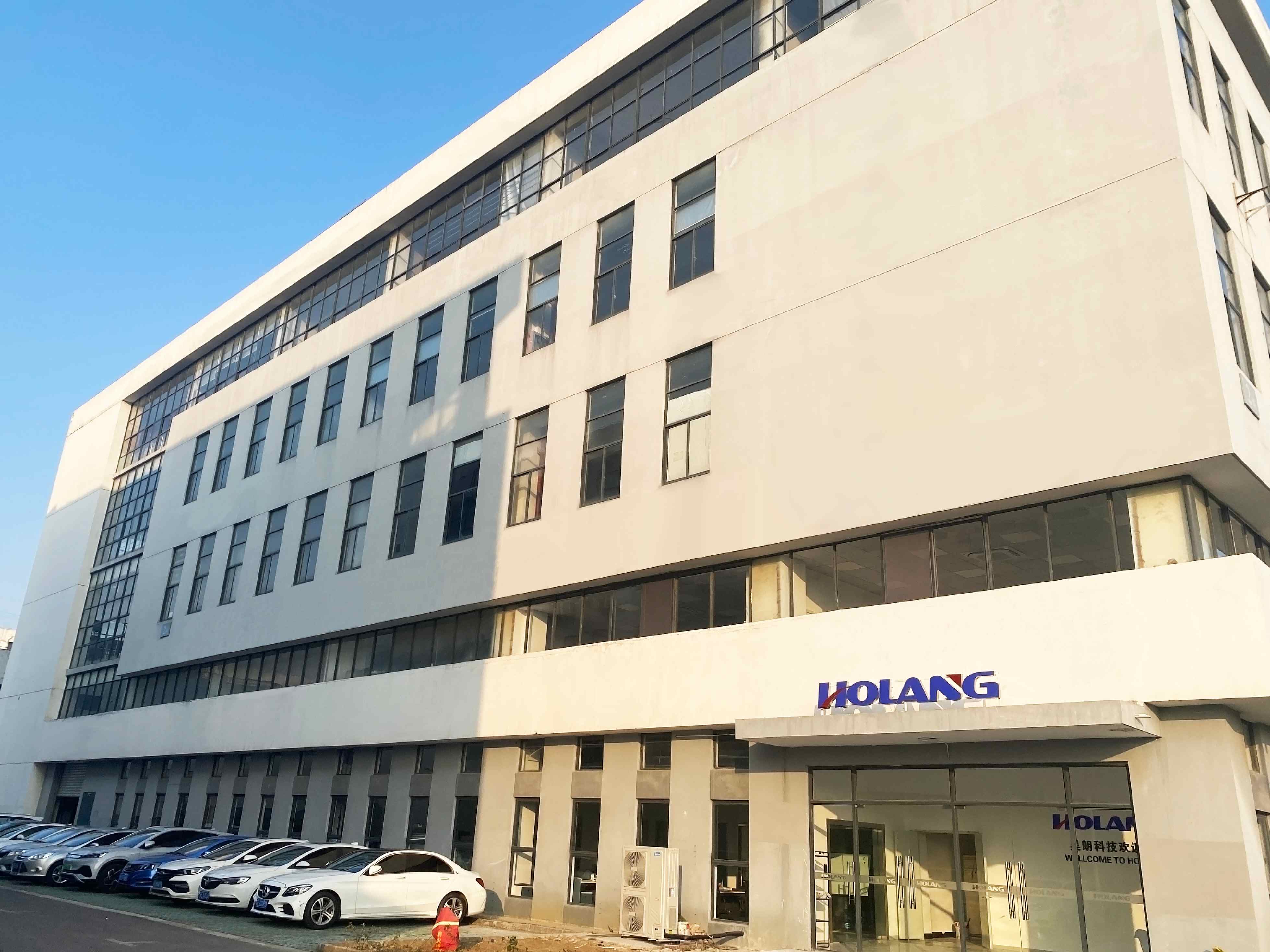
Contact Holang Tech (Suzhou) Co., Ltd and provide your packaging machine model, production speed, package volume, gas consumption, inlet pressure, and operating conditions. HOLANG will develop a customized nitrogen supply solution for your production facility.