


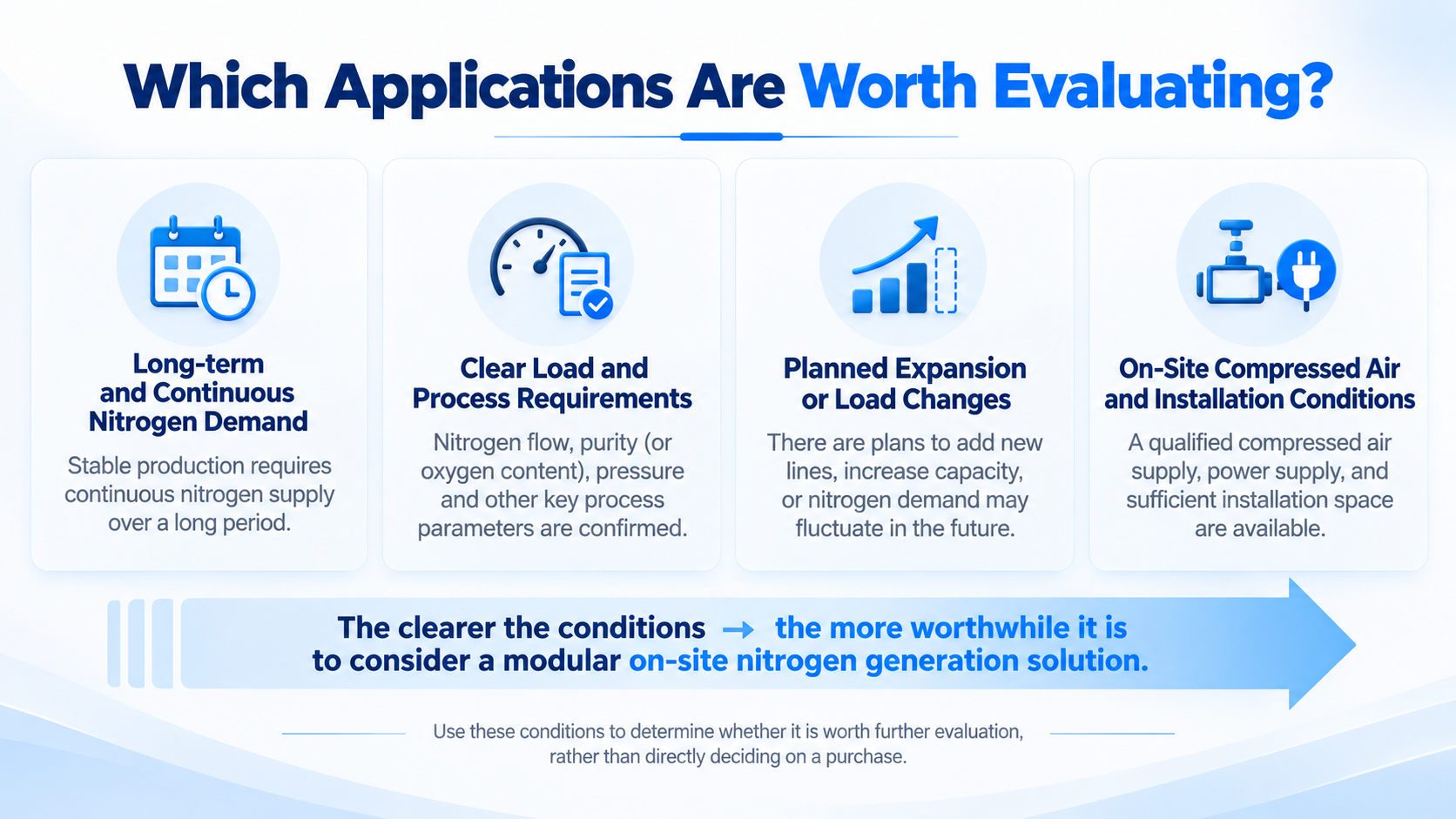
Not every production line is suitable. First consider continuous nitrogen use, expansion plans, and site conditions.
Whether an SMT reflow soldering line is suitable for a modular nitrogen generator cannot be determined only by industry type or number of production lines.
More importantly, consider whether the line uses nitrogen continuously over the long term, whether future expansion is planned, and whether qualified compressed air, power, piping, and installation space are available on site.
If these conditions are generally clear, modular on-site nitrogen generation is worth comparing as an option. If the project is only for short-term trial production, nitrogen use is infrequent, or site conditions are not available, there is no need to rush into purchasing equipment.
Why Do SMT Reflow Soldering Lines Evaluate On-Site Nitrogen Generation?
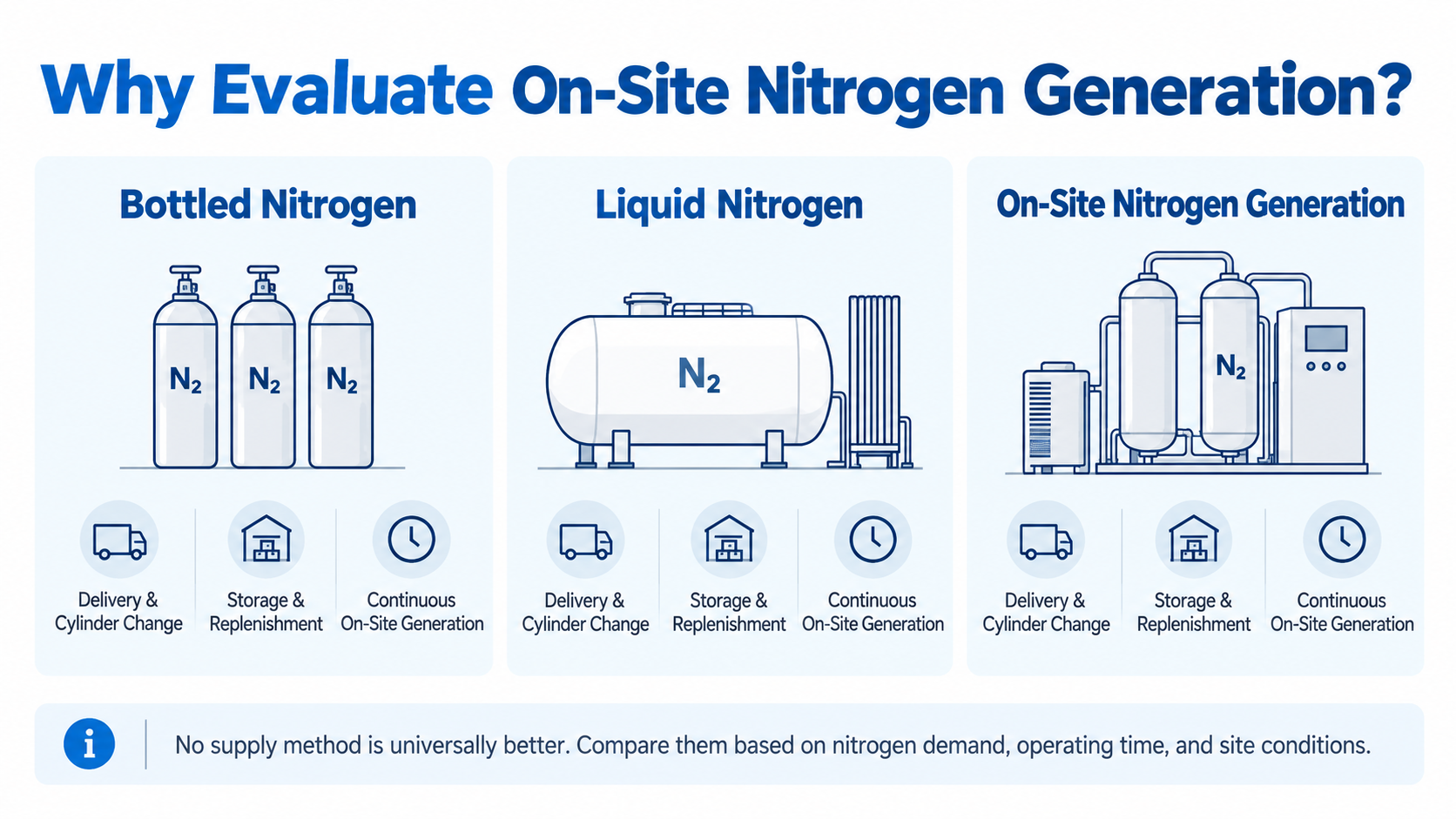
When the reflow soldering process requires nitrogen, factories usually compare bottled nitrogen, liquid nitrogen, and on-site nitrogen generation.
Common reasons for considering on-site nitrogen generation include:
- Long-term or continuous nitrogen use;
- A desire to reduce cylinder replacement, delivery, and inventory management;
- A need to supply multiple reflow ovens from one system;
- Possible future production-line expansion;
- A need to compare long-term costs across different solutions.
On-site nitrogen generation reduces reliance on routine delivery. It does not mean equipment requires no maintenance, nor does it mean backup gas supply is unnecessary in every situation.
Why Do Some Production Lines Consider Modular Solutions?
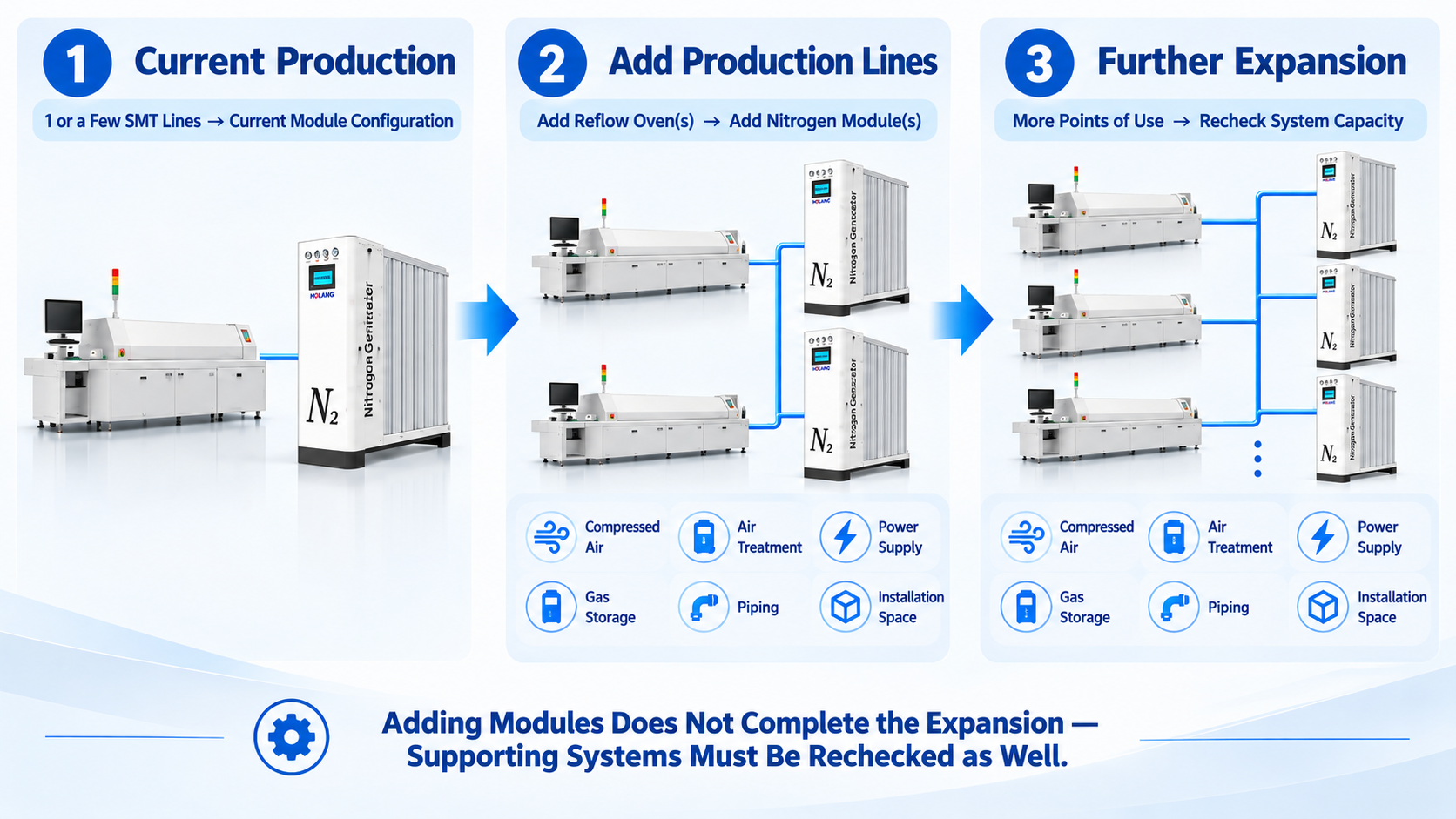
Nitrogen demand in SMT factories may change with shifts, orders, and the number of operating units. A project may begin with one reflow oven and add production lines in phases later.
A modular nitrogen generator can be configured for near-term operating conditions while reserving conditions for future module additions, avoiding an initial configuration based entirely on maximum long-term demand.
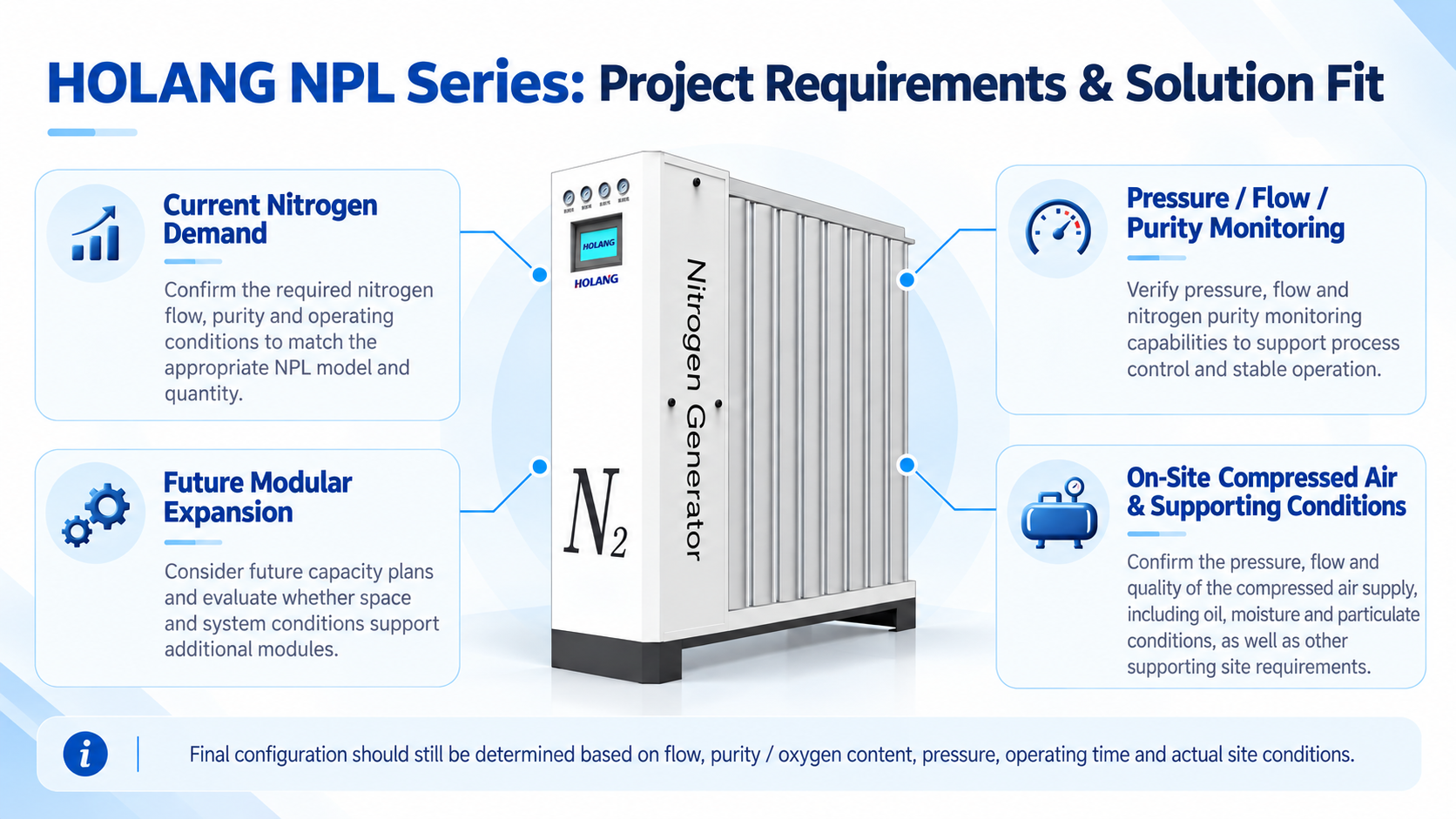
However, “modules can be added” is only the first step. Actual expansion also requires checking:
- Whether the air compressor has sufficient remaining capacity;
- Whether air treatment can meet the additional demand;
- Whether power, gas storage, and piping need adjustment;
- Whether the control system can connect additional modules;
- Whether installation and maintenance space has been reserved.
Which Conditions Are Suitable for Further Evaluation?
The more of the following conditions that are met, the more worthwhile it is to evaluate a modular nitrogen generator:
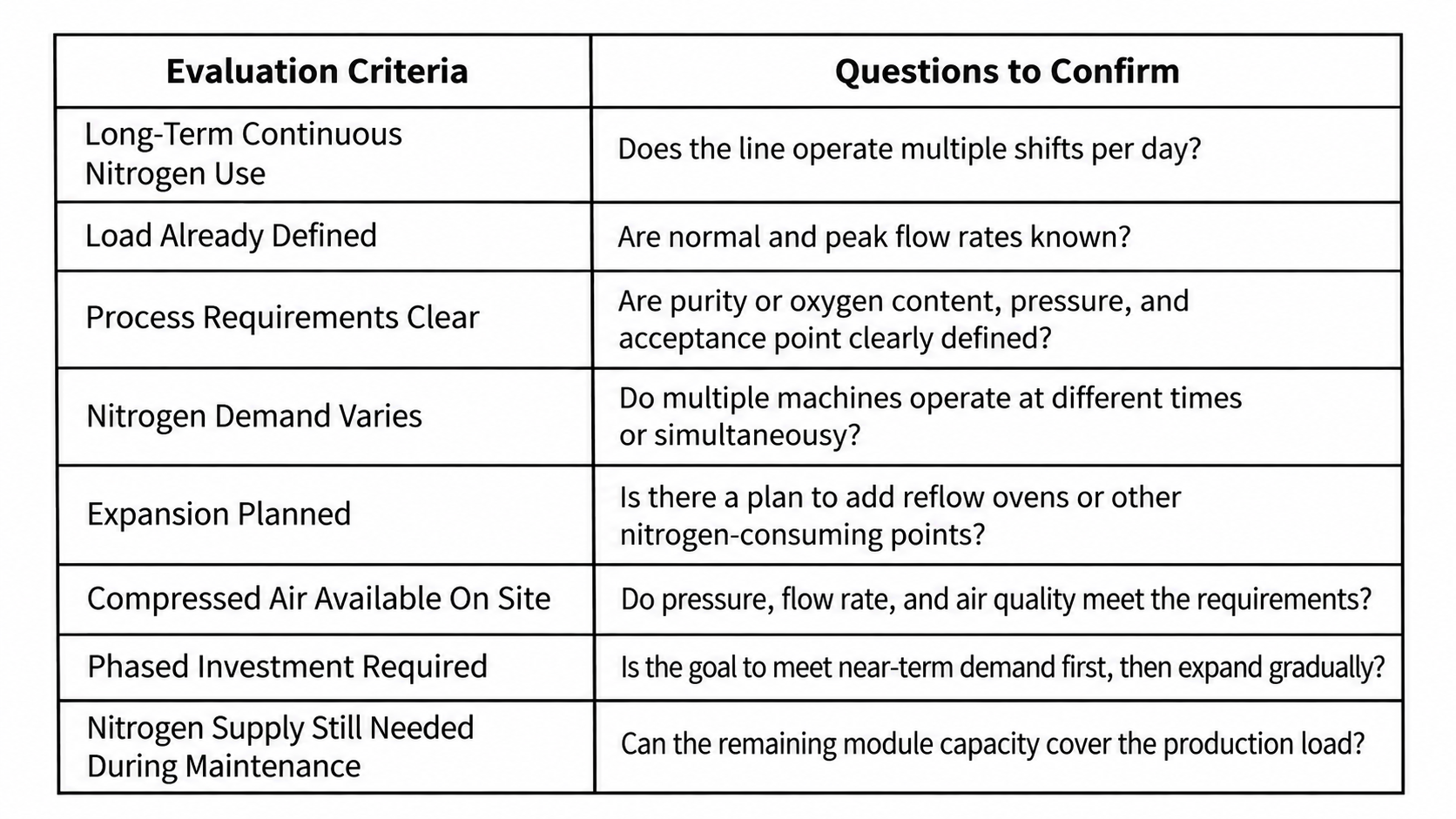
A single SMT production line may also be suitable for on-site nitrogen generation. However, selection should not be based only on the number of production lines. Oven type, operating time, peak flow, and process conditions can all affect actual demand.
When Should a Modular Solution Not Be the First Choice?
The following situations should first be compared with other gas-supply methods or equipment configurations:
- The project is only for short-term trial production;
- Nitrogen use is infrequent;
- Actual flow rate and process requirements have not been confirmed;
- Qualified compressed air is not available on site;
- There is no clear future expansion plan;
- Installation space cannot support expansion and maintenance;
- Only the main-unit price is considered, without calculating supporting-system costs.
When parameters are unclear, the priority is not selecting a model, but completing the nitrogen-use conditions of the reflow oven.
What Can the HOLANG NPL Series Provide?
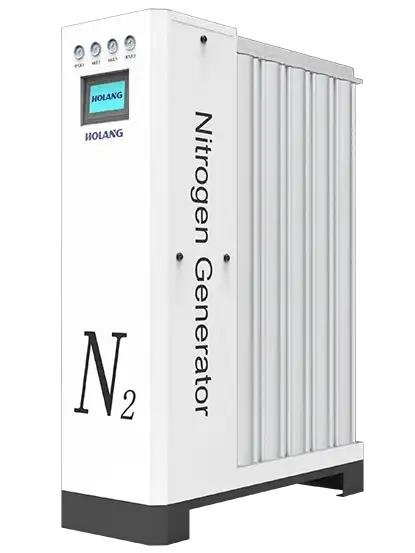
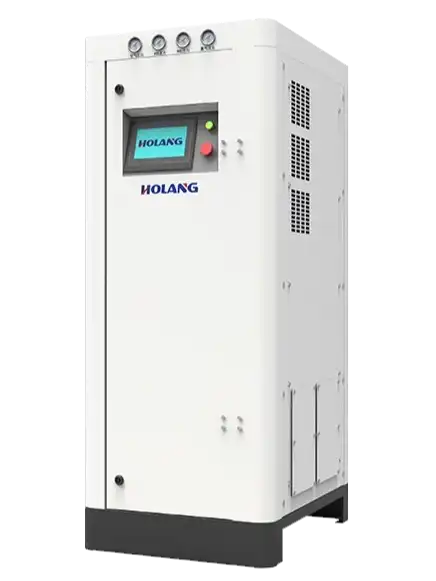
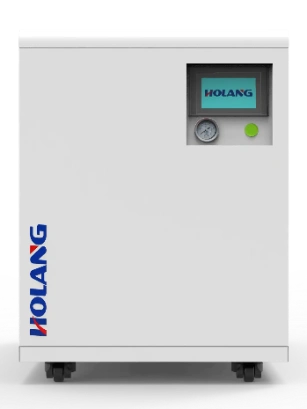
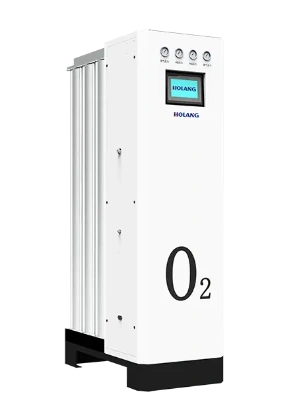
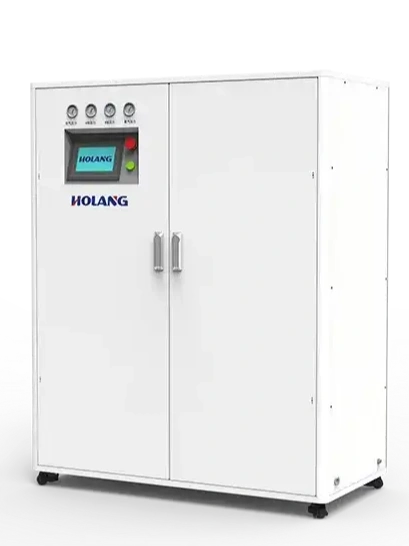
HOLANG’s publicly available NPL Series product information states that the series uses PSA technology, offers a published nitrogen purity range of 95%–99.999%, and adopts an independent modular structure.
Where operating conditions are suitable, the NPL Series can be considered as a candidate solution for on-site nitrogen generation in SMT reflow soldering, with evaluation focused on:
- Configuring nitrogen capacity for near-term demand;
- Reserving conditions for future module additions;
- Supporting module-by-module inspection, maintenance, and upgrades;
- Monitoring inlet and outlet pressure, flow, and purity;
- Adjusting operating methods under different nitrogen-use loads.
Specific configurations should still be determined according to flow rate, purity or oxygen content, pressure, continuous operating time, and site conditions.
Frequently Asked Questions
Does a small SMT production line need a modular nitrogen generator?
Not necessarily. The decision should be based on actual flow rate, daily operating time, process requirements, site conditions, and expansion plans. For short-term trial production or low-frequency nitrogen use, bottled nitrogen and other solutions can be compared first.
Can an existing air compressor be used directly?
This cannot be determined directly. Confirm the available pressure, flow, air quality, and fluctuations during normal production. Do not rely only on air-compressor nameplate parameters.
Does future expansion only require adding modules?
Not necessarily. After adding modules, compressed air, air treatment, power, gas storage, piping, and installation space must all be checked again.
To assess whether an NPL modular PSA nitrogen generator is suitable for a specific SMT reflow soldering line, prepare the oven model, process requirements, normal and peak flow rates, operating time, on-site compressed-air conditions, and expansion plans. HOLANG technical personnel can then provide further verification.
Service Hotline: 400-0512-711