


Are Puffed Snack Bags Inflated Just for Appearance?
When people pick up puffed snacks such as potato chips, crispy rice snacks, rice crackers, or shrimp crackers, they often notice one thing:
The package is usually full and inflated.
Some may think this is only to make the package look bigger, fuller, or more attractive on the shelf.
But for food manufacturers, the gas inside the package is not simply “air.” It is part of the packaging process and is closely related to product protection, transportation, storage, and shelf display.
For puffed snacks, the package is not inflated just for appearance. It is often related to nitrogen flushing packaging.
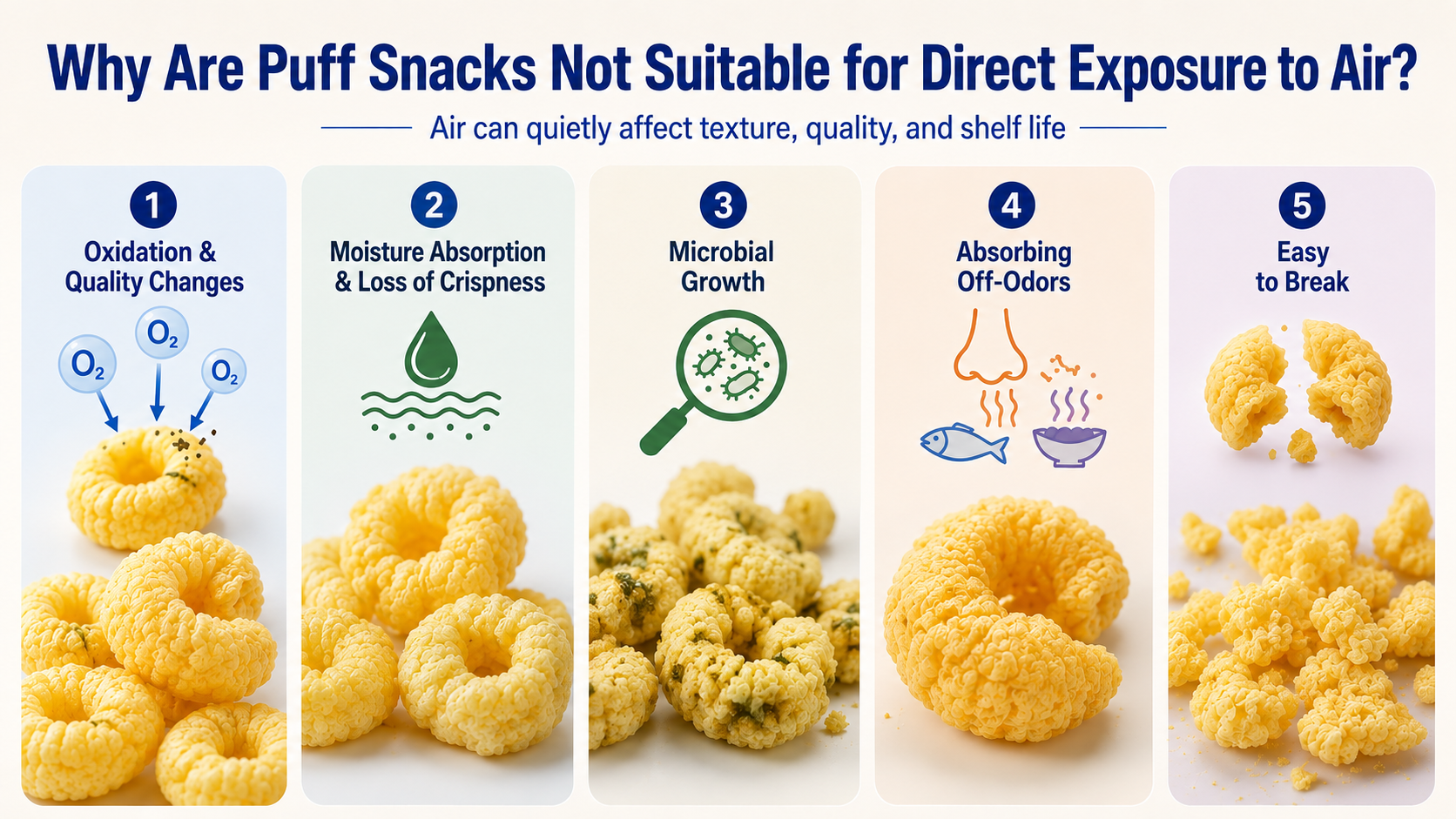
Why Are Puffed Snacks Sensitive to Air?
Puffed snacks are usually crispy, lightweight, and fragile.
Many of them also contain oil from frying, seasoning, or spraying processes. When exposed to oxygen and moisture for a long time, the product may experience flavor changes, loss of crispness, or increased breakage.
Therefore, food packaging is not only about sealing the bag. Manufacturers also need to consider whether the product can remain crispy, whether it can withstand transportation, and whether the packaging condition stays stable before reaching consumers.
What Does Nitrogen Do in Puffed Snack Packaging?
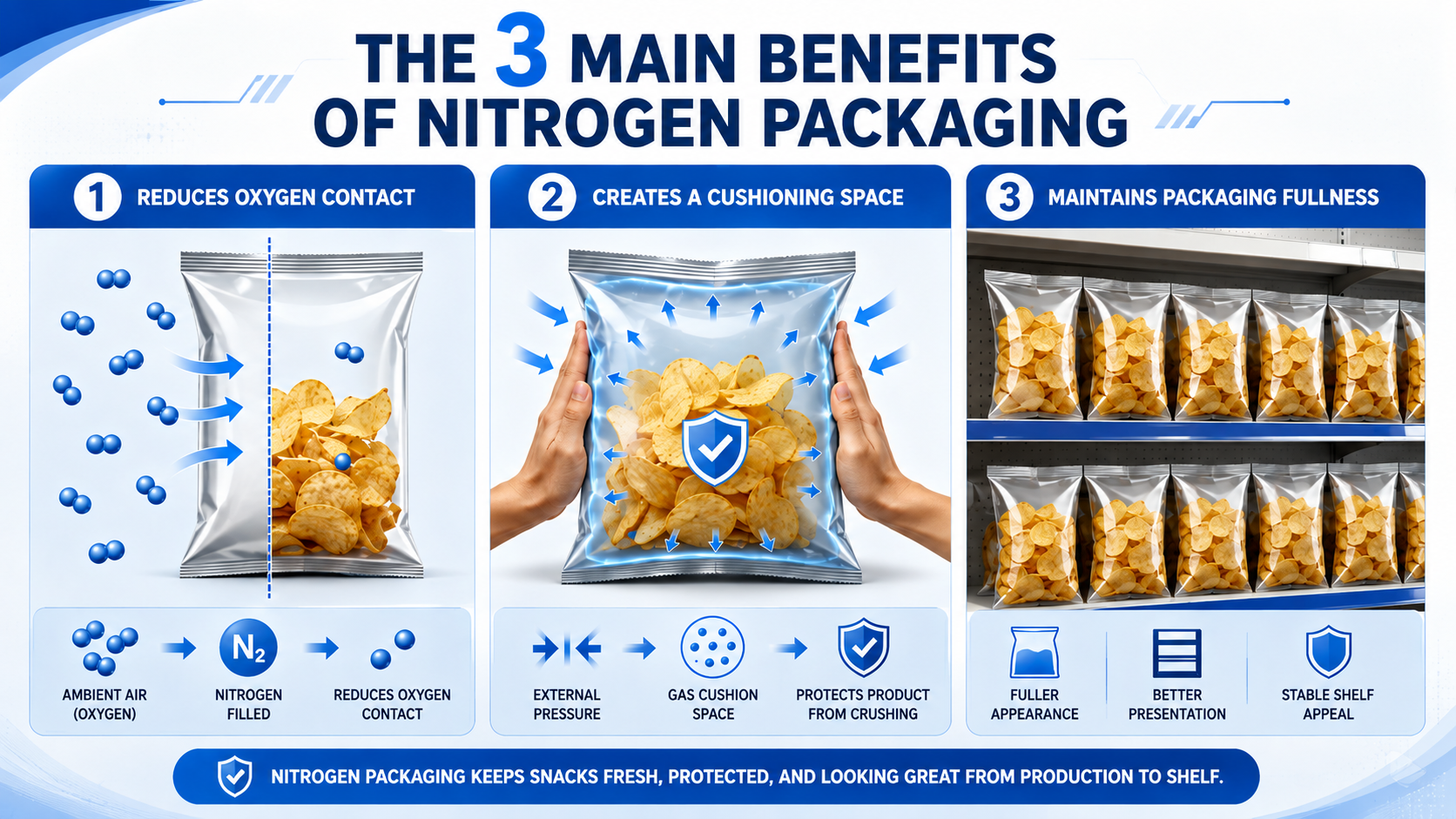
Nitrogen is commonly used as a protective gas in food packaging. For puffed snacks, it mainly helps in three ways:
1. Reducing oxygen contact
By lowering the oxygen level inside the package, nitrogen helps reduce oxidation risks and supports more stable flavor and texture during storage.
2. Providing cushioning protection
Products like chips and rice crackers are easy to break. A properly filled package can create a cushioning space and reduce direct compression during transportation and stacking.
3. Maintaining package fullness
A full and stable package can better protect the product and improve shelf presentation. However, the package is not simply “the more inflated, the better.” It should be designed together with packaging materials, sealing quality, residual oxygen control, gas filling volume, and transportation conditions.
Food Factories Need More Than Just “Having Nitrogen”
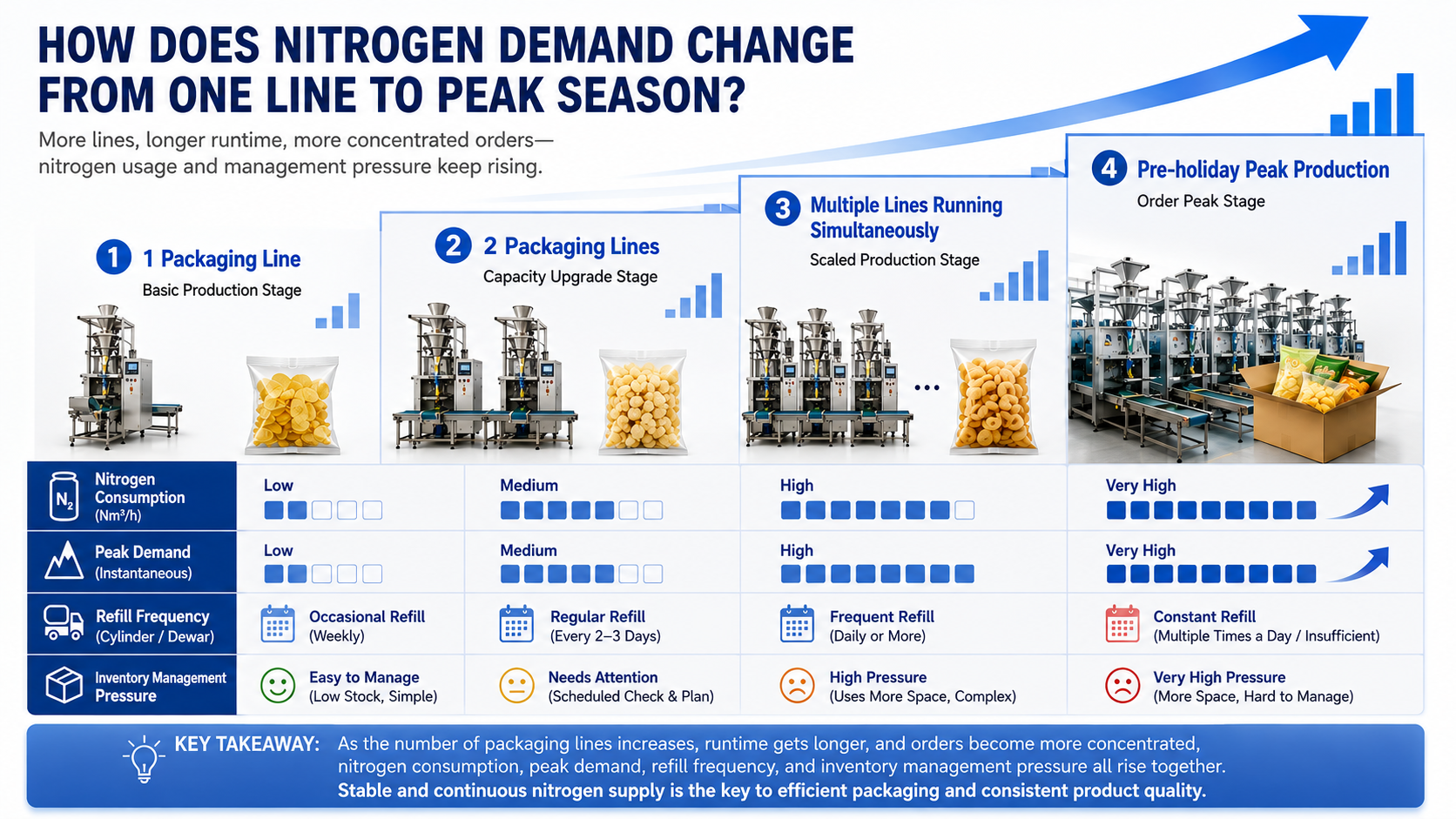
For small-batch or occasional production, outsourced nitrogen cylinders or liquid nitrogen may be enough.
But when packaging lines run every day, or multiple machines use nitrogen at the same time, nitrogen becomes part of daily production.
At this stage, food factories need to consider:
✅ Is the nitrogen supply stable?
✅ Can the flow rate keep up with the packaging line?
✅ Is the purity suitable for the product?
✅ Will cylinder replacement or gas replenishment affect production?
✅ Can the supply meet peak-season orders?
When nitrogen usage becomes continuous, the gas supply method is worth reassessing.
Why Consider On-Site Nitrogen Generation?
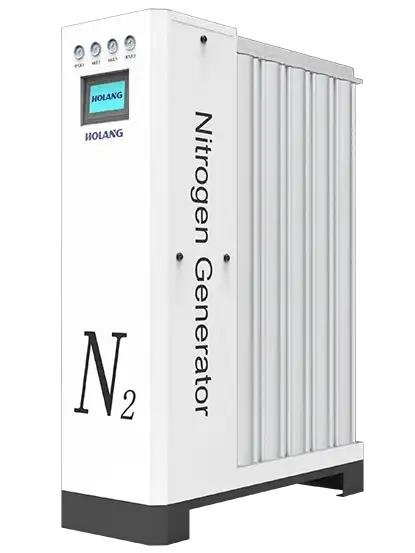
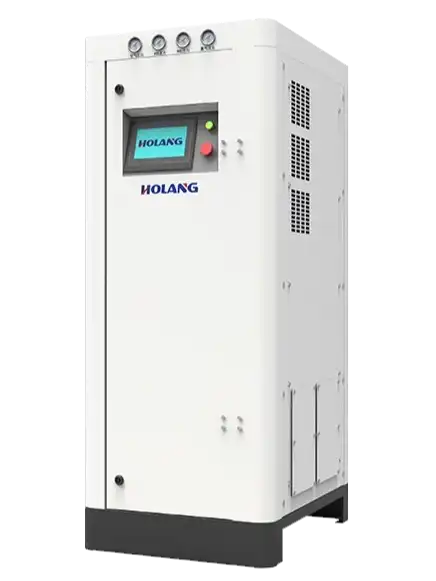
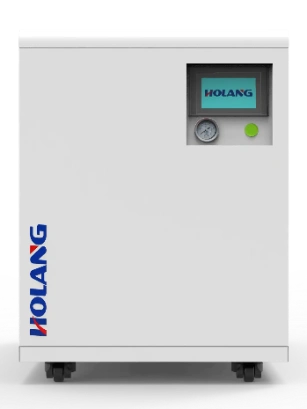
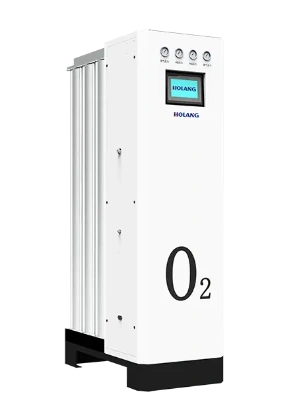
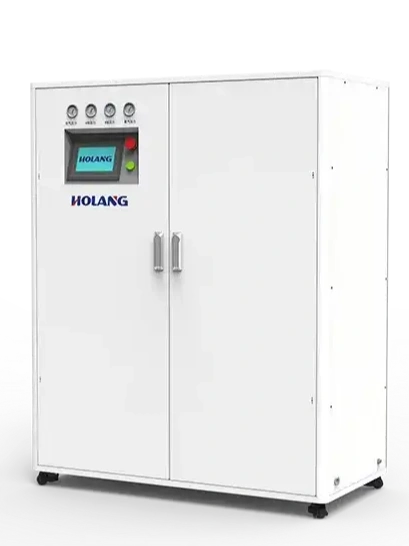
On-site nitrogen generation uses air as the raw material and produces nitrogen directly at the factory.
For food factories with long-term nitrogen flushing needs, it can help reduce dependence on outsourced gas delivery, lower the pressure of frequent cylinder replacement, and provide a more continuous nitrogen source for packaging lines.
This is especially suitable for packaging scenarios where nitrogen is used regularly, such as:
- Puffed snacks
- Nuts
- Powdered foods
- Coffee beans
- Bakery products
- Other nitrogen flushing packaging applications
The value of on-site nitrogen generation is not that it looks more advanced.
Its real value is making nitrogen supply more stable, controllable, and suitable for continuous production.
Summary
Puffed snack bags are not inflated just for appearance.
For food manufacturers, nitrogen flushing is related to oxidation control, product protection, transportation, storage, and shelf display.
When packaging lines continue to expand, nitrogen consumption increases, or multiple machines use nitrogen at the same time, factories should pay closer attention to whether their nitrogen supply is stable and efficient.
If your food packaging line is using nitrogen continuously, you can first prepare your product type, packaging method, number of packaging lines, operating hours, and current gas supply method.
HOLANG can help evaluate whether on-site nitrogen generation is suitable for your packaging scenario and what key parameters should be considered.