

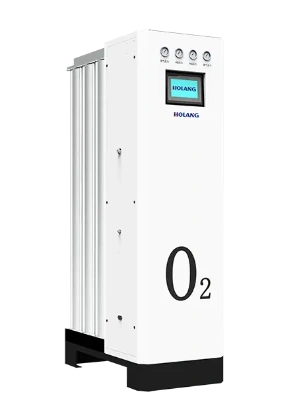
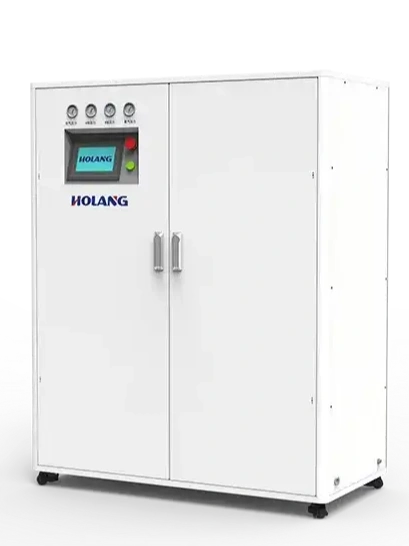
Oxygen has become an essential resource across a wide range of industries, including healthcare, environmental protection, wastewater treatment, and industrial manufacturing. As applications continue to expand, companies are no longer concerned only with having access to oxygen, but also with supply stability, cost efficiency, and operational safety.
Traditional oxygen supply methods, such as cylinders and liquid oxygen delivery, have been widely used for many years. However, in practice, these methods are often affected by transportation schedules, inventory management, and safety regulations. Any disruption in supply can lead to increased operating costs or even interruptions in production and system operation.
Against this backdrop, on-site oxygen generation systems are gaining increasing attention. By shifting from “buying oxygen” to “producing oxygen,” companies can achieve on-demand supply, continuous operation, and a more stable cost structure, along with improved system control.
As a result, oxygen generators are no longer just standalone equipment, but an important part of optimizing overall oxygen supply systems.
Working Principle of Oxygen Generators:
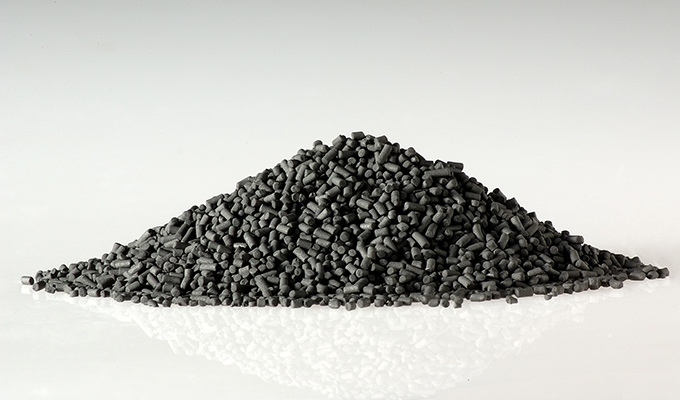
Most modern oxygen generators are based on PSA (Pressure Swing Adsorption) technology. The core principle relies on the different adsorption capacities of molecular sieves for various gases in the air, enabling the separation of oxygen from nitrogen.
In simple terms:
- Air is compressed and purified before entering the adsorption system
- Molecular sieves preferentially adsorb nitrogen
- Oxygen is separated and delivered as product gas
- Continuous operation is achieved through cyclic adsorption and regeneration
This process does not involve complex chemical reactions, ensuring stable operation and relatively simple maintenance, making it suitable for long-term continuous use.
Key Applications of Oxygen Generators:
-
Healthcare: Reliable Oxygen Supply for Critical Care
In hospitals, clinics, and emergency medical scenarios, oxygen is essential for respiratory support and life-saving treatments. Traditional cylinder-based systems require frequent replacement and carry the risk of supply interruption, while liquid oxygen systems demand strict storage and handling conditions.
On-site oxygen generation provides a continuous and reliable oxygen source, reducing dependence on external supply. For small to medium-sized healthcare applications, systems with capacities around 20–25 Nm³/h, such as OPL11 or OPL12, are typically suitable. For applications requiring higher stability, integrated systems with buffer tanks are recommended to ensure consistent output.
- Wastewater Treatment: Enhancing Efficiency and Reducing Energy Consumption
In wastewater treatment, oxygen plays a critical role in biological processes. Traditional air aeration often suffers from low oxygen transfer efficiency, while oxygen-enriched systems significantly improve performance.
By implementing oxygen generators, operators can:
- Increase dissolved oxygen levels
- Accelerate biological reactions
- Reduce overall energy consumption
For medium-scale projects with demand around 30 Nm³/h, models such as OPL07D or OPL08D are suitable. For continuous and stable operation, integrated systems with buffer tanks (e.g., OPL07BD) are recommended to minimize fluctuations.
- Aquaculture: A Key Factor for Yield and Survival Rate
In aquaculture, dissolved oxygen levels directly affect fish health, growth, and survival rates. Oxygen deficiency can lead to stress or even large-scale losses, especially in high-density farming environments.
Oxygen generators provide a stable oxygen supply, enabling higher stocking density and improved productivity. Depending on the scale, systems in the 20–30 Nm³/h range (such as OPL12 or OPL07D) are commonly used. For oxygen-sensitive environments, buffer tank configurations can further enhance stability.
- Industrial Applications: Balancing Efficiency and Cost
Oxygen is widely used in industrial processes such as combustion enhancement, metal processing, and glass manufacturing. In these applications, companies focus on supply reliability and long-term cost efficiency.
On-site oxygen generation systems provide:
- On-demand oxygen supply
- Reduced dependence on external suppliers
- Improved operational stability
With varying requirements from 20 Nm³/h to 30+ Nm³/h, the OPL series offers flexible configurations and scalability to meet different operational needs.
Key Advantages of Oxygen Generators:
- Lower Overall Oxygen Cost
Traditional supply methods involve costs for gas purchase, transportation, and storage management. On-site oxygen generation eliminates these recurring expenses and reduces reliance on external supply chains, offering significant long-term cost advantages.
- Continuous and Stable Supply
Oxygen generators can operate 24/7, ensuring uninterrupted supply. For applications with high stability requirements, integrated systems with buffer tanks (such as the OPL B series) are recommended to reduce pressure fluctuations.
- Improved Safety
Compared to high-pressure cylinders and cryogenic liquid oxygen storage, on-site generation reduces transportation and storage risks, resulting in a safer operating environment.
- Flexible Expansion and Adaptability
As demand grows, oxygen systems can be configured or expanded accordingly, avoiding the need for complete system replacement and reducing future investment risks.
Selection Guide: Choosing the Right Oxygen Generator:
When selecting an oxygen generator, three key parameters should be considered:
- Flow rate (Nm³/h): determines supply capacity
- Purity (typically 90–95%): affects application performance
- Pressure (bar): must meet process requirements
For example:
- 20–25 Nm³/h → OPL11 / OPL12
- ~30 Nm³/h → OPL07D / OPL08D
For applications requiring higher stability, integrated systems with buffer tanks are recommended.
Conclusion:
As companies place increasing emphasis on cost control, safety, and operational reliability, on-site oxygen generation is evolving from an optional solution into a standard configuration.
Compared to traditional supply methods, oxygen generators not only provide a stable and reliable oxygen source, but also contribute to improved operational efficiency and long-term sustainability.
If you are evaluating an oxygen supply solution, it is recommended to assess your specific requirements—such as flow rate, purity, and pressure—and select a properly matched system to achieve optimal performance and return on investment.