




A well-known nut manufacturer once encountered a challenge during continuous production: using the same batch of raw materials and the same packaging equipment, the finished products packaged on two consecutive days showed noticeable differences. Some packaging bags remained full and plump, while others appeared somewhat deflated. During subsequent shelf-life observations, the stability of the product's flavor also varied.
In fact, this phenomenon occurs frequently in food processing production lines. As the first manufacturer of modular nitrogen generators in China, Holang Tech (Suzhou) Co., Ltd (HOLANG) observed during visits to numerous enterprise production lines that while everyone adopts the nitrogen flushing process, the final packaging effects sometimes fluctuate.
These phenomena remind us that the ultimate effect of gas-flushed packaging depends not only on "whether nitrogen is flushed," but also on whether three key technical aspects of the production line are functioning optimally.
I. Residual Oxygen Control: The Direct Indicator for Evaluating Nitrogen Flushing Effectiveness
In food packaging, the primary purpose of flushing nitrogen is to reduce the oxygen concentration inside the packaging through gas displacement, thereby delaying lipid oxidation and flavor loss. If the gas displacement is incomplete and the residual oxygen inside the packaging remains too high, oxidation reactions will still occur.
Different food categories have varying requirements for residual oxygen levels:
| Product Type | Recommended Residual Oxygen Range | Common Manifestations of High Residual Oxygen |
| Nuts, Fried and Puffed Foods | ≤ 2%–3% | Increased peroxide value, prone to rancidity |
| Cookies, Crisp Biscuits | ≤ 1%–2% | Lipid oxidation, darkened product color |
| Oily Snacks | ≤ 2% | Deteriorated taste, increased acid value |
| Coffee, Fat-containing Powders | ≤ 1% | Aroma loss, oxidized off-flavors |

A common blind spot in daily production: Sometimes, random checks of residual oxygen on the production line show "qualified" results, but the displacement effect may have already experienced slight fluctuations. Minor adjustments to the gas flushing nozzle position, millisecond-level deviations in flushing time, or subtle changes in the exhaust channel can cause the residual oxygen level to fluctuate within the acceptable range (e.g., rising from 2% to 5%). Therefore, we generally recommend that instead of merely focusing on "whether gas was flushed," more attention should be paid to whether the actual residual oxygen volume inside the packaging remains stable at the exact moment of sealing.
II. Gas Supply Stability: The Crucial Foundation for Packaging Consistency
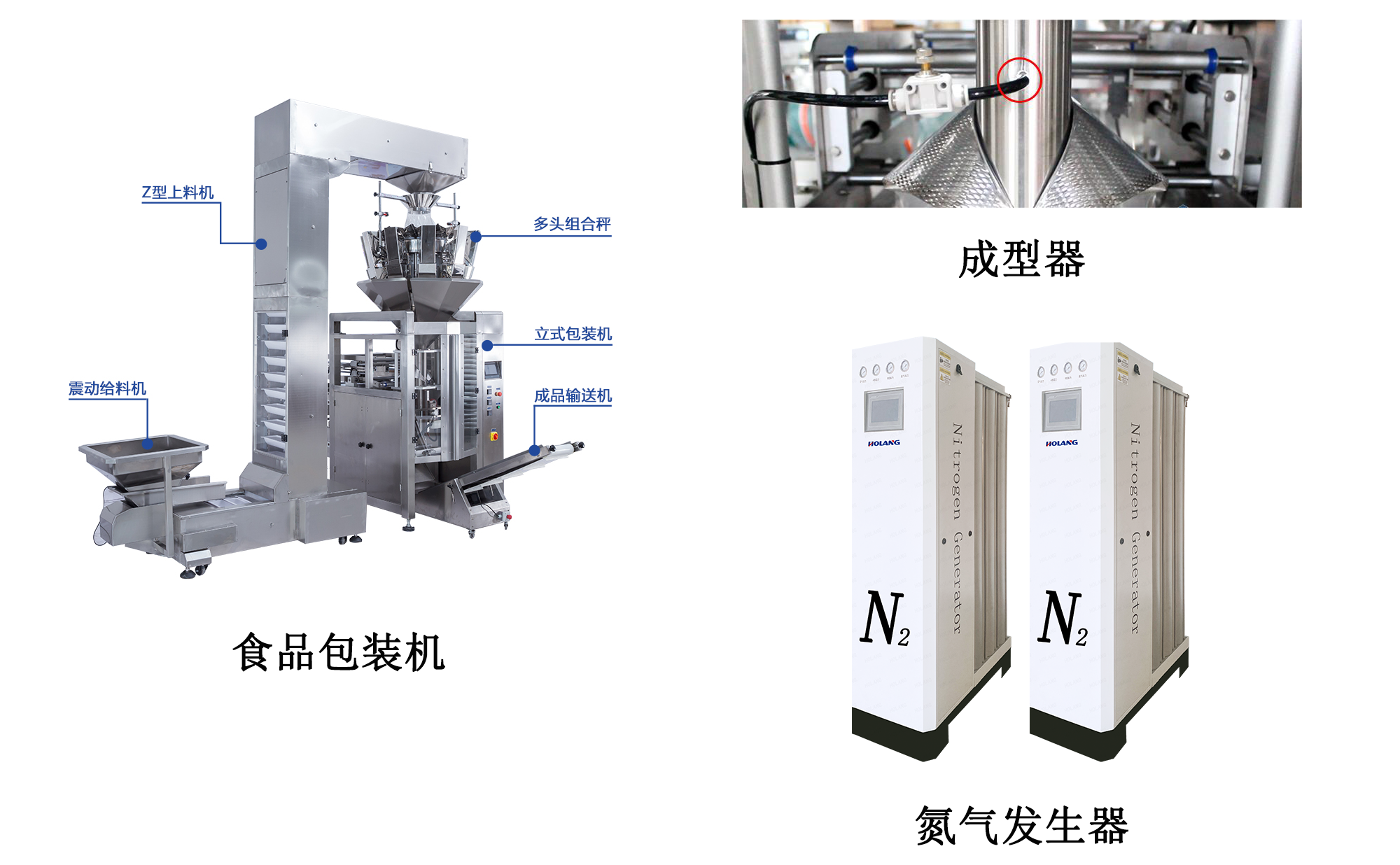
No matter how precisely the packaging machine parameters are calibrated, they require the stable coordination of the front-end gas source. In continuous production, subtle fluctuations in the nitrogen supply are often directly reflected in the finished packaging:
-
Purity Fluctuations: If the nitrogen purity drops from 99.9% to 99.0%, the residual oxygen inside the packaging will slightly increase, which may lead to inconsistent shelf-life performance among products in the same batch.
-
Pressure Instability: If the gas pressure is insufficient during flushing, displacement is often inadequate, easily resulting in underfilled packaging or air trapped in the seal.
-
Insufficient Flow: When multiple packaging machines operate simultaneously in a workshop, if the gas supply system cannot keep up during peak periods, the packaging effects within the same batch will be uneven.
For food production lines with multi-shift operations and high production capacity, whether the gas supply system can continuously and steadily output the required purity, pressure, and flow is the foundation for ensuring the repeatability of packaging results.
III. Gas Supply Methods: Matching with Production Line Operating Characteristics
Currently, the common gas supply methods used by food enterprises mainly include cylinders, liquid nitrogen, and on-site nitrogen generation. Each method has its suitable scenarios. If the actual operational rhythm of the production line is comprehensively considered during equipment selection, subsequent production management will be much smoother.
| Gas Supply Method | Applicable Scenarios | Selection Suggestions and Considerations |
| Cylinder Gas | Low gas consumption, single-shift production | As consumption increases, the frequency of cylinder changes rises; attention must be paid to manual handling costs and potential pressure fluctuations. |
| Liquid Nitrogen | Medium consumption, extremely high purity requirements | Storage tanks require specific floor space, and the replenishment cycle is relatively fixed. |
| On-site Nitrogen Generation | Multi-shift continuous production, large gas consumption | Requires initial equipment investment, but due to the low cost per cubic meter of gas, it offers significant long-term economic benefits. |
When evaluating gas supply methods, you can refer to the following three aspects:
-
What is the approximate daily gas consumption? Below 50 Nm³/day, cylinders or liquid nitrogen are usually more economically flexible; above 200 Nm³/day, the long-term cost advantages of on-site nitrogen generation gradually become apparent.
-
Is it continuous multi-shift production? If cylinder replacement occurs more than 2-3 times a day, the hidden costs associated with downtime for gas changes should be considered.
-
Are there expansion plans in the next 1-2 years? If planning to add packaging lines, it is advisable to prioritize the "scalability" of the gas supply system in advance to leave room for future growth.
IV. A New Gas Supply Choice for Continuous Production Scenarios: Modular Nitrogen Generation
For food enterprises with multi-shift continuous production, centralized gas consumption, and future expansion plans, an increasing number are turning to novel on-site nitrogen generation equipment to better balance stability and flexibility.
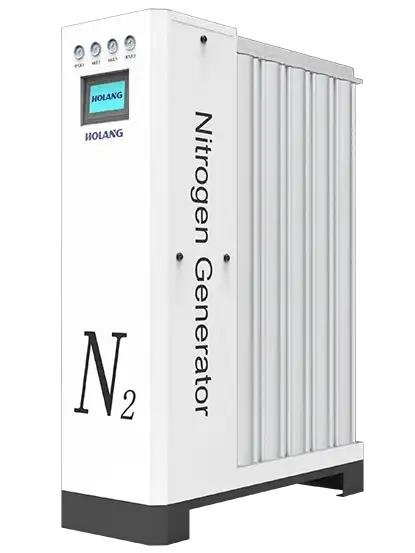
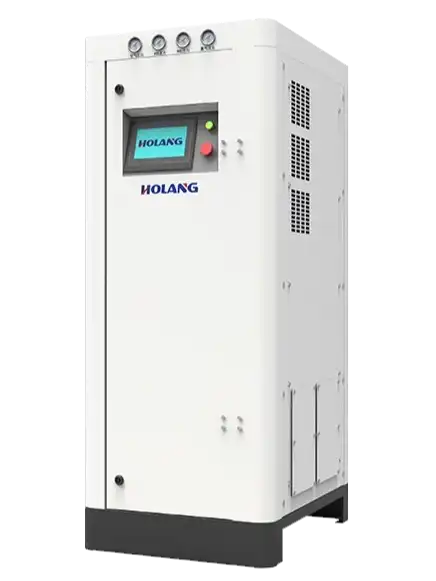
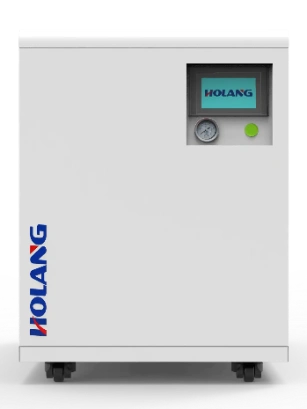
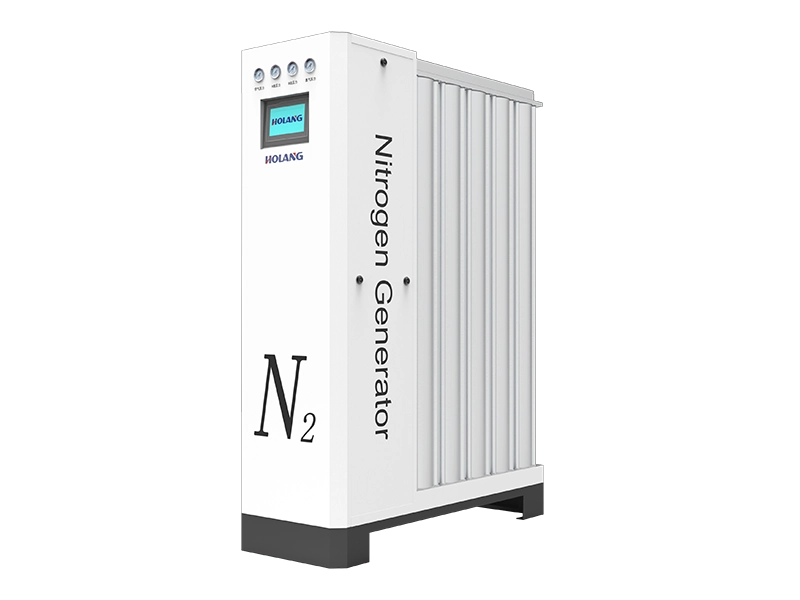
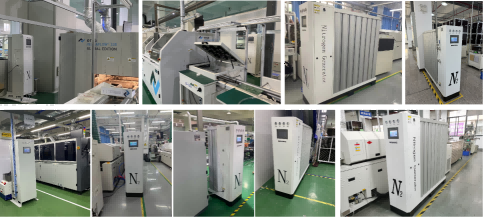
HOLANG has designed the NPL series Modular Nitrogen Generator to address these continuous production conditions, aiming to provide food enterprises with a more worry-free gas supply experience:
-
Precise Matching & Redundancy: Flexible modular design allows enterprises to select models precisely based on actual current needs. Multiple modules operate in parallel; during routine maintenance, the system can still maintain a certain proportion of continuous gas supply, significantly reducing the risk of complete line shutdowns caused by a single unit's failure.
-
Stable and Reliable Piping Design: The equipment utilizes the German WALFORM piping process, replacing traditional welding methods. This better handles micro-vibrations during long-term operation and reduces the risk of leaks, thereby ensuring enduring stability of nitrogen pressure and purity.
-
Exemption from Inspection Hassles: Considering compliance convenience for enterprises, HOLANG's equipment is explicitly not classified as a pressure vessel. Therefore, it does not require cumbersome special equipment inspection processes. For the European market, the equipment does not require PED (Pressure Equipment Directive) certification and can be put into use immediately after installation.
-
Continuous and Stable Gas Supply: Once connected to compressed air and power, the system automatically generates gas, maintaining the required purity and pressure. It is perfectly suited for multi-shift, unattended production environments.
Conclusion
Gas-flushed packaging is a systematic technological process. Properly implementing the three aspects of controllable residual oxygen, stable gas supply, and matched supply methods can help us better achieve the expected preservation and packaging effects in daily production.
If you occasionally encounter unstable residual oxygen control or gas supply pressure fluctuations during production line operations, or if you are evaluating a more suitable gas supply solution for a new production line, please feel free to communicate with us at any time.
Get Your Exclusive Gas Supply Recommendations
Welcome to visit our official website: www.holanggas.com
The HOLANG technical team is highly willing to provide you with objective operational analysis and equipment selection references based on your actual gas consumption, shift arrangements, and future development plans.