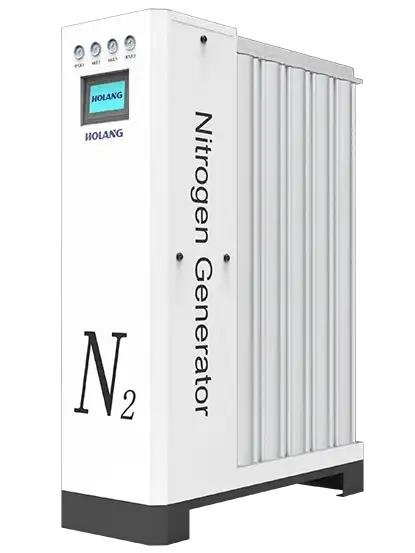
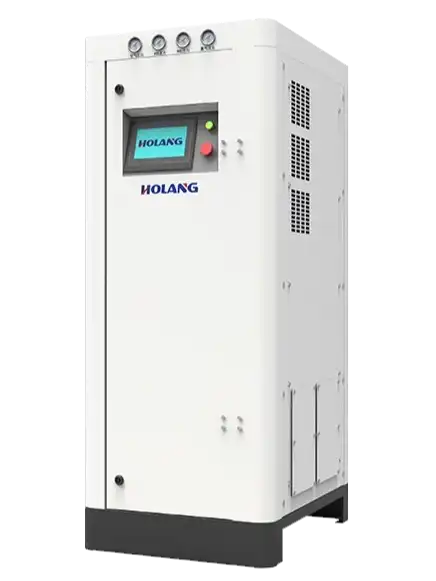
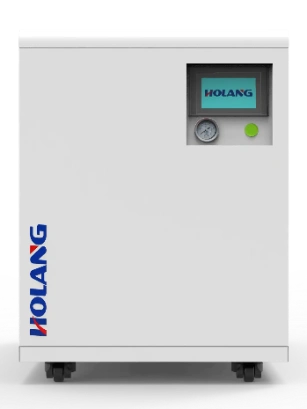



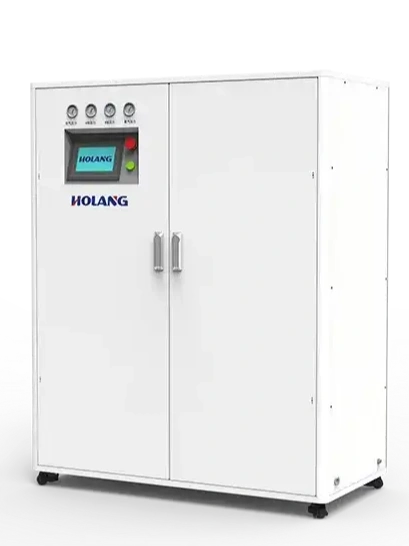
When customers first hear “modular nitrogen generation,” they often think of one simple idea:“If you need more nitrogen, just add another module.”
That idea is not wrong. But in real factories, whether expansion actually works rarely depends on how many modules you add. It depends on something more fundamental:Was your nitrogen supply system designed as a scalable architecture from day one?
In other words, the real value of modular design is not “can add.”It is: after adding modules, can purity, pressure, and continuous supply remain stable?
1. Why “Just Add One More” Often Fails on Site
Across typical applications we support, such as SMT/wave soldering, food packaging, and laboratory supply, expansion failures usually come down to three issues.
1) No margin in compressor & air pre-treatment, so purity starts to drift
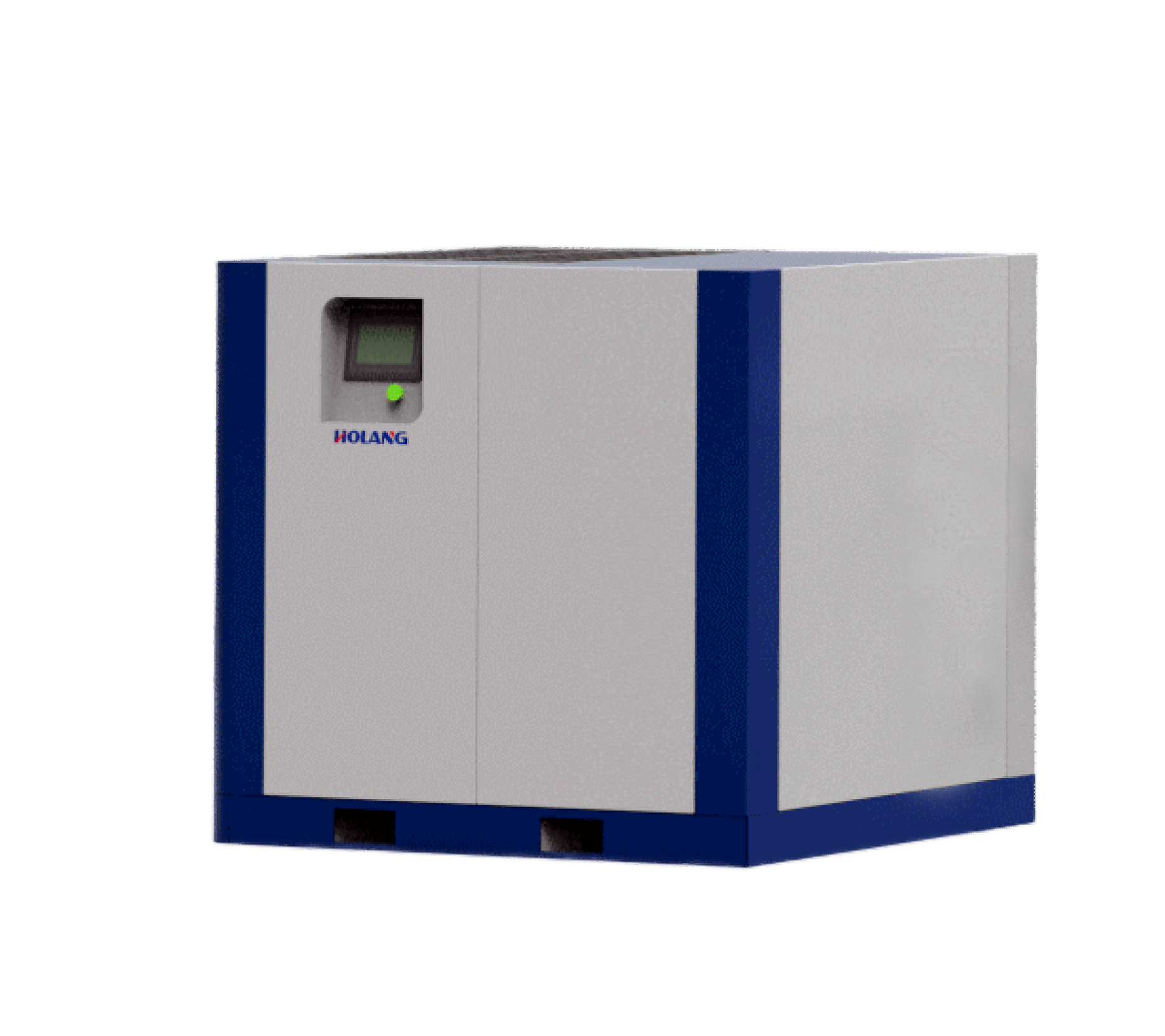
Expansion means both gas demand and system load increase. If the air compressor, dryer, and filtration were sized for a single module, common outcomes include:
-
Dew point, oil carryover, and dust control get worse
-
Adsorption beds are overloaded
-
Purity begins to fluctuate, alarms increase, and process stability suffers
Often the problem is not the nitrogen generator itself. It is this: you added equipment, but the upstream system capability did not scale with it.
2) Parallel modules without unified control lead to “unsynchronized lifetime”
If modules run independently without system-level coordination and load balancing, you may see:
-
Some modules switching too frequently while others run under low load
-
Operating-hour gaps grow wider over time
-
Maintenance becomes harder and more expensive (staggered replacements, repeated downtime)
Eventually it becomes: it works, but it gets increasingly difficult to manage.
3) Buffering and piping were not designed for expansion, and demand spikes destabilize the system
After expansion, the “hidden bottlenecks” show up fast:
-
Insufficient total buffering, weak peak-shaving capability
-
Small pipe diameter increases pressure drop
-
Simultaneous start-ups at multiple use points cause pressure fluctuations
On site, it often looks like this: average flow is enough, but the process is unstable. This is especially critical for stability-sensitive processes such as nitrogen flushing in food packaging and inerting for welding.
2. Real Modular Design: Not Stacking Equipment, but Scaling System Capability
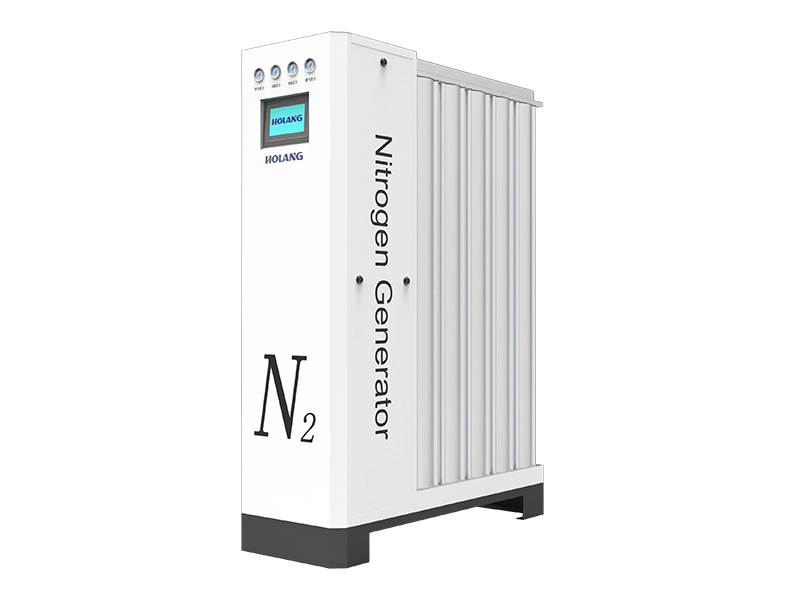
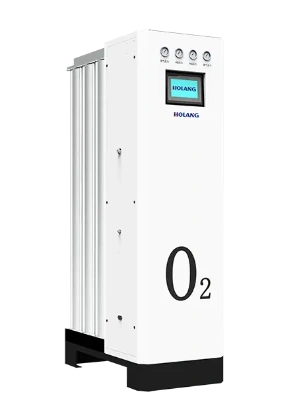
In HOLANG’s project practice, we define modular nitrogen generation as: a scalable nitrogen supply system, from the air supply side to the control side.
That is why HOLANG modular solutions are more likely to “expand smoothly and stay stable.”It comes down to three core design principles:
1) Define the “system ceiling” first, then expand in stages
We typically break customer demand into three levels:
-
Current stable operating demand
-
Expansion demand for the next 1–3 years
-
Extreme conditions (simultaneous start-up, peak consumption, future new use points)
The benefit is clear: you can add modules in phases without repeatedly redesigning the system boundary.
2) Parallel modules must be controlled as a system, not as individual units
The key is not “more machines,” but:
-
Unified interlock control and load balancing
-
More even operating hours across modules
-
Stable system rhythm after expansion
So customers gain not just capacity, but: a more stable nitrogen supply window and a more predictable maintenance cycle.
3) Design buffering and piping for expansion to increase anti-fluctuation capability
Many processes are not sensitive to average consumption. They are sensitive to instantaneous fluctuations. HOLANG solutions typically incorporate from the beginning:
-
Buffer sizing strategy
-
Pressure drop estimation
-
Peak shaving capability planning
So expansion does not dilute overall system stability.
3. What Results Can Customers Expect?
When modular nitrogen is designed correctly, customers typically see:
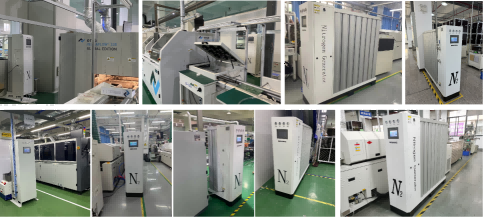
-
Faster expansion: smoother module additions with lower retrofit and downtime risk
-
More stable supply: better control of purity and pressure fluctuations, a wider process window
-
Easier maintenance: more balanced runtime, fewer “patchwork” maintenance decisions
-
More controllable investment: phased spending without overpaying for uncertain future capacity
-
Lower risk: with redundancy or N+1 design logic, single-point issues have less impact
That is why many customers ultimately choose not just a single unit, but: a nitrogen supply system that can grow with their production line.
Recommended Fit: Who Should Choose Modular?
Modular solutions are typically a better choice if you match any two of the following:
-
Production expansion schedule is uncertain and order fluctuations are obvious
-
Future new consumption points may be added, or purity requirements may increase
-
Your process is stability-sensitive (food packaging flushing, welding inerting, etc.)
-
You want to reduce upfront CAPEX while keeping clear expansion headroom
Summary
Modular nitrogen generation is not simply “add one more module when nitrogen is not enough.”Whether expansion stays stable depends on:
-
Whether compressor and air pre-treatment margins were reserved
-
Whether the parallel system has unified control and load balancing
-
Whether buffering and piping were designed for anti-fluctuation and future expansion
HOLANG modular solutions focus on stable expansion: define the future boundary first, then expand smoothly with better purity and pressure stability, more predictable maintenance, and more flexible investment.