


In 3D printing environments, nitrogen supply is rarely as simple as connecting a gas source and starting production. Different machines, printing processes, and operating rhythms can create very different nitrogen requirements.

Some sites are more concerned about purge speed before printing starts. Others focus on avoiding gas interruption during long print cycles, while some are more sensitive to stable outlet pressure and flow.
That is why nitrogen supply solutions should not be selected based only on the equipment name. The real questions are:
- What nitrogen purity level is required?
- What are the peak and continuous gas consumption demands?
- Will additional printers or workstations be added in the future?
1. SLM: More Focus on Purge Peaks and Continuous Supply
In metal powder printing applications, the build chamber usually needs to be purged before printing begins in order to quickly reduce oxygen concentration.
Once printing starts, gas consumption typically shifts into a more stable holding stage.
In these scenarios, nitrogen system sizing should not be based only on average consumption. Peak demand during the purge stage is equally important.
If the gas source can support only the stable operating phase but not the initial purge demand, startup efficiency and printing rhythm may be affected.
2. SLS: More Focus on Continuous Supply and Multi-Machine Operation
SLS is commonly used for polymer materials such as nylon, where print cycles are often relatively long.
In these environments, unexpected gas interruption during operation is usually highly undesirable.
For service providers or production facilities running multiple printers simultaneously, centralized supply, pipeline distribution, and supply stability become important considerations.
The key question is not whether a single printer can receive nitrogen, but whether the gas system can remain stable when multiple machines are operating at the same time.
3. DED: More Focus on Outlet Pressure and Localized Shielding
DED applications often involve localized melt pool shielding, while the print head may move over a large working range.
Pipeline length, workstation distance, and simultaneous operation can all affect final gas delivery performance.
In these cases, evaluating only the nitrogen generator’s production capacity is not enough. Pipeline layout, buffer configuration, outlet pressure, and actual gas consumption rhythm should all be considered together.
4. Key Questions Before Selecting a Nitrogen Supply Solution
Before evaluating a nitrogen supply system for a 3D printing site, it is recommended to confirm:
- Process type: SLM, SLS, DED, or other processes
- Number of machines: standalone use or centralized supply
- Required nitrogen purity and allowable fluctuation range
- Whether high-flow purge demand exists before printing
- Single print cycle duration and continuous operation time
- Future expansion plans
- Available installation space, pipeline distance, and site conditions
If the site has only a small number of printers with stable gas consumption, a standalone nitrogen supply system may be sufficient.
If multiple printers require centralized supply, pipeline distribution, buffer configuration, and terminal gas stability should be prioritized.
If print cycles are long and downtime losses are significant, continuous supply capability and backup planning become especially important.
5. Common Nitrogen Purity and Configuration Reference
Nitrogen purity requirements vary depending on process type, material, and equipment.
As a general reference:
- Standard metal 3D printing applications may consider 99.99% nitrogen
- Applications requiring tighter oxygen control may consider 99.999% nitrogen
- Specialized materials or highly reactive applications should be evaluated according to process requirements and equipment recommendations
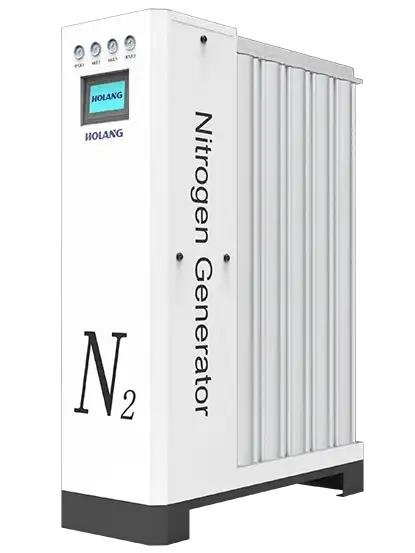
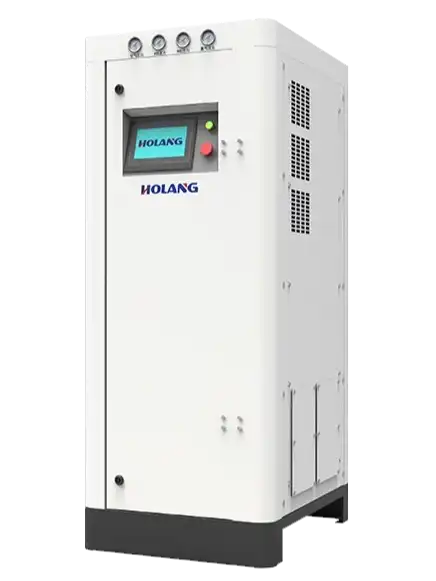
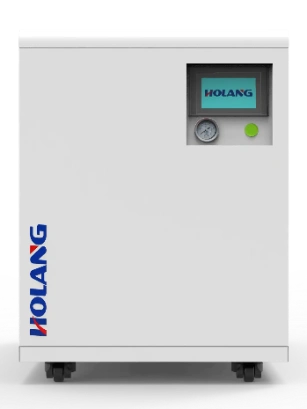
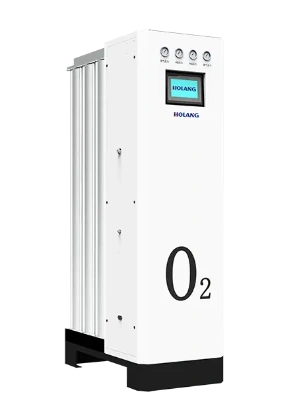
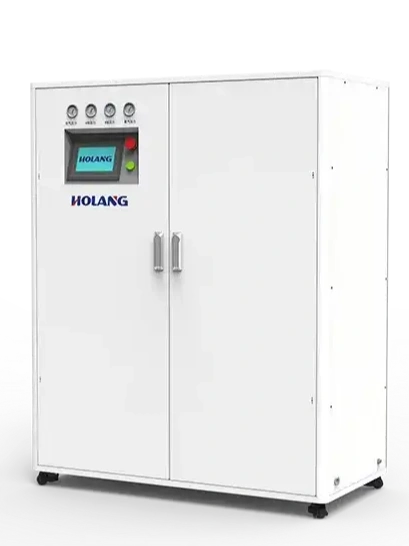
For example, the HOLANG Modular Nitrogen Generator NPL05B can serve as a flexible nitrogen supply reference for certain small to medium-sized 3D printing applications.
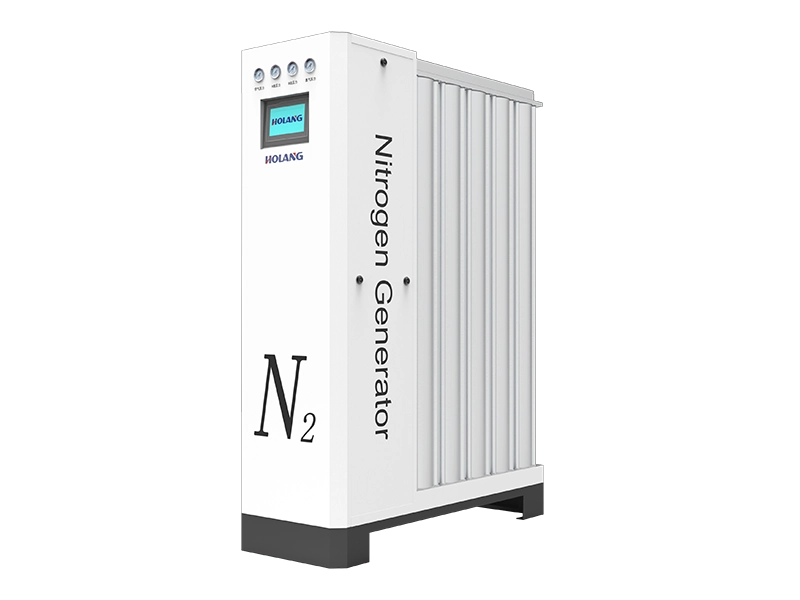
Example Reference Specifications for NPL05B
-
Nitrogen purity range: 95%–99.999%
-
Flow range: 12.4–66 Nm³/h depending on required purity level
-
Key features: modular design, high-quality components, and intelligent monitoring
-
Optional configuration: nitrogen buffer tank available for improved supply stability
Final model selection, purity, flow, and pressure configuration should always be determined according to actual site conditions and equipment requirements.
6. When Is a Modular Nitrogen Generator Worth Evaluating?
In 3D printing nitrogen supply applications, modular nitrogen generators are particularly suitable for solving several common challenges:
- Fluctuating gas demand
- Continuous supply requirements
- Limited installation space
1) Peak Purge Demand
SLM systems may require relatively high flow during chamber purging before printing begins, while gas consumption decreases once stable printing starts.
With appropriate buffer configuration, modular systems can adapt more flexibly to this “short-term peak + stable holding” gas demand profile.
2) Long Continuous Operation
For SLS or multi-machine installations, print cycles are long and unexpected shutdown can create significant losses.
A modular system can provide operational redundancy through multiple modules, allowing some modules to remain online while others undergo maintenance.
3) Limited Space
R&D centers, small-batch production workshops, and equipment-dense facilities often prefer to reserve more space for printing equipment.
Modular systems offer greater layout flexibility and are well suited for sites with space limitations or changing future layouts.
4) Gradual Expansion
If additional printers may be added later, modular systems can be configured for current demand while preserving room for future scaling, helping avoid oversized initial investment.
Therefore, if the site involves:
- Peak purge demand
- Long print cycles
- Multiple printers operating together
- Limited space
- Gradual equipment expansion
then a modular nitrogen generator may deserve closer evaluation.
Summary
Nitrogen supply solutions for 3D printing applications should not be selected based only on process names or nitrogen purity.
Purity, flow, pressure, purge demand, continuous operation time, machine quantity, pipeline conditions, and future expansion plans should all be evaluated together.
If the site is already experiencing long purge times, unstable gas supply, multi-machine coordination challenges, or concerns about interruption during long print cycles, it may be time to reassess whether the current nitrogen supply configuration truly matches operational demand.
HOLANG focuses on on-site nitrogen generation solutions for industrial and professional applications.
Based on machine quantity, target purity, peak flow demand, continuous operating hours, and installation conditions, HOLANG can help evaluate suitable nitrogen supply solutions for 3D printing environments.
If you are currently assessing nitrogen supply options for 3D printing applications, feel free to contact the HOLANG team for further discussion.