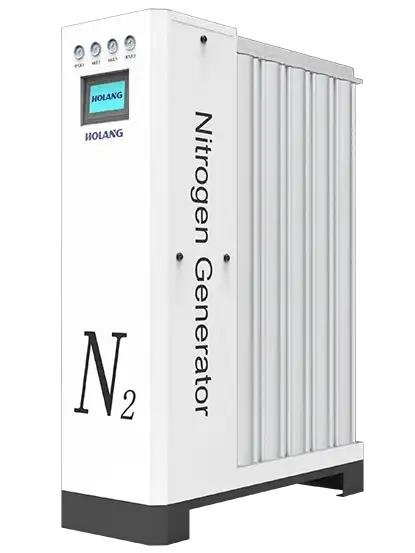
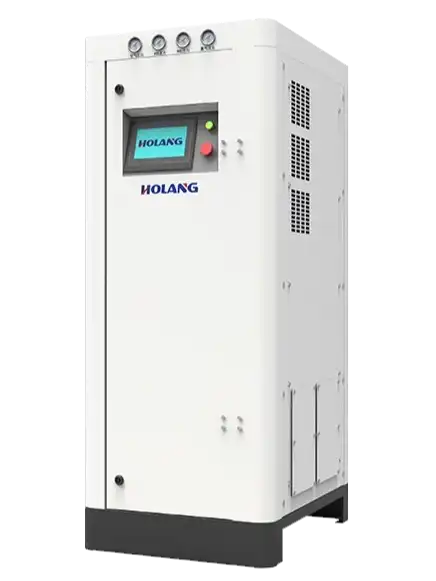
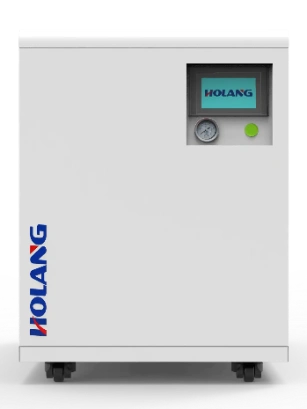



In the selection of nitrogen generation systems, customers often notice a clear price difference between integrated (all-in-one) and split-type configurations, even when the required purity, flow rate, and pressure are the same.
Although both solutions deliver nitrogen reliably, their engineering structure, system integration level, long-term stability, and maintenance design differ substantially. These fundamental differences are the true source of the price gap.
🚀 Quick Guide: Which System Fits Your Facility?
Before diving into the engineering details, use this table to quickly match your facility type with the right system:
| Feature | Integrated System | Split-Type System |
|---|---|---|
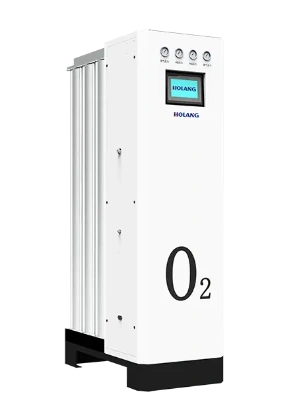
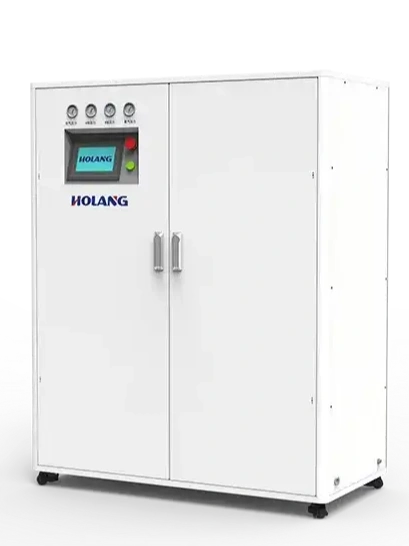
| HOLANG Model | Explore NPA / NPL Series → | Explore Industrial Skid Series → |
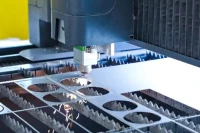
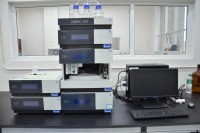
| Typical User | SMT Lines, Labs, Laser Cutting, Food | Chemical Plants, Mines, Large Factories |
| Space Needed | Very Small (Plug & Play) | Large (Requires separate compressor room) |
| Noise Level | Low (Quiet operation) | High (Standard industrial noise) |
| Price Logic | Higher Initial Cost (Paying for tech & space) | Lower Initial Cost (Paying for raw capacity) |
This article provides a comprehensive technical explanation from the perspective of system engineering.
1. Different System Integration Levels Lead to Completely Different Engineering Workloads
1.1 High-density engineering in integrated systems (e.g., HOLANG NPA Series)
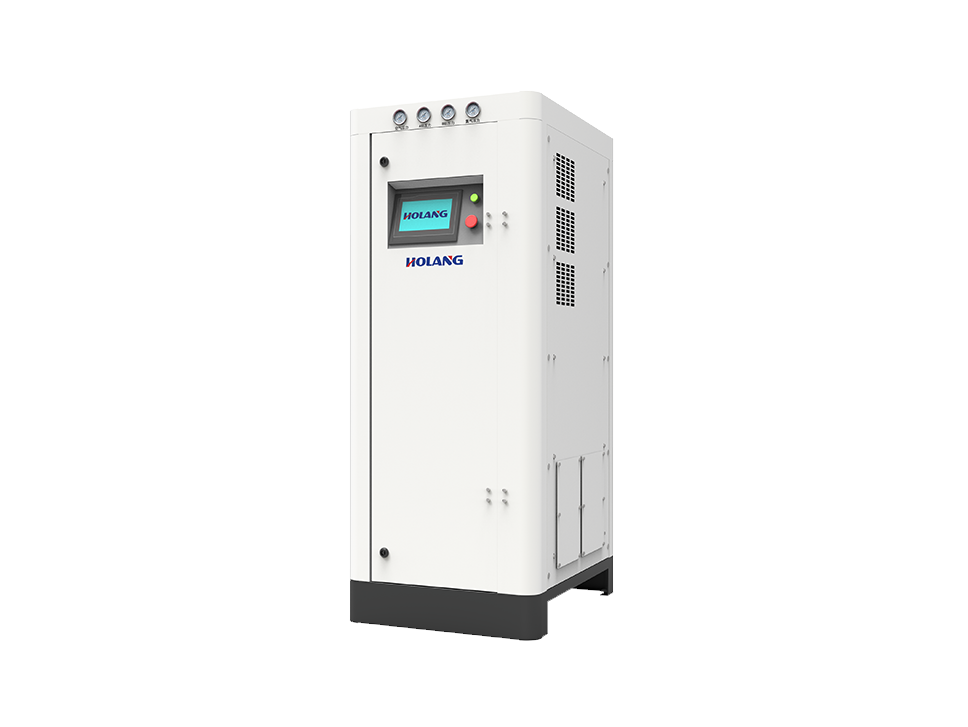
An integrated nitrogen generator must accommodate multiple functional modules within a compact enclosure, including:
-
Air compressor
-
Filtration and purification stages
-
PSA nitrogen generator
-
Electrical control system
-
Buffer tank
-
Safety and monitoring units
To ensure stable long-term operation, extensive engineering work is required, including internal heat management, vibration isolation, and electromagnetic interference avoidance.
This level of integration significantly increases design complexity compared with a split configuration.
1.2 Split-type systems operate under much looser constraints
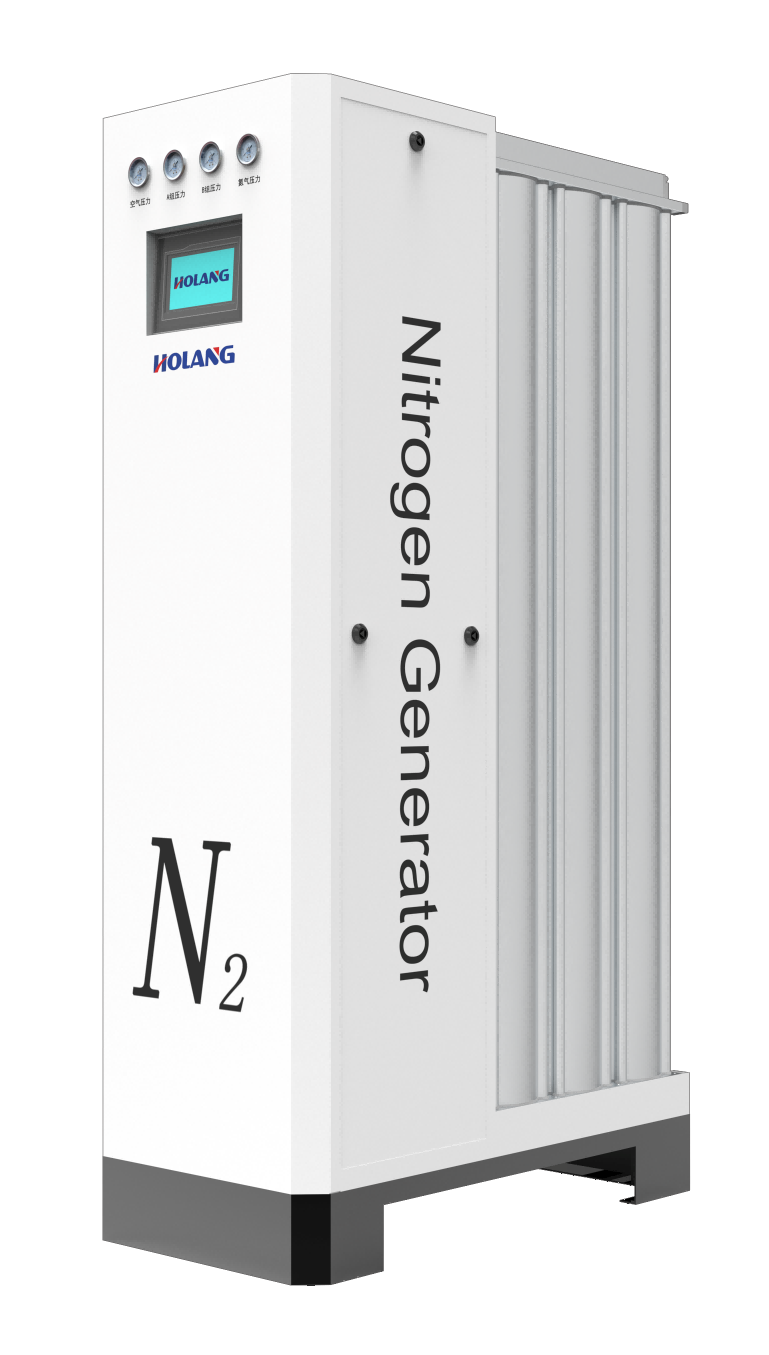
With separate equipment placements and generous space, heat dissipation, airflow, and vibration are naturally easier to control. This makes split-type systems less demanding in terms of engineering optimization, resulting in lower development costs.
2. Higher Operating Stress Requires Higher-Spec Components in Integrated Systems
2.1 More demanding internal environment
Compact layouts result in higher temperature concentration and tighter mechanical coupling.
Therefore, integrated systems (like our NPL Series) must use higher-grade components, such as:
-
Low-noise, high-efficiency compressors
-
High-temperature-resistant pipelines and fittings
-
Precision pressure and oxygen concentration sensors
-
Reinforced shock-absorption structures
These component upgrades directly increase the manufacturing cost but ensure reliability in a small footprint.
2.2 Split-type systems can use standard components
Because heat and vibration are naturally dispersed, split-type systems face fewer environmental constraints, enabling more flexible and economical component selection.
3. Stability Requirements Are Not the Same: Integrated Units Require System-Level Optimization
Integrated systems must ensure stability despite their compact structure. This requires extensive engineering work to manage:
-
Heat cycle balance
-
Pressure fluctuation control
-
Interaction among multiple functional modules
These system-level optimizations are invisible to end users, yet they constitute a major part of development costs. Split-type systems rely on external space and physical distance to maintain stability, reducing the need for such intensive integration engineering.
4. “Plug-and-Play” Convenience Comes From Increased Factory-Side Workload
One of the main advantages of integrated systems is that they are ready for immediate use upon delivery. To achieve this, manufacturers must complete far more extensive testing before shipment:
-
Full compatibility validation
-
Comprehensive thermal balance testing
-
Noise and vibration tuning
-
Multi-condition pressure stability tests
-
Rigorous leakage and sealing tests
-
Extended continuous-running tests
The total test workload is typically two to three times that of a split-type system.
By contrast, split-type systems rely on field installation and tuning, reducing pre-shipment engineering cost.
5. Maintenance Design Is More Sophisticated in Integrated Units
To ensure maintainability in limited internal space, integrated nitrogen generators often include:
-
Modular or drawer-type structures
-
Quick-release designs for filters and consumables
-
Dedicated maintenance channels
-
Clear layout separation between high-temperature and sensitive components
-
Optimized cable and piping routing to avoid excessive disassembly
This engineering complexity significantly increases R&D and production workload.
Split-type systems provide abundant maintenance space and straightforward access, so structural requirements are much lower.
6. The Cabinet of an Integrated Unit Is a Functional Component, Not a Cosmetic Element
The enclosure of an integrated nitrogen generator must deliver multiple functions simultaneously, including:
-
Noise insulation
-
Guided airflow and heat dissipation
-
Mechanical strength and vibration resistance
-
Sealing and safety protection
-
Dust and corrosion resistance
-
Support for internal modules
This requires high-performance materials, precise fabrication and more complex processes, contributing to total cost.
💰 Need an Accurate Price Comparison?
Still not sure if the extra cost of an Integrated unit is worth it for your business?
Send us your Floor Plan or Space Dimensions.
Our engineers will:
-
Check if a Split-Type system fits your room (saving you money).
- Provide a Side-by-Side Quote (Integrated vs. Split) for the exact same purity/flow.