


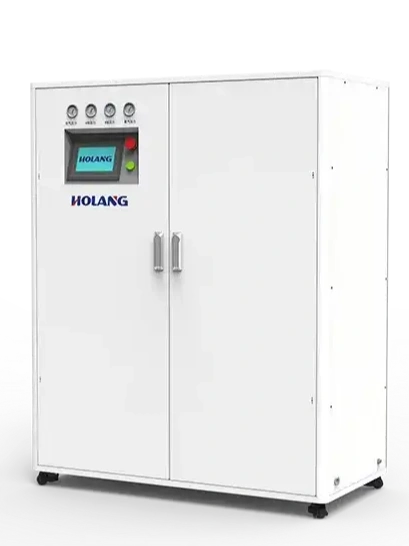
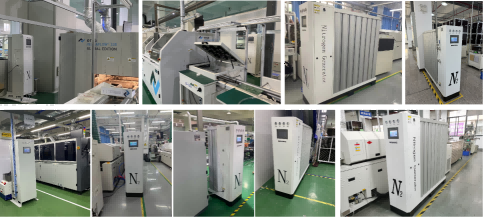
When companies evaluate a nitrogen generator, purity, flow rate and price are often the first factors they compare. In real operation, however, the long-term user experience is more often affected by gas supply stability, future expansion needs, installation conditions and maintenance cost.
For applications such as microelectronics, life sciences and laboratory analysis, a nitrogen generator is not simply a standalone piece of equipment. It should be selected according to the actual process, gas consumption pattern, installation environment and possible changes in future production capacity.
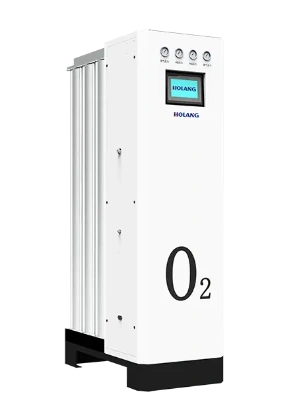
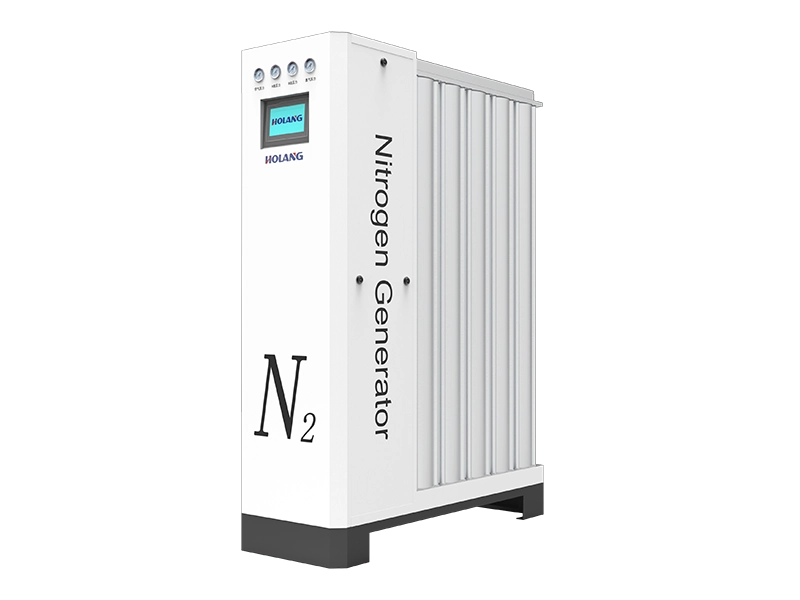
HOLANG focuses on the research and manufacturing of modular nitrogen generators. The following points can help companies evaluate nitrogen generator brands and solutions more carefully before making a purchasing decision.
Start with the Actual Gas Demand, Not Only the Parameter Sheet
Before selecting a nitrogen generator, it is important to clarify several basic questions:
What is the current nitrogen consumption?
- Is there any possibility of future production expansion, additional production lines or more laboratory instruments?
- Is nitrogen used continuously, periodically or intermittently?
- What are the requirements for nitrogen purity, pressure and flow stability?
- Is compressed air already available on site?
- Is the installation space limited?
These factors directly affect the configuration of the nitrogen generation system. If the system is selected only according to the minimum current demand, future changes in production or instrument quantity may lead to insufficient capacity, additional modification costs or even a redesign of the gas supply system.
Therefore, brand selection should not be based only on nominal equipment parameters. It is also important to see whether the supplier can provide a reasonable configuration according to the actual application scenario.
Expansion Capability Matters for Long-Term Use
Some companies may have limited nitrogen demand at the beginning, but later need to add production lines, expand laboratory instruments or handle changing order volumes. In such situations, a modular nitrogen generator can offer more flexibility.
Compared with a fixed one-time configuration, a modular design makes it easier to adjust capacity according to actual demand. It can help avoid excessive initial configuration and leave room for future expansion.
When evaluating a nitrogen generator brand, companies should pay attention to several points:
- Does the system support future module expansion?
- Will expansion require replacing the whole unit?
- Will the expansion process affect the existing gas supply system?
- Can the supplier provide expansion advice based on site conditions?
For growing companies, or for applications where future nitrogen demand is uncertain, expansion capability should not be ignored.
Gas Supply Stability Should Be Evaluated by Application
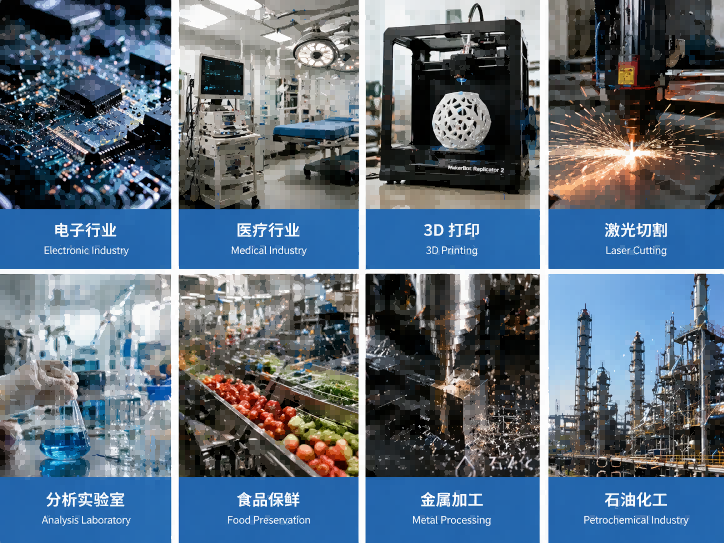
Different industries have different requirements for nitrogen supply.
In microelectronics applications such as SMT and semiconductor packaging, stable nitrogen supply can support more consistent welding, packaging and process operation. In laboratory analysis applications such as LC-MS, LC-MS/MS, mass spectrometry and chromatography, nitrogen supply needs to match the operating rhythm of the instruments. In life science-related applications such as food packaging and biopharmaceutical production, companies usually pay close attention to continuous supply, operating reliability and ease of use on site.
This means that choosing a nitrogen generator brand is not only about whether the equipment can produce nitrogen. It is also about whether the supplier understands how nitrogen is actually used in specific industries.
Key questions include:
- Can the supplier provide configuration advice for the target application?
- Can the supplier explain the applicable range under different purity, flow and pressure conditions?
- Does the supplier have experience in similar application scenarios?
- Can the system be adjusted when on-site gas demand changes?
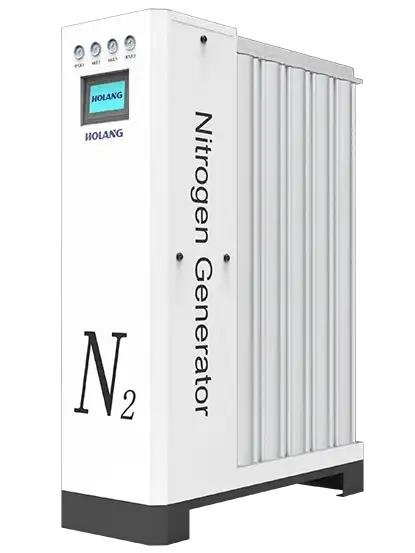
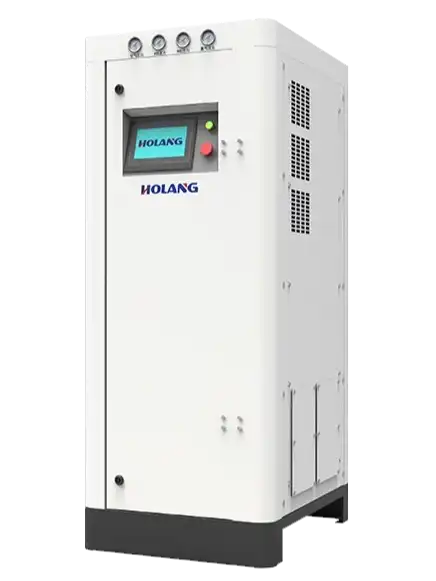
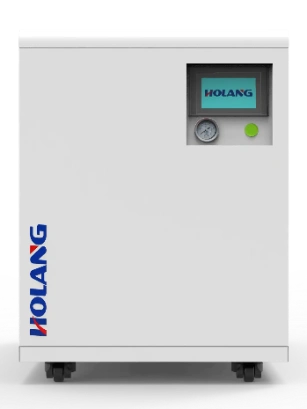
HOLANG modular nitrogen generators are designed for industrial and professional nitrogen applications that require stable gas supply, future expansion and better site adaptability. For users in microelectronics, life sciences and laboratories, the actual application conditions should be considered before simply comparing parameter sheets.
Installation Space and Site Conditions Also Affect Selection
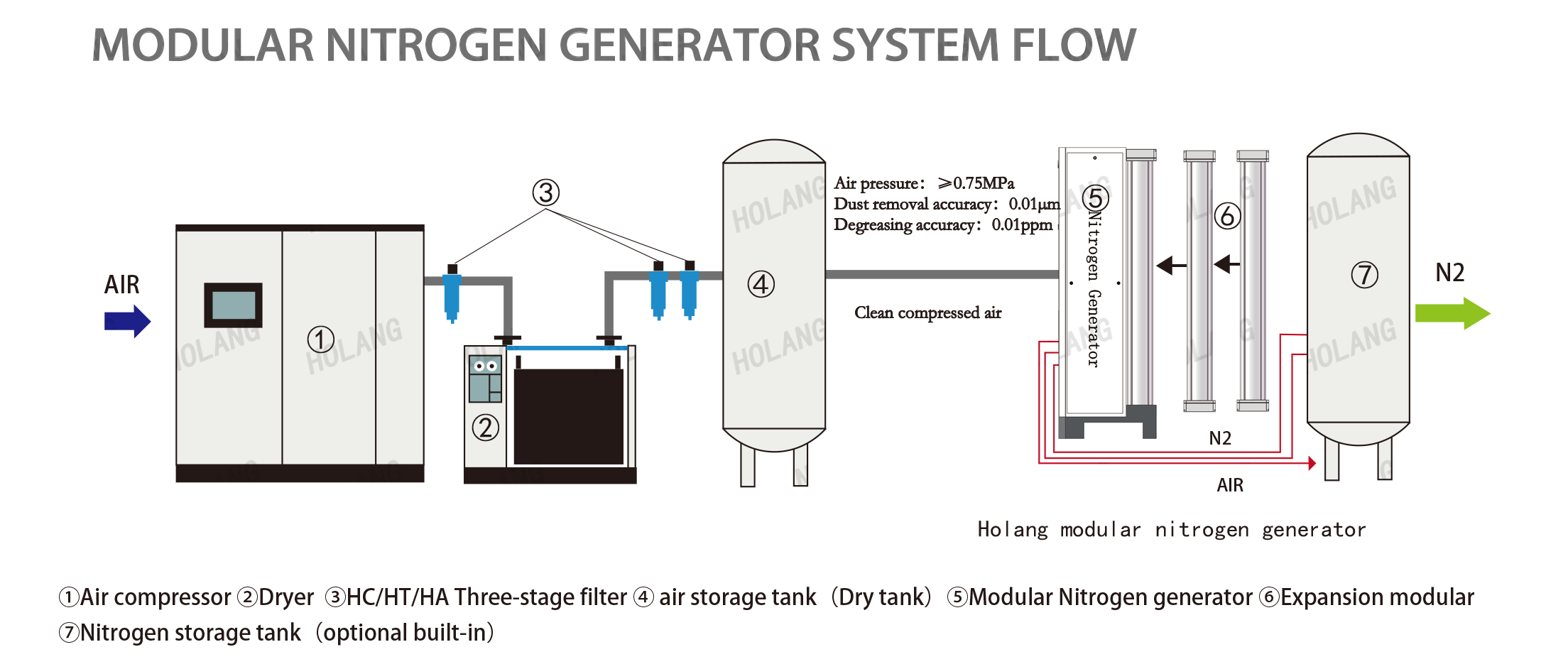
A nitrogen generator is usually not used as an isolated device. It needs to be evaluated together with available space, compressed air conditions, piping distance, maintenance access and the surrounding environment.
For laboratories, cleanrooms, workshops and local gas-use points, equipment footprint, layout and maintenance space are all important. If the installation area is limited, or if long-distance piping is not suitable, companies should confirm in advance whether the system is compact enough and whether it can be installed close to the gas-use point.
During selection, companies can compare:
- Equipment footprint under the same gas production capacity;
- Whether the system is suitable for installation near the gas-use point;
- Whether routine maintenance requires a large operating space;
- Whether compressed air, power supply and ventilation conditions are available on site;
- Whether space should be reserved for future expansion.
Modular nitrogen generators are usually more flexible in space adaptation, especially for applications with distributed gas-use points, limited installation space or future configuration adjustments.
Long-Term Cost Is More Than the Purchase Price
The purchase price of a nitrogen generator is only one part of the total cost. Long-term operation is also affected by energy consumption, maintenance frequency, consumable replacement, downtime for maintenance and after-sales response.
Before making a decision, companies should not only compare quotations. They should also confirm:
- Is routine maintenance convenient?
- Are major consumables and wearing parts easy to replace?
- Is the maintenance cycle clear?
- Will future expansion or repair affect normal nitrogen use?
- Can the supplier provide long-term operation and maintenance support?
- Can maintenance advice be provided according to actual usage?
For continuous production or high-frequency use, maintenance convenience and downtime risk are often more important than a lower initial purchase price. A system that better fits the site conditions can help reduce unnecessary modification and maintenance pressure over long-term operation.
Different Companies Should Set Different Priorities
- For companies in the R&D or small-batch production stage, basic stability, configuration flexibility and after-sales response are usually more important.
- For companies in mass production, continuous gas supply capacity, expansion potential, operating cost and long-term maintenance should be evaluated more carefully.
- For precision laboratories and analytical instrument applications, nitrogen purity, flow stability, instrument matching and installation conditions should be the key focus.
- For companies planning to replace cylinders, liquid nitrogen or externally supplied gas, it is necessary to evaluate supply continuity, on-site safety management, long-term cost and future expansion space at the same time.
There is no single standard answer for every application. A more reasonable approach is to first clarify the actual nitrogen demand, and then determine which equipment structure and supplier capability are more suitable for the site.
When to Consult HOLANG
Companies can contact HOLANG when they are evaluating questions such as:
- Whether the current nitrogen supply method can be replaced by on-site nitrogen generation;
- Whether the current gas consumption is suitable for a modular nitrogen generator;
- Whether future expansion should be considered before purchasing equipment;
- How to match purity, flow and pressure requirements in microelectronics, life sciences or laboratory applications;
- Whether a modular configuration is suitable for a site with limited installation space;
- How to reduce maintenance pressure and avoid excessive initial configuration during long-term operation.
HOLANG specializes in the research and manufacturing of modular nitrogen generators. Based on actual gas demand, installation conditions and future expansion requirements, HOLANG can provide on-site nitrogen generation solutions with better adaptability for industrial and professional users.‘’
Selection Consultation and Technical Support
Website: www.holanggas.com
Tel: +86 400 0512 711