


6 Key Details to Prepare Before Buying a Nitrogen Generator
When purchasing a nitrogen generator, many customers first ask:
“How much does it cost?”
But for industrial nitrogen generation systems, price depends on the actual working conditions.
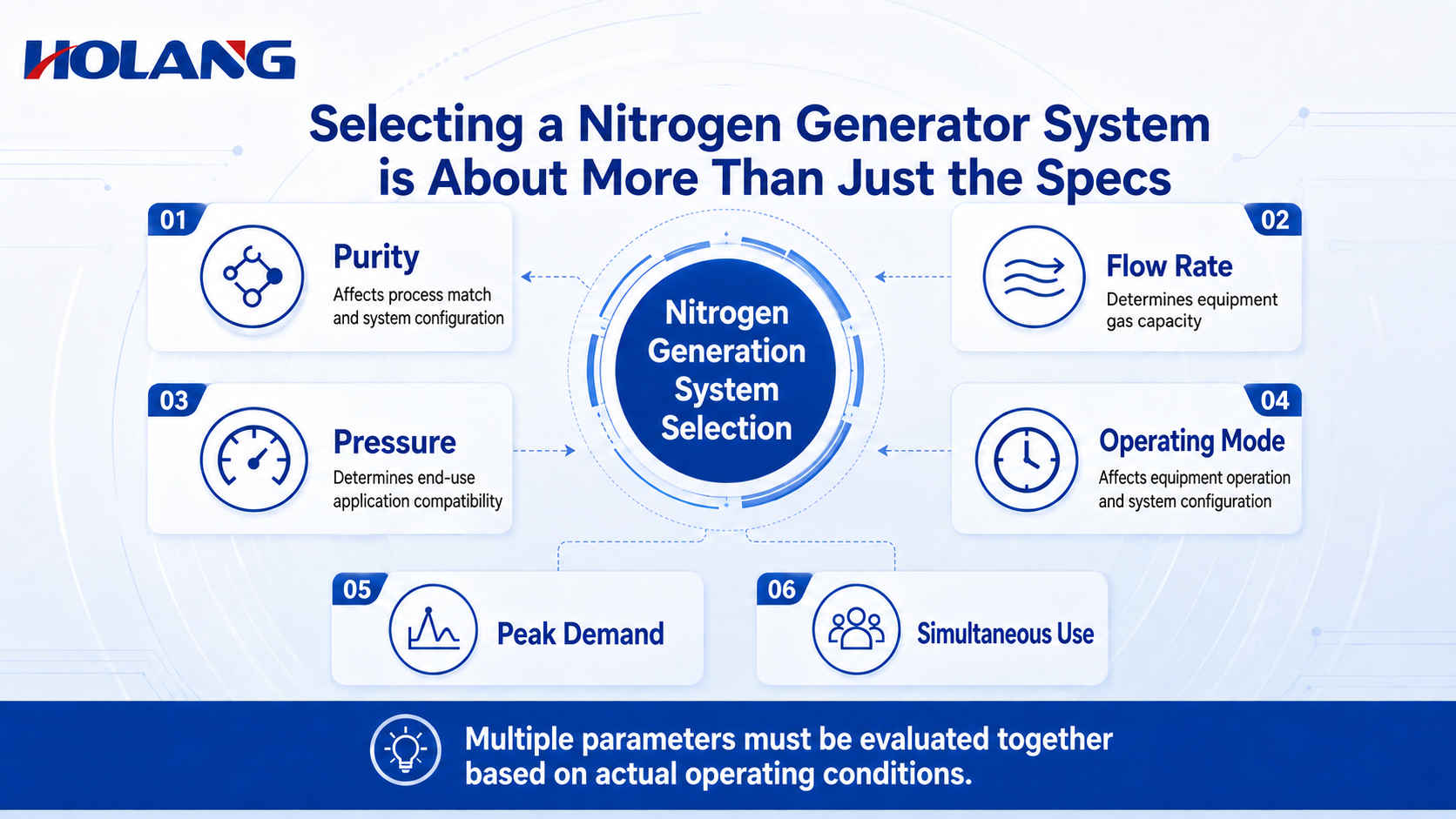
Different industries, applications, purity levels, flow rates, pressures, and operating hours may require different configurations.
If the system is too small, it may not meet production demand.
If it is too large, it may increase investment and energy costs.
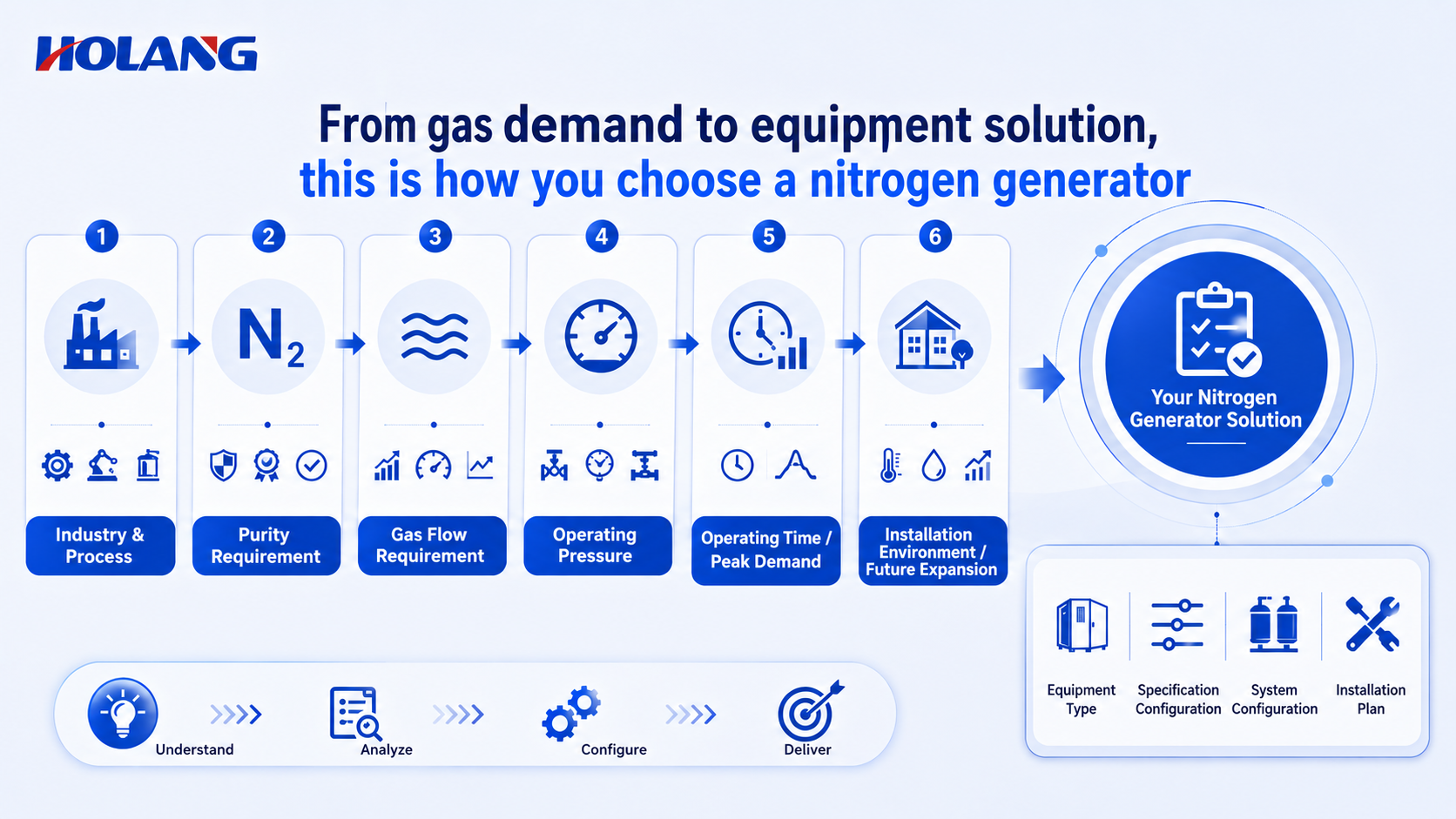
Before requesting a quotation, prepare these 6 key details.
01
Industry and Application
First, confirm where the nitrogen will be used.
For example:
-
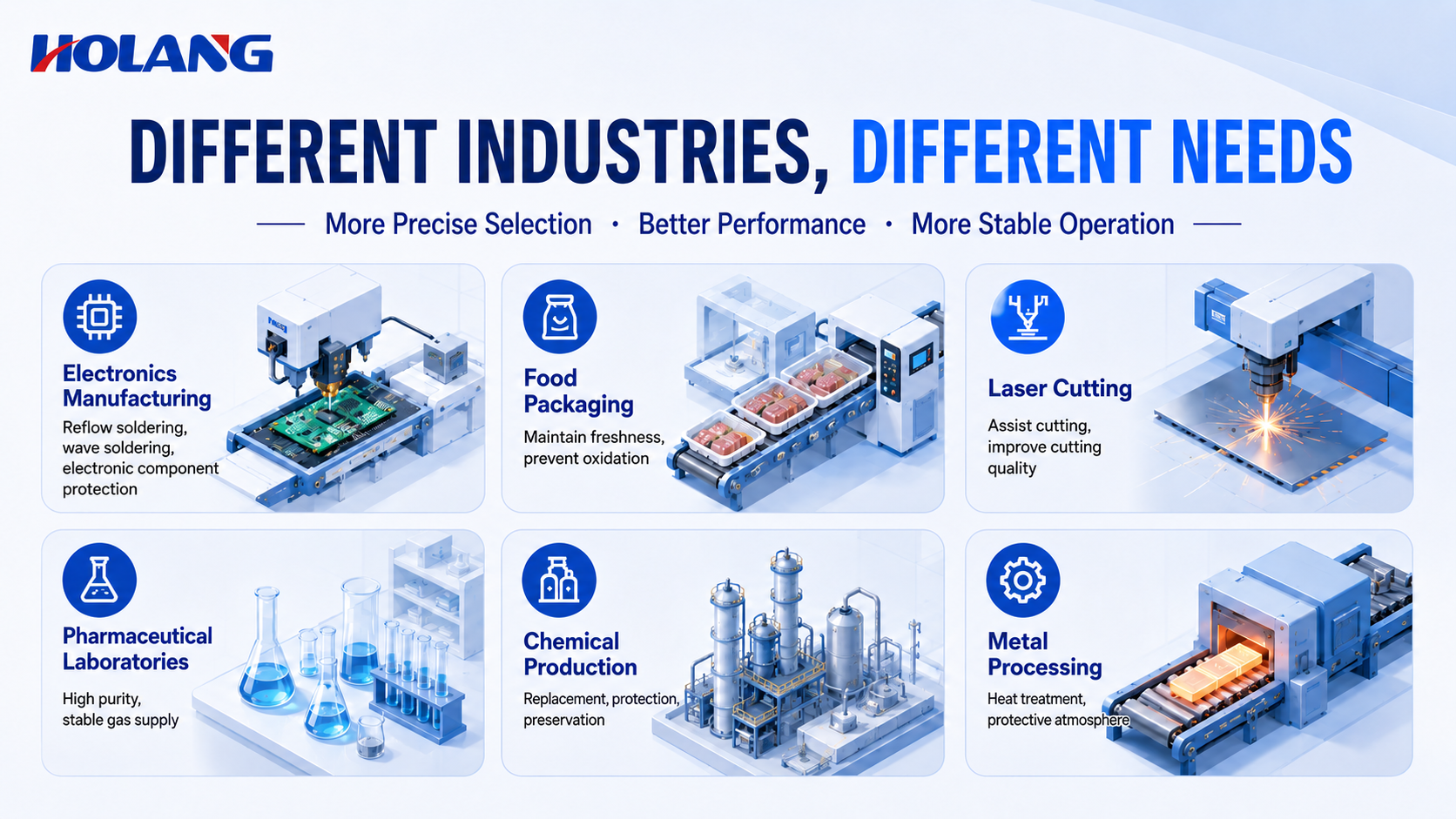
Electronics manufacturing: reflow soldering, wave soldering, component protection
-
Food packaging: freshness protection and oxygen reduction
-
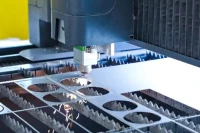
Laser cutting: auxiliary cutting gas
-
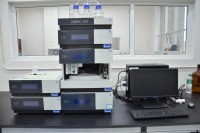
Pharmaceutical, laboratory, or chemical processes: stable and high-purity gas supply
Instead of only saying “we need a nitrogen generator,” it is better to explain your industry and specific application.
This helps engineers choose the right solution direction.
02
Required Nitrogen Purity
Nitrogen purity is important, but higher purity is not always better.
Higher purity usually means different equipment configuration, energy consumption, and operating cost.
If you are not sure about the exact purity, you can describe your process goal, such as:
-
Reducing oxidation
-
Extending shelf life
-
Improving soldering quality
-
Supplying analytical equipment
-
Replacing cylinder nitrogen or liquid nitrogen
Engineers can help estimate a suitable purity range based on your application.
03
Nitrogen Flow Rate
Flow rate determines how much nitrogen the generator needs to produce.
The key question is:
How many Nm³/h of nitrogen do you need?
If you do not know the exact flow rate, you can provide:
-
Daily or monthly cylinder consumption
-
Monthly liquid nitrogen consumption
-
Existing equipment gas consumption data
-
Number of machines using nitrogen
-
Operating hours per day
Peak demand or multiple production lines using nitrogen at the same time should also be mentioned.
04
Working Pressure
Different processes require different nitrogen pressures.
Some applications need low pressure, while laser cutting or special industrial processes may require higher and more stable pressure.
Useful information includes:
-
Required pressure at the end-use equipment
-
Current pressure after cylinder pressure reduction
-
Pressure after liquid nitrogen vaporization
-
Minimum pressure required by the process
Clear pressure information helps match the system to the actual site conditions.
05
Operating Hours and Simultaneous Gas Use
Operating time affects system configuration.
For example, 8 hours per day, 12 hours per day, and 24-hour continuous operation may require different solutions.
Please confirm:
-
Daily operating hours
-
Weekly operating days
-
Whether production is continuous
-
Number of production lines using nitrogen
-
Whether there are peak usage periods
These details help engineers design a more suitable nitrogen generation and storage system.
06
Installation Site and Expansion Plan
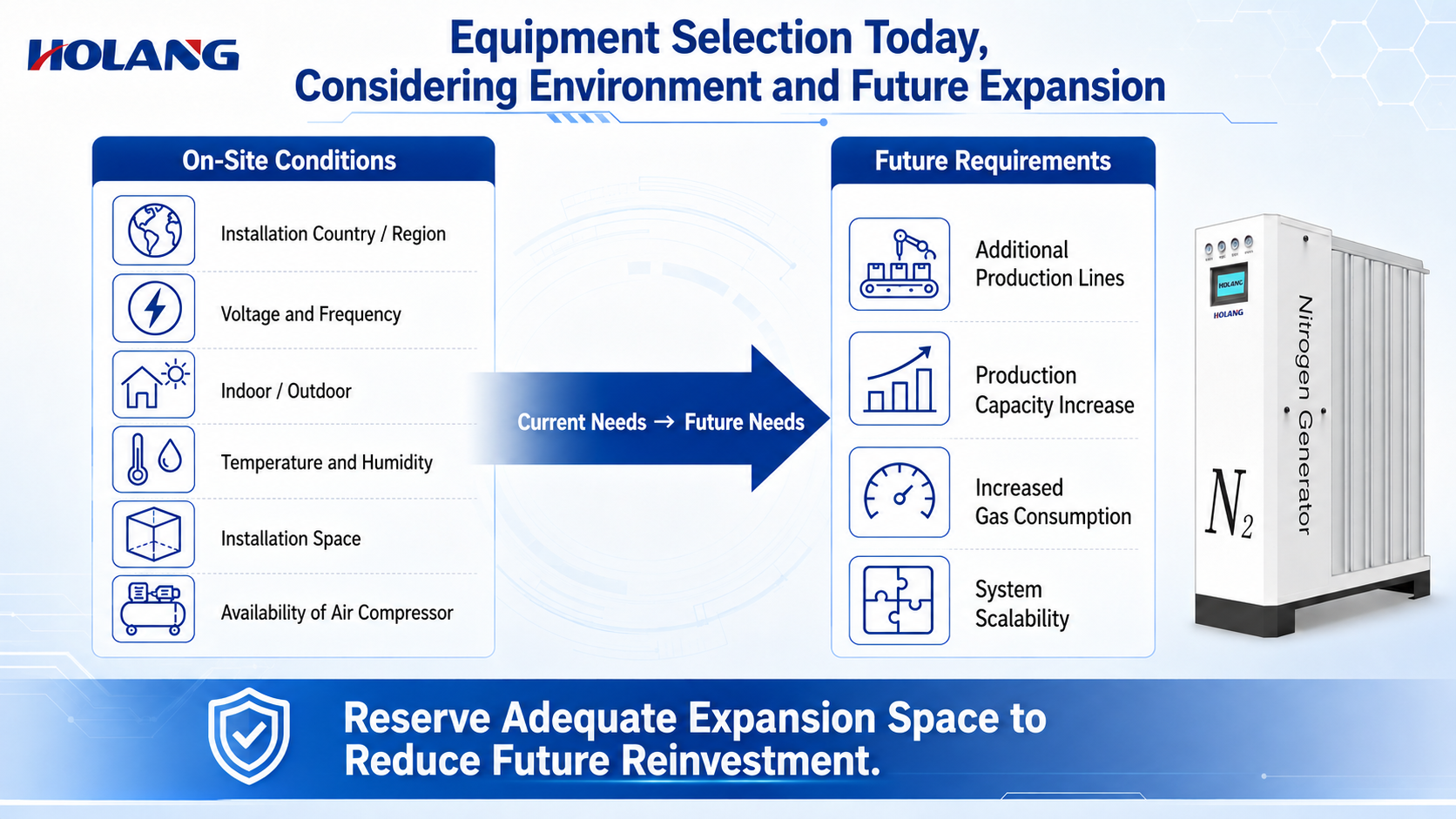
The installation environment also affects equipment selection.
Please provide:
-
Installation country or region
-
Indoor or outdoor installation
-
Temperature and humidity
-
Existing air compressor availability
-
Installation space
-
Power supply conditions
-
Future capacity expansion plans
If future production expansion is planned, a modular nitrogen generation solution can support flexible expansion and reduce repeated investment.
Summary
When buying a nitrogen generator, do not only ask for the price first.
The right configuration depends on real working conditions.
Before selection, prepare these 6 details:
-
Industry and application
-
Nitrogen purity
-
Flow rate
-
Working pressure
-
Operating hours
-
Installation site and expansion plan
Purity is not always the higher the better, and equipment is not always the bigger the better.
A suitable nitrogen generation solution should meet production needs while considering energy consumption, stability, maintenance, and future expansion.
Send these details to HOLANG, and we can provide an initial configuration suggestion for your project.